


 עִבְרִית
  English (UK)
  Русский
  বাংলা
বাংলা  العربية
  日本語
日本語  한국어
한국어  Magyar
  Norsk nynorsk
  Türkçe
  Español
  Čeština
  Svenska
  Português
  Ελληνικά
  Suomi
Suomi  Nederlands
  Română
  Italiano
  Français
  Polski
  Українська
  Deutsch
  简体中文
简体中文  Slovenčina
  Српски језик
  اردو
اردو  Azərbaycan dili
  O‘zbekcha
  አማርኛ
አማርኛ 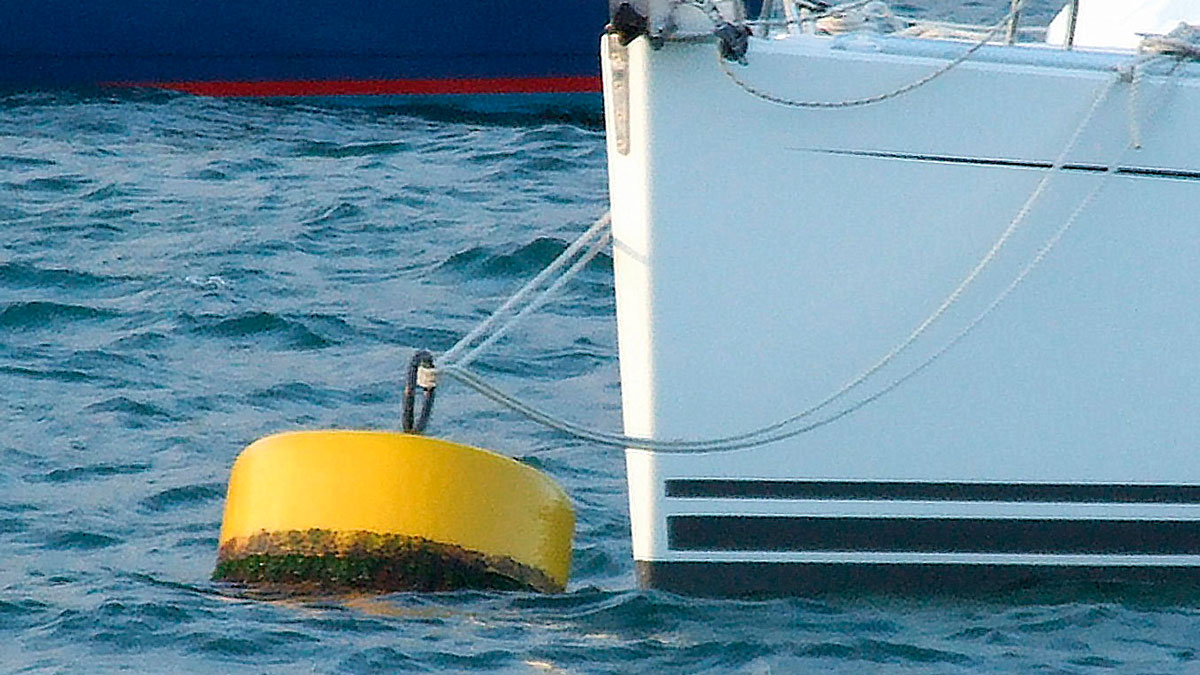 טעויות עגינה שכירסמו וארפ בקוטר 14 מ"מ ב-Westerly Sea Lord - תיקונים מהירים">

When tidal streams exceed 2 knots with a Force 5 easterly wind, a single slip passed between bow fairleads can saw through a 14mm braid-on-braid mooring warp in well under 20 minutes.
What went wrong: a concise case study
During an evaluation sail from סאות'המפטון to Poole Harbour, a charity 11.9m (39ft) Westerly Sea Lord picked up a mooring buoy off Brownsea Island. The skipper took a single slip from one bow fairlead through the buoy ring to the other fairlead, and the crew descended below decks. With the yacht tide-rode and the large sprayhood acting as a sail, the buoy was forced alternately from one side of the bow to the other. Within 20 minutes the 14mm warp’s sheath had been abraded through and inner braids exposed; another 20 minutes would likely have produced a complete failure and an adrift vessel.
Practical mooring rules to prevent chafe
Adopt the following principles to reduce chafe and improve reliability when mooring to buoys or alongside:
- Use a round turn on the mooring ring and lead the warp over the bow roller where possible — this stops the rope sliding on the ring.
- Prefer a single fairlead with a round turn rather than a slip between two fairleads; if two fairleads are required, use two separate warps with a round turn on each.
- Keep a redundant slip slack on the ring for easy departure: main warp first, then the slack slip.
- Protect the anchor and strop so the mooring strop cannot foul the anchor on the bow roller — lash the anchor upside down where needed.
Table: Common mooring methods — pros and cons
| Method | יתרונות | חסרונות |
|---|---|---|
| Single slip between two fairleads | Quick to rig in light conditions | High chafe risk under tidal/wind movement |
| Round turn over mooring ring via bow roller | Stops rope sliding; reduces chafe | May require hard pull to cast off |
| Two warps, one per fairlead with round turns | Load alternates; chafe spread between lines | More complex to rig and release |
| Warp with short chain splice | No chafe on ring; durable | Noise/transmission to accommodation; heavier |
| Sheathed rope (polythene tube) | Reduced sheath wear | Still vulnerable if ring is rough and movement large |
Other pitfalls and simple mitigations
Sheathing a warp in a polythene tube or splicing a short length of שרשרת into a dedicated mooring warp both reduce chafe; each option has trade-offs in noise, weight and handling. When permanently on a buoy, ensure strops do not allow the buoy to rub the hull — a short strop plus lashing the anchor upside down prevents fouling of the fluke and avoids paint damage along the boot-top.
Picking up a buoy: techniques for high-freeboard boats
High-freeboard yachts commonly struggle to reach buoy rings from the bow. Practical alternatives:
- Pass a line from a mooring cleat to a stern platform and bring the stern to the buoy, then work the slack in while falling back on the tide.
- Use a lasso technique with a coiled nylon/polyester line (these sink) and throw over the buoy when close alongside, then convert to a permanent mooring promptly.
- Deploy the dinghy to secure a permanent warp if conditions permit.
Cleating techniques: do it the proper way
When belaying on cleats, take the rope round the open side of the cleat when strain approaches from an angle, pass round the back and the other horn, add a couple of figure-of-eights and finish with a half-hitch whose tail lies parallel to the last figure-of-eight. This allows controlled easing under load and avoids jamming. Avoid using the standing end to form a hitch — under load it can become impossible to release.
Can I trust this boat mooring?
Many traditional moorings remain in use without visitors knowing their condition or construction. Regular inspection, redundant arrangements and conservative handling are the best defences against unexpected failure. Ben Sutcliffe-Davies has highlighted the hidden risks in mooring condition surveys for many sailors.
At a glance, the most important takeaways are: use a round turn on the ring, favour a single fairlead routed over the bow roller, consider chain splice or sheathing for high-wear situations, and practice proper cleating. Even the best written advice and honest reviews cannot substitute getting out and feeling how your vessel responds under real conditions. On GetExperience, you can book marina-based training, charter checks and coastal seamanship sessions from verified providers with secure payments and voucher confirmation issued afterward, and you can submit requests for tailored excursions or training to receive offers that match your needs. Book your Trip GetExperience.com
Summary: fast-moving tides and strong wind can turn a supposedly secure slip into a chafe hazard within minutes; countermeasures include round turns over the bow roller, separate warps for double-fairlead setups, chain or sheathing to prevent abrasion, careful strop and anchor management, and correct cleating. These measures protect not only the boat but the quality of travel experiences, yacht parties and charter safety. Whether you’re planning cruise packages, luxury adventure travel experiences, eco-friendly wildlife safaris, exclusive yacht charters for events, museum tours with live guides, adventure rafting trips for beginners, or even interactive online cultural workshops and beginner esports coaching sessions, sound seamanship underpins enjoyable and safe Travel experiences.