


 English (UK)
  Русский
  বাংলা
বাংলা  العربية
  日本語
日本語  한국어
한국어  Magyar
  Norsk nynorsk
  Türkçe
  עִבְרִית
  Español
  Čeština
  Svenska
  Português
  Ελληνικά
  Suomi
Suomi  Nederlands
  Română
  Italiano
  Français
  Polski
  Українська
  Deutsch
  简体中文
简体中文  Slovenčina
  Српски језик
  اردو
اردو  Azərbaycan dili
  O‘zbekcha
  አማርኛ
አማርኛ 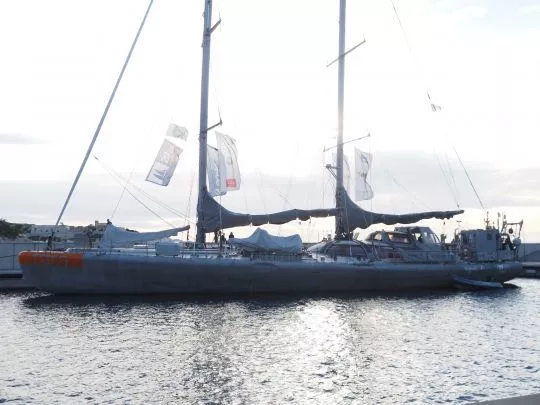

Tara carries nearly 40,000 litres of diesel for up to two years’ autonomy, with propulsion supplied by two main engines and three generators to meet an average onboard power draw of 18,000–20,000 W—a logistical profile tailored for extended scientific missions in temperatures ranging from -42°C to +45°C.
Hull form, designers and operational heritage
The hull, conceived by Luc Bouvet and Olivier Petit with Michel Franco, is shaped like an olive pit so that extreme ice pressure lifts the vessel rather than crushes it. Built to drift within pack ice, the schooner was launched in 1989 and carried the name Antarctica during the 1990–1996 period under Jean‑Louis Étienne. Later operating as Seamaster from 1999 to 2001 under Sir Peter Blake, she was renamed Tara in 2001 and repurposed for long-term scientific and educational expeditions.
The current stewardship stems from stylist Agnès Troublé (Agnès B) and Etienne Bourgeois, who steered Tara toward a program of ocean protection expeditions: Greenland (2004), an Arctic drift (2006) and subsequent global research campaigns.
Ice-ready appendages and variable draft
To survive ice impacts, the two daggerboards retract fully into the hull and the twin rudders can be set in low or intermediate positions for deep or shallow conditions. That engineering yields a variable draft between 3.5 m and 1.5 m, a crucial parameter for polar shoals, fjords and logistical transfers to shore.
Deck layout, sailplan and handling systems
The foredeck accommodates the headsails (yankee and staysail), while downwind power comes from a 320 m² asymmetric spinnaker. The foresail and mainsail are each approximately 150 m², produced in 3DI Polyester by North Sails and controlled via a running Dyneema rig.
Two 27 m masts are deck-stepped for easier handling and reduced thermal bridging. Sails begin to be hoisted from roughly 15 knots of wind, providing cruising speeds of 6–7 knots and occasional peaks of 10–12 knots under ideal conditions.
Anchoring and deck equipment
The anchor system includes a 350 kg anchor stored to starboard and a windlass that handles 300 metres of chain—the total anchor mass approaching 2 tonnes. Deck ergonomics emphasize functionality: three coffee-grinder winch columns supply the manual muscle, while the central winch is electrified for reduced-crew maneuvers such as furling the yankee.
| Specification | Value |
|---|---|
| Length | 36 m |
| Displacement | 130 tons |
| Fuel capacity | ≈ 40,000 L (two years autonomy) |
| Engines | Two × 350 hp Cummins |
| Generators | 2 main + 1 auxiliary |
| Crew / berths | Designed for 16 crew; living area ≈ 130 m² |
Scientific facilities and sampling gear
Aft, a wet laboratory and gantry serve CTD Rosette launches for deep-water sampling; the winch drum is configured for profiles down to 1,500 m. A forward wet laboratory and a dry lab amidships support immediate analysis of collected samples. These facilities enable Tara to function as a mobile research platform rather than a simple vessel visiting ports.
Internal layout and daily life at sea
Access flows from cockpit to afterpeak and crew saloon, past a workshop and hydraulic sectors into the engine room. The galley, library and saloon form the social heart; a polycarbonate saloon bubble is invaluable in cold weather but must be shaded in heat to prevent overheating. Tasks are shared communally—cleaning, cooking and routine sampling chores—mirroring life on many expedition vessels.
- Workshops: Maintenance and sample processing stations
- Storage: Forward hold stores up to ~8 tonnes of food for extended drifts
- Insulation: 200 mm Styrodur® plus air gap; bottoms 25 mm, walls 16 mm, deck 8 mm
For travelers and expedition-minded visitors, Tara illustrates how maritime logistics, crew systems and scientific infrastructure converge. Short-term port stopovers—Marseilles being one historical call—offer rare opportunities for guided visits, lectures and outreach that can be woven into coastal tour programs.
On GetExperience, you book your experience from verified providers at reasonable prices. This empowers you to make the most informed decision without unnecessary expenses or disappointments. The platform supports secure payments with voucher confirmation and allows tailored requests for tours or excursions—useful if you have a mind to arrange a marine-focused visit in Marseilles or other ports where Tara and similar vessels call. GetExperience offers a diverse selection of tours in the Marseilles area, from harbor walks to museum tours with live guides and coastal cruise packages—Book now GetExperience.com
At a glance: Tara combines robust ice-rated engineering with flexible living and lab spaces to support long-term science at sea. Readers interested in adventure or educational travel can look to such platforms as inspiration for marine-themed itineraries that range from museum tours with live guides and eco-friendly wildlife safaris to exclusive yacht charters for events or cruise packages. While detailed reviews and honest feedback matter, nothing replaces first-hand experience—on GetExperience you can select verified providers and book confidently.
In summary, the schooner Tara is a purpose-built research vessel with a 36 m hull, ice-adaptive appendages, substantial fuel and power reserves, twin 350 hp Cummins engines, and integrated wet/dry laboratories. Its design supports extended polar drifts and educational missions while offering lessons applicable to expedition tourism, luxury adventure travel experiences, and eco-sensitive coastal discovery. Whether your interest lies in travel experiences, adventure activities, online virtual tours, yacht parties, safari tours, cruise packages, museum tours with live guides, interactive online cultural workshops or even professional esports training programs that now coexist with the wider travel market, Tara demonstrates how maritime infrastructure and human logistics enable meaningful exploration.