


 English (UK)
  Русский
  বাংলা
বাংলা  العربية
  日本語
日本語  한국어
한국어  Magyar
  Norsk nynorsk
  Türkçe
  עִבְרִית
  Español
  Čeština
  Svenska
  Português
  Ελληνικά
  Suomi
Suomi  Nederlands
  Română
  Italiano
  Français
  Polski
  Українська
  Deutsch
  简体中文
简体中文  Slovenčina
  Српски језик
  اردو
اردو  Azərbaycan dili
  O‘zbekcha
  አማርኛ
አማርኛ 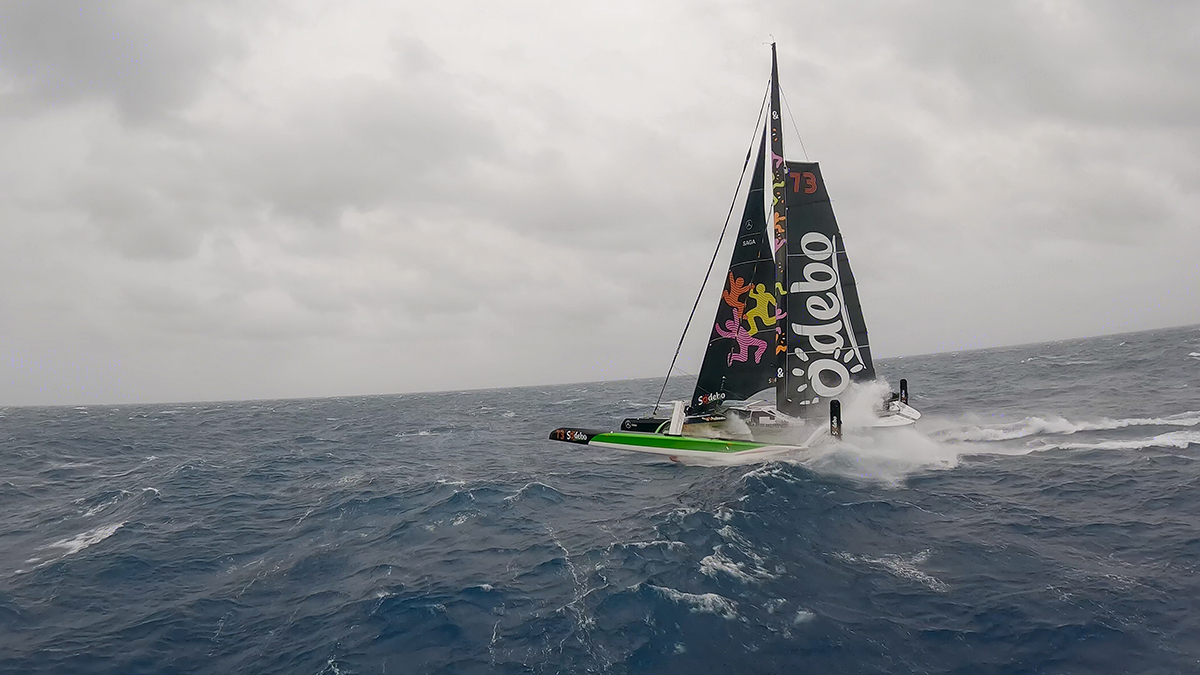

Sodebo Ultim 3 must cover fewer than 1,000 nautical miles and cross the Jules Verne finish line before 20:31 UTC on 25 January 2026 to surpass Idec Sport’s benchmark of 40d 23h 30m 30s; meanwhile, a deep North Atlantic low—named Storm Ingrid—is forecast to deliver >40 kt winds, gusts to 50 kt and swells in excess of 10 m through the Bay of Biscay over the next 24–48 hours.
Position, pace and the logistics of a record bid
As of the latest tracker positions, Thomas Coville’s crew remain more than 600 miles ahead of the 2017 Idec Sport standard, having maintained a lead for much of the circumnavigation since departing on 15 December 2025 at 2101hrs. The Ultim’s foiling platform delivers sustained cruising speeds of 30–35+ knots, but the final North Atlantic push requires precise sail changes, routing and weather-window management to avoid structural risk in the Biscay maelstrom.
Key route milestones
| Milestone | Record status | Notes |
|---|---|---|
| Equator (first crossing) | New benchmark set | Passed 4 days, 4 hours after departure |
| Cape of Good Hope | New benchmark set | Rounded in 10 days 23 hours |
| Cape Horn | New benchmark set | Nearly 11 hours ahead of Idec Sport |
| Final North Atlantic | ~600+ nm lead | Storm Ingrid expected to reduce speed and force routing changes |
How Sodebo has managed the passage
The circumnavigation has combined fast foiling runs with careful routing to work around persistent pressure systems: a westerly detour around the St Helena High, steady northing in the South Atlantic to build a lead, and tactical gybing through variable Indian Ocean flows. During sections where the fleet slowed, the team recovered by sustaining high average speeds through the Pacific, at times surpassing 35 knots to regain the record pace.
Operational challenges and crew roles
- Weather routing: continuous adjustments to keep the boat on a safe upwind angle until a leeward corridor opens.
- Sail handling: dozens of gybes and rapid sail changes since the Cape of Good Hope; minimizing load cycles is crucial.
- Structural monitoring: vigilance for foil or daggerboard damage in heavy seas.
Crew complement
Skippered by Thomas Coville, Sodebo Ultim 3 is sailed with Benjamin Schwarz, Frédéric Denis, Pierre Leboucher, Léonard Legrand, Guillaume Pirouelle and Nicolas Troussel. Each crew member rotates watch systems, sail trims and onboard systems checks to preserve speed while protecting the platform against extreme wave and gust loads.
Storm strategy: staying safe while chasing pace
Team communications indicate a deliberate plan for Storm Ingrid: continue sailing upwind as long as the sea state and wind permit, then route westward to create leeward space for a safer downwind run when the low arrives. The crew’s stated preference is to maintain 110–120° TWA rather than hard downwind at 90°, a choice intended to reduce sideways loading and the risk of pitchpoling or foil failure.
Design margins for an Ultim foiling trimaran anticipate severe conditions, but the Biscay winter low represents a unique test of the boat’s engineered limits and of on-the-water decision-making under record pressure.
Implications for tourism and coastal operations
Severe North Atlantic storms affect not only record attempts but also regional tourism operations—ports, ferry schedules and coastal excursions can be disrupted by sudden sea-state changes. Trip planners and tour operators along the Bay of Biscay are closely monitoring forecasts to adjust embarkation times for yacht parties, cruise packages and smaller excursion fleets.
Follow the finish and plan related experiences
For travellers who follow ocean racing as part of their wider interest in maritime experiences, the final stages of this Jules Verne bid offer a timely reminder to consider weather risk in any coastal itinerary. Regional tours, museum visits with live guides, exclusive yacht charters for events and eco-friendly wildlife safaris all rely on robust local logistics when winter storms strike.
Highlights so far: Sodebo has set new benchmark times at both Equator crossings and all three great Capes, demonstrated high-speed foiling durability over long ocean sectors, and now faces a tactical decision in Storm Ingrid’s lead-up. Of course, even the best reviews and most honest feedback can’t replace first-hand experience. On GetExperience, you book your experience from verified providers at reasonable prices. This empowers you to make the most informed decision without unnecessary expenses or disappointments. Take advantage of the platform’s convenience, affordability and wide range of options to select guided coastal tours, yacht charters or museum tours that match your interests, with secure payment and voucher confirmation. Book now GetExperience.com
In summary, Sodebo Ultim 3’s final 1,000 miles combine tight timing, advanced routing and severe sea-state exposure: the crew’s management of sail plans, watch systems and routing around Storm Ingrid will determine whether the Jules Verne Trophy record falls. For travellers and observers, the episode ties into broader themes of travel experiences and adventure activities—from exclusive yacht charters and cruise packages to museum tours with live guides, eco-friendly wildlife safaris and interactive online cultural workshops—reminding us that practical logistics and weather are as central to memorable trips as they are to global sailing records.