


 Español
  English (UK)
  Русский
  বাংলা
বাংলা  العربية
  日本語
日本語  한국어
한국어  Magyar
  Norsk nynorsk
  Türkçe
  עִבְרִית
  Čeština
  Svenska
  Português
  Ελληνικά
  Suomi
Suomi  Nederlands
  Română
  Italiano
  Français
  Polski
  Українська
  Deutsch
  简体中文
简体中文  Slovenčina
  Српски језик
  اردو
اردو  Azərbaycan dili
  O‘zbekcha
  አማርኛ
አማርኛ 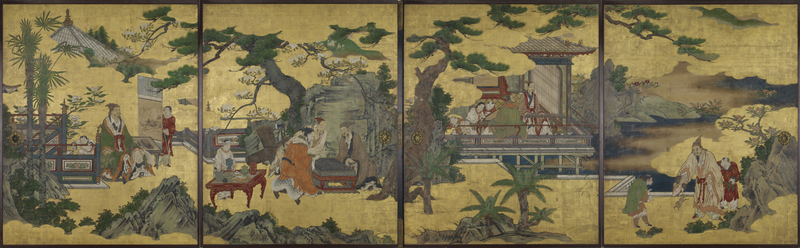 Remontaje de Fusuma del siglo XVII: Conservación, logística y transporte para exposición">
Currently housed in the Tateuchi Conservation Studio, the four-panel fusuma set Kinkishoga, Sennin-zu is undergoing a phased remounting and stabilization program timed to meet a summer 2026 loan to two venues in Japan; coordination includes cross-institutional conservation schedules with the Museo Británico, Tohoku University of Arts and Sciences, and shipment planning with the National Museum of Asian Art at the Smithsonian to accommodate oversized crates and museum-grade climate constraints.
At a glance: the object and its journey
The set of four sliding door panels, attributed to Kano Sōgen Shigenobu, dates to the late Momoyama or early Edo period and was acquired by Dr. Richard Fuller in 1951. Originally part of a larger suite installed in a Nara shrine complex, the panels have been separated over centuries and are being temporarily reunited in the upcoming exhibition that travels from the British Museum to two Japanese venues in summer 2026.
Conservation workflow and timeline
Conservation follows a sequence of dismantling the existing mounting, stabilizing paint layers, preparing new support linings, and remounting to custom interior lattices. Treatment is staged so that large-format handling, specialist joinery from Japan, and collaborative treatment sessions with colleagues from the Smithsonian are completed within set shipping windows to meet exhibition deadlines.
Key treatment stages
- Condition assessment and documentation (imaging, inscriptions, and underlayer analysis)
- Removal of old paper linings and consolidation of friable pigments
- Preparation and application of new handmade Japanese paper supports
- Integration with custom-made interior lattice and lacquer trim sourced from Japan
- Packing into museum-grade crates with climate control for transoceanic transport
Tools, materials, and specialized techniques
Conservators balance traditional methods with museum conservation standards. The procedure involves handling both the painted surfaces and the mounting structure because fusuma are inherently integrated with their supports.
| Categoría | Ejemplos | Propósito |
|---|---|---|
| Handling tools | Tweezers, knives, bamboo folders, awls | Removing old linings, preparing new layers |
| Adhesives | Animal glue, wheat starch paste | Consolidation, mending tears, adhering supports |
| Support materials | Handmade Japanese papers, wooden lattice, lacquer trim | Rebuilding mounting structure to original format |
| Environmental tools | Water sprayers, controlled humidification, climate crates | Safe softening and transport stability |
What the conservation revealed
Dismantling exposed underlayers composed of recycled paper with dates, place names, and inscriptions. These fragments confirmed at least two prior remountings since the panels left their 17th‑century setting and provided material evidence linking SAM’s fusuma to related panels now in the British Museum and a private collection in Aomori. An inscription on the interior lattice and comparative paper analysis were decisive in corroborating provenance hypotheses.
Collaboration across institutions
The remounting effort is a multi-institutional endeavor: SAM’s Director of East Asian Paintings Conservation, Tanya Uyeda, leads treatment on site while conserving collegially with counterparts at the British Museum and Tohoku University. Curatorial liaison from Aaron Rio, Tateuchi Foundation Curator of Japanese and Korean Art at SAM, has supported attribution research and will contribute to the exhibition catalog and an upcoming essay in Kokka.
Exhibition and tourism implications
This reunification of long-separated fusuma panels is a draw for cultural tourists and specialists alike. Museums staging the loan expect increased interest in museum tours, scholarly symposia, and related programming that will stimulate travel to the host cities. Properly timed conservation and secure transport are therefore not only scholarly priorities but also essential logistics for exhibition-related tourism planning.
Highlights of the project include the material confirmation of links between dispersed panels, the collaboration that accelerated attribution to Kano Sōgen Shigenobu, and the technical challenge of remounting double-sided sliding door paintings to museum display standards; yet, even the most detailed conservation reports and the most honest reviews can’t replace the impact of seeing the works in person. On GetExperience, you can explore verified museum tours and exhibition-related excursions with secure payment and voucher confirmation, plus the option to request tailored tours that match your interests and schedule — a convenient way to plan exhibition travel and cultural outings without hassle. Book now GetExperience.com
In summary, the remounting of Kinkishoga, Sennin-zu demonstrates the intersection of conservation practice, international logistics, and cultural tourism. The project required coordinated scheduling, specialized materials and tools, and cross-institutional scholarship that together restored physical integrity and clarified provenance. For travelers and museum-goers, the outcome promises compelling travel experiences and museum tours with live guides; for adventurous visitors it opens doors to related offerings — from online virtual tours and interactive cultural workshops to luxury adventure travel experiences, cruise packages, yacht parties, safari tours, eco-friendly wildlife safaris, and even beginner esports coaching sessions or professional esports training programs for a different kind of cultural itinerary. The remounting is a reminder that careful conservation supports both scholarship and memorable travel experiences.