


 Українська
  English (UK)
  Русский
  বাংলা
বাংলা  العربية
  日本語
日本語  한국어
한국어  Magyar
  Norsk nynorsk
  Türkçe
  עִבְרִית
  Español
  Čeština
  Svenska
  Português
  Ελληνικά
  Suomi
Suomi  Nederlands
  Română
  Italiano
  Français
  Polski
  Deutsch
  简体中文
简体中文  Slovenčina
  Српски језик
  اردو
اردو  Azərbaycan dili
  O‘zbekcha
  አማርኛ
አማርኛ 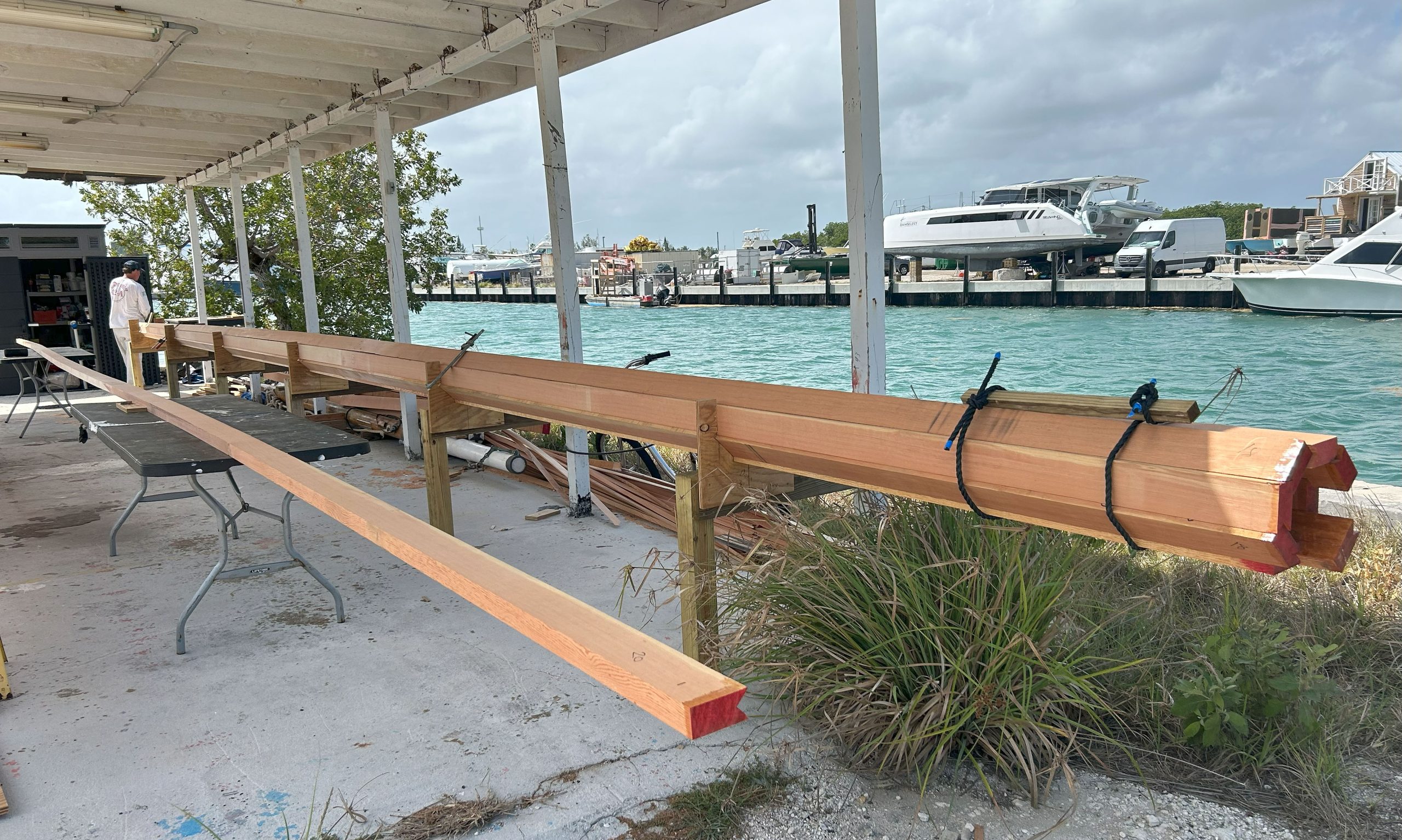 Reef Chief’s New Douglas Fir Hollow Masts Assembled on Stock Island, Key West">

Immediate logistics: timber, hauliers, and staging
Transporting full-dimension 2×4 Douglas fir from Washington, Maine to Stock Island required coordinated carrier pickup, palletised crating, and temporary on-site storage at Buddy’s Marina and Boatyard. The shipment included over 20 lengths of air-dried, clear, vertical-grain timber, staged to optimise sequence of scarfing, planing, and layup—critical steps when working on a 47′ 10″ (14.6m) bird’s-mouth hollow mainmast and a 50′ 9″ (15.5m) foremast.
Background and vessel history
Reef Chief began life as a 65′ plank-on-frame bateau designed by Joseph Gregory and built by Carl Pederson in 1972. Acquired and operated in Key West by Allen Cody Taube, she served as a subchapter-T passenger carrier for four decades, taking tourists to Florida Keys reefs. Ownership later transferred to Danger Charters, де Wayne Fox managed the donation and restoration effort.
Spar design and specifications
The new masts were designed as hollow, bird's-mouth, octagonal laminated spars built from Douglas fir staves. They replicate the original taper and placement of hounds whilst adding modest refinements for stainless mast collars and modern wiring runs.
| Item | Mainmast | Foremast |
|---|---|---|
| Outside diameter | 10″ (254 mm) | 10″ (254 mm) |
| Finished length | 47′ 10″ (14.6 m) | 50′ 9″ (15.5 m) |
| Staff width | 4″ (101 mm) typical | 4″ (101 mm) typical |
| Wall thickness (max) | 1 3/4″ (44 mm) | 1 3/4″ (44 mm) |
| Construction method | Bird's mouth, 8 staves, 3 segments per stave, scarfed joints | |
Why the bird's-mouth method matters
У "The bird's-mouth Octagonal laminate provides a balance of strength, light weight, and the ability to build a hollow spar that accepts internal wiring and wiring grounds. For operators offering reef or sunset charters, dependable spars reduce downtime and regulatory headaches tied to Coast Guard recertification.
Workshop setup and materials
A shaded, open-sided shed on Stock Island served as the spar shop: concrete slab, portable toolshed, and a spar bench laid out on six supports. Key suppliers included Americas’ Wood Co. for Douglas fir lumber and Glue Products і WEST System for epoxy systems. Tools ranged from a heavy-duty power plane and a Rigid planer to a vintage 7 1/2″ Skilsaw for long ripping cuts.
- Epoxy: Epon/Shell systems for layup, WEST System for scarf joints with Tropical Hardener
- Fasteners & finishes: stainless-steel hardware, Awlgrip primer and polyurethane
- Rigging items: tiger wood hounds donated by Tommy Mann; traditional shroud arrangement
Materials handling and quality control
Staves were sorted by length, grain, and density; heavier pieces were reserved for lower mast sections. All rough-sawn stock was planed to 1 3/4″ thickness and finished to a target width, ensuring consistent glue contact and predictable taper development.
Construction process
Scarfing and staggering
Each stave used three scarfed segments to span mast height. Scarfs were cut at an 8:1 ratio and staggered radially to avoid coincident joints. Thorough surface scuffing and adhesive “tooth” preparation maximised joint strength.
Taper, layup, and clamping
Taper was lofted from original mast-taper drawings. Open-top forms on the spar bench controlled the outer profile while a coordinated crew—often eight or more—mixed and applied thin and then thickened epoxy. Compression was applied with Spanish windlasses spaced about 18″ apart to ensure tight glue lines along 50′ lengths.
Shaping, wiring and finishing
After curing, the octagonal spar progressed through 16- and 32-sided shaping to a rounded profile, followed by sanding, penetrating epoxy soak, and Awlgrip priming and polyurethane finish. Internal wiring runs for VHF and lights were installed with downward-drilled wiring holes and sealed masthead filler blocks; mast heels and tenons were custom-fitted to existing mast steps.
Practical considerations for operators and tourists
For charter operators, reliable spars directly affect vessel availability and guest safety. For tourists, a well-maintained schooner delivers smoother sailing, better sightlines for reef passages, and fewer cancellations—important when booking short Key West excursions or sunset sails.
At a glance, the Reef Chief spar project combined careful logistics, traditional joinery, modern epoxies, and community labour. Still, reading about a refit can’t equal stepping aboard for a sunset sail; firsthand experience remains the final arbiter. On GetExperience, you book experiences from verified providers with transparent pricing, secure payments and voucher confirmation issued afterward; you can also submit requests for custom tours and receive tailored offers from providers. This makes it easy to choose the right Key West schooner excursion to match your preferences and budget. Book your Trip GetExperience.com
Summary: The Reef Chief mast replacement combined long-distance timber logistics, bird's-mouth laminated construction, precise scarf joints, and coordinated layup in a shaded Stock Island workshop. The result—hollow Douglas-fir masts finished with modern epoxy and Awlgrip—restores strength and appearance while supporting reliable charter operations. For travellers, this boosts confidence in booking reef tours, yacht charters, and sunset sails, whether you seek museum tours with live guides, eco-friendly wildlife safaris, luxury adventure travel experiences, yacht parties, cruise packages, adventure rafting trips, or interactive online cultural workshops; nothing replaces the value of personal travel experiences and adventure activities, but proper maintenance and restoration ensure those experiences remain memorable.