


 Українська
  English (UK)
  Русский
  বাংলা
বাংলা  العربية
  日本語
日本語  한국어
한국어  Magyar
  Norsk nynorsk
  Türkçe
  עִבְרִית
  Español
  Čeština
  Svenska
  Português
  Ελληνικά
  Suomi
Suomi  Nederlands
  Română
  Italiano
  Français
  Polski
  Deutsch
  简体中文
简体中文  Slovenčina
  Српски језик
  اردو
اردو  Azərbaycan dili
  O‘zbekcha
  አማርኛ
አማርኛ 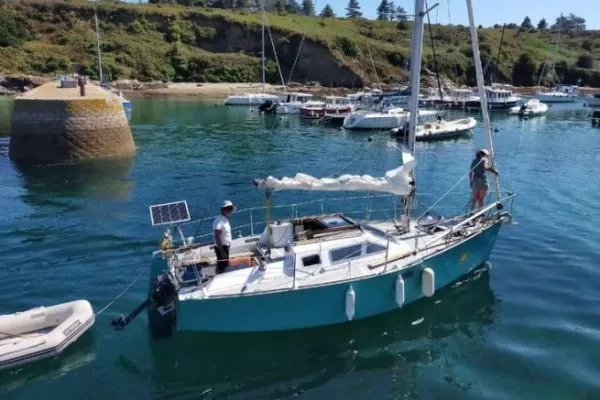 Приклад модернізації електричного підвісного двигуна для вітрильної яхти довжиною 7 метрів та вагою 2 тонни: від 6-сильного підвісного двигуна до 3-кіловатного ePropulsion 3.0 Evo">

The 7m, roughly 2-tonne sailboat received a 3 kW ePropulsion 3.0 Evo pod drive mounted on the centerline under the hull, replacing the previous 6 HP outboard; the installation required reinforcement of the sole with 20 mm marine plywood epoxy-bonded between two stringers to distribute the concentrated propulsion loads and protect against grounding impacts.
Pod installation and structural considerations
Installing the pod beneath the hull, longitudinally aligned and parallel to the waterline, optimizes thrust and minimizes parasitic vibration. This configuration concentrates mechanical forces at one fixed point, so local strengthening was mandatory: the floor in the former engine bay was rebuilt on a 20 mm marine-plywood bed, saturated with epoxy to prevent long-term warping and supported by two varangues.
Alignment and mounting details included short, protected cable runs and placing the charger close to the batteries for service access. The entire retrofit, beyond planning, was executed in approximately ten hours of hands-on work.
Installation checklist (at a glance)
- Pod: ePropulsion 3.0 Evo (3 kW), centerline mount
- Hull reinforcement: 20 mm marine plywood between two stringers
- Battery pack: two E60 units (~6 kWh total)
- Battery placement: former engine compartment under companionway
- Charger: mounted above batteries with short wiring
- Epoxy saturation of supports to prevent warping
Batteries and electrical architecture
The electrical system is built around two E60 batteries delivering roughly 6 kWh of usable capacity. The pack sits on the reinforced 20 mm plywood floor and is secured to two varangues. Wiring is routed for minimal length and maximum protection, and the charger occupies an accessible position above the battery bank.
Practical notes: solar input is reserved for auxiliary services, and hydro-generation below 5 knots proved marginal during testing—expect limited replenishment from passage alone.
Power, speed and range — sea-trial data
| Power draw | Speed (knots) | Approx. range |
|---|---|---|
| 1,500 W | 4.3 | ~17 nm (≈4 hours) |
| 3,000 W | ~5.2 (gain ≈0.9 kn) | Range drops significantly |
Construction
At 1,500 W the boat reaches near hull speed with good efficiency—about 25% battery capacity per hour. Doubling to 3,000 W yields only a modest speed gain while dramatically reducing range: beyond this point the energy cost per additional knot becomes unfavorable.
Cruising feedback and itinerary implications
Over a week-long cruise from Arradon calling at Hoedic і Belle-Ile and returning to the Gulf, the sailboat recorded ~82 miles sailed while motoring only two effective hours (approximately 8 miles). Total battery consumption for the week was roughly 50%, with one hour for harbour manoeuvres and one hour to secure arrival before a tidal reversal—the remainder was under sail.
For coastal touring: the combination of quiet electric propulsion and conservative power sizing supports a sailing-first itinerary, but planners should factor in limited motoring reserves for adverse wind or tidal conditions.
Limitations and recommended redundancy
- Energy reserve risk: strong headwinds or current can exceed stored capacity.
- Backup: carry a small 2,000 W generator for emergency recharging.
- Regeneration: hydro-generation is minor below 5 knots; do not rely on it for sustained charging.
How electric propulsion reshapes the cruising experience
Electric traction changes daily use: near-silence, instant torque for tight manoeuvres, no on-board fuel, and reduced annual mechanical maintenance. For visiting guests and day-charter passengers, the quiet approach into harbours and the lack of vibration make for a more relaxed arrival and a better photo-friendly experience—note to operators planning yacht parties or short cruise packages. On a light cruiser like the Pizzicato, the installation is a conscious trade-off: prioritise coastal sailing and accept controlled, not excessive, motor power.
Conversion extends beyond hardware: it requires rethinking logistics—charging strategy, harbour services, and backup fuel plans—all factors that tie directly to travel planning and the types of experiences operators can offer.
On GetExperience, you book your experience from verified providers at reasonable prices. This empowers you to make the most informed decision without unnecessary expenses or disappointments; the platform’s transparent voucher-confirmation and secure payment flow make arranging bespoke shore-based services or tailored on-water experiences straightforward. When preparing a holiday, think beyond single services and craft a cultural program—GetExperience helps arrange local guides, museum tours with live guides, or exclusive yacht charters for events that perfectly complement an eco-conscious cruise. Book your Trip GetExperience.com
To sum up, this retrofit demonstrates that a 3 kW pod with ~6 kWh battery capacity suits a 7m coastal cruiser when the sailing programme prioritises time under sail and short bursts of propulsion. The result delivers quieter, cleaner travel and practical benefits for tourism operators and private skippers alike. Consider the balance of energy, redundancy and itinerary when planning coast-hopping trips: well-chosen systems enable memorable travel experiences—whether you’re organising adventure activities, yacht parties, or eco-friendly wildlife safaris—and pair well with curated offerings like museum tours with live guides, cruise packages, interactive online cultural workshops, or exclusive yacht charters for events.