


 Français
  English (UK)
  Русский
  বাংলা
বাংলা  العربية
  日本語
日本語  한국어
한국어  Magyar
  Norsk nynorsk
  Türkçe
  עִבְרִית
  Español
  Čeština
  Svenska
  Português
  Ελληνικά
  Suomi
Suomi  Nederlands
  Română
  Italiano
  Polski
  Українська
  Deutsch
  简体中文
简体中文  Slovenčina
  Српски језик
  اردو
اردو  Azərbaycan dili
  O‘zbekcha
  አማርኛ
አማርኛ 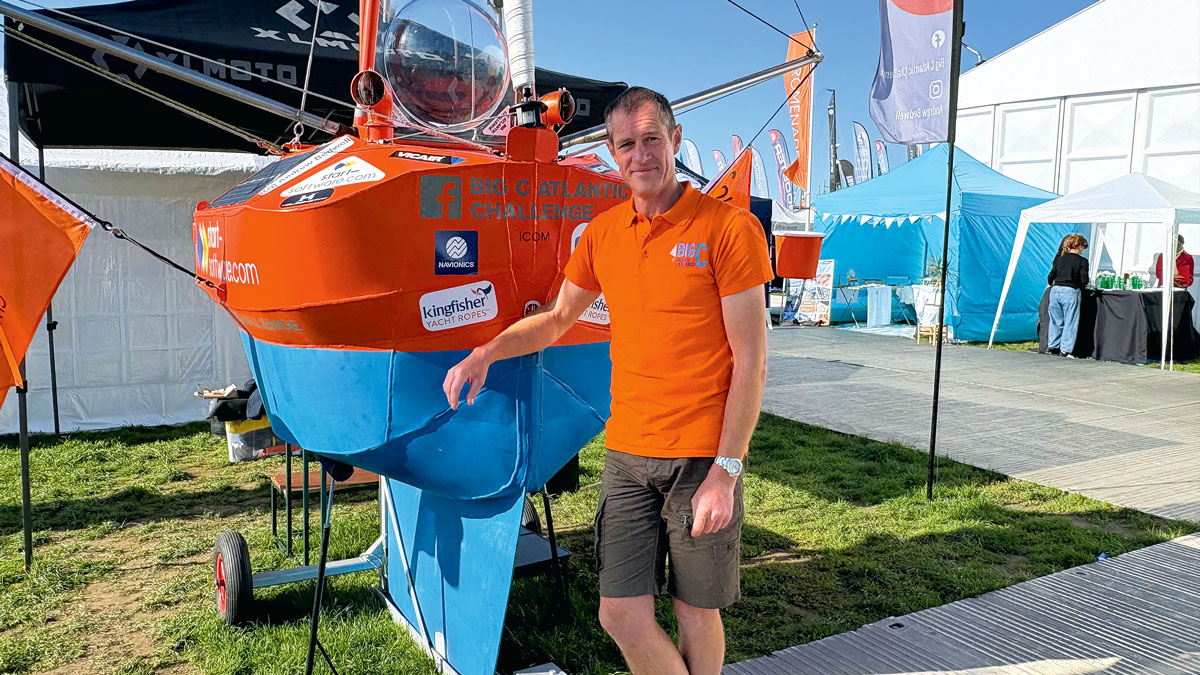 Big C V2 : conception d’un micro-yacht de classe 1 m pour un défi transatlantique">

Performance and structural figures up front
Big C V2 achieved a recorded top speed of 3.7 knots during sea trials; the hull and keel are made from seam-welded aluminium with 5mm plating at the keel and hull and 3mm on the topsides. The complete hull, including navigation, power systems, rigs and mast, weighs 250kg, and the vessel is designed to carry a total of 550kg. The encapsulated lead keel is roughly 115kg and is secured with 25mm diameter bolts adjustable from inside the structure.
Design and construction
After an initial napkin sketch and life-size cardboard mock-up to check ergonomics, naval architect Jérôme Delaunay developed a compact hull form to reduce heeling-induced drag. Where the original Big C used twin pods as outriggers, V2 integrates those volumes into a more hydrodynamic hull shape. The result is an extra 90mm of internal space, allowing a 6ft crewmember to stretch legs when seated.
| Paramètre | Valeur |
|---|---|
| Top speed (sea trials) | 3.7 knots |
| Matériau de la coque | Seam-welded aluminium (5mm/3mm) |
| Hull + systems weight | 250 kg |
| Design load | 550 kg |
| Quille | Encapsulated 115 kg lead, adjustable |
| Solar array | Two 50W panels |
Watertight integrity and habitability
The main hatch is a 10mm polycarbonate dome, backed by an 8mm polycarbonate washboard that can be lightly pressurised to pre-stress and stiffen the hatch during heavy seas. Directional dorade vents are sealable from the inside. Carpeted surfaces provide thermal insulation, and two sealed batteries (20Ah AGM and 20Ah lithium) are supported by the solar panels to power navigation electronics and ventilation.
Rigging, sails and redundancy
The rig is an aluminium A-frame with a central furling drum and two outriggers, flying twin 10oz Dacron sails designed for easy reefing. Every backstay, outrigger and shroud features intentional fusibles so that failures occur at replaceable points rather than on the Dyneema rigging. Low-chafe measures include Technora covers on high-wear runnings and stainless steel sleeves where lines enter the hull.
- Shock absorption: rubber U-joints at outrigger connections.
- Spare strategy: standardised shackles and a minimal toolkit (Knipex pliers, screwdrivers, Allen keys).
- Emergency steering: two aft drogues and two stern eyes for drogues that can double as backup steering.
Navigation, power and survival equipment
Navigation and comms include an Icom M510 AIS transponder, Icom M10 VHF, Garmin handheld chartplotter and a phone-based Navionics backup. Power management uses two Victron batteries supported by two 50W solar panels, with thermal pairing of AGM beside lithium to manage charging in cold conditions. Fresh water is supplied via a Katadyn Survivor 35 manual watermaker plus a spare desalinator.
Storm tactics and risk mitigation
Planned tactics for heavy weather centre on sealing the vessel, furled sails, closed dorade vents, and fitting the polycarbonate washboard to pressurise the living volume as a survival capsule. The boat is intentionally tender so it can roll rather than resist, reducing peak loads on the rig and minimizing the risk of dismasting. A snorkel-style breathing venting arrangement removes condensation and vents exhaled air aft to reduce CO2 buildup while sealed inside.
Historic context at a glance
Small-boat Atlantic crossings have a lineage: Sea Egg (John Riding 1964), Tinkerbelle (Robert Manry 1965), April Fool (Hugo Vihlen 1968), Giltspur (Tom McClean 1983), Vera Hugh (Tom McNally 1993) and Father’s Day (Hugo Vihlen, current record). Big C V2 sits within this tradition while adopting modern materials and systems.
The design and operational choices made for Big C V2 have direct travel and tourism implications: safety-driven innovations in compact vessels can influence guided adventure trips, small-boat charters and experiential ocean travel, especially in regions like Newfoundland and Ireland where micro-transit logistics and coastal excursions are popular.
Key highlights include the aluminium structural choice, adjustable encapsulated keel, modular rig fuses for rapid repair, and the dual-battery/solar power strategy that enables autonomous navigation systems. However, no amount of specification replaces direct experience; even the best reviews and honest feedback can’t replicate a personal trial at sea. On GetExperience, you book your experience from verified providers at reasonable prices. This empowers you to make the most informed decision without unnecessary expenses or disappointments, while enjoying secure payments, voucher confirmation and the option to request tailored tours or excursions in regions like Newfoundland and western Ireland. Book now GetExperience.com
In summary, Big C V2 represents a concentrated engineering response to the logistics of solo microyacht ocean transit: compact aluminium construction, deliberate redundancy in rigging, lightweight power systems and a survival-first interior. For travellers and adventure-seekers, these advances hint at future expériences de voyage et activités d'aventure—from eco-friendly wildlife safaris and museum tours with live guides to exclusive yacht charters, cruise packages and even interactive online cultural workshops—bridging technical innovation with accessible, affordable exploration. The vessel’s systems and storm tactics underscore how careful planning translates to real-world safety and enjoyment on the water.