


 Svenska
  English (UK)
  Русский
  বাংলা
বাংলা  العربية
  日本語
日本語  한국어
한국어  Magyar
  Norsk nynorsk
  Türkçe
  עִבְרִית
  Español
  Čeština
  Português
  Ελληνικά
  Suomi
Suomi  Nederlands
  Română
  Italiano
  Français
  Polski
  Українська
  Deutsch
  简体中文
简体中文  Slovenčina
  Српски језик
  اردو
اردو  Azərbaycan dili
  O‘zbekcha
  አማርኛ
አማርኛ 

Plan a phased rollout of electric planes on short routes, then expand to longer legs as tech matures. Early flights will rely on smaller, lighter frames, with rigorous safety checks prior to each flight and a focus on reliability and maintenance costs.
Prototypes across the industry show regional ranges around 200–400 km on light airframes, while researchers pursue higher energy density cells and robust cooling. A number of teams balance weight, safety margins, and performance in real-world tests; visuals from flight tests illustrate compact propulsion units integrated across wings and tails.
For extended links, hybrid layouts pair electric power with small turbines to add range; A shift toward modular packs and scalable power electronics helps operators adapt fleets without heavy refurbishments. As energy grids decarbonize, potential savings in emissions per passenger-km grow on routes powered by green electricity.
Regulatory, grid, and supply constraints slow progress. Suppliers and test teams work on standard interfaces to ease maintenance, repair, and upgrades. Certification for new chemistries, safety standards, and maintenance procedures adds time, while airport charging capacity and the mineral supply chain require coordinated planning.
Adoption path: focus on regional fleets in the near term, supported by targeted investments in battery supply, charging hubs, and flight-planning tools, creating a foundation for broader service once high-density cells prove reliable. Start with flexible pilots using existing platforms and scale as data shows dependable operations.
Electric Aircraft: Practical Outlook

Begin with a targeted rollout: electric-powered aircraft on short regional routes to validate charging, reliability, and quick turnarounds, then scale as performance proves itself.
Key driver in the near term remains energy density and thermal management. For aircraft with several seats, carrying capacity trades with range, so design must optimize wings and lightweight systems, especially as the market matures. A careful balance preserves a useful seat count while keeping mass low, driving a tangible liv onboard that feels calm for passengers.
Regulatory and legal barriers are as important as hardware. The european airspace landscape and europes market shape how soon electric-powered aircraft can enter service, with certification timelines, noise rules, and mission profiles guiding when and where aircraft can fly and how fleets size up for daily operations.
Across europe and the americas, several operators are poised to join the forefront, with easyjet leading partnerships and other carriers testing how quiet, electric-powered flights affect life-cycle costs and passenger comfort. The goal remains a meaningful reduction in emissions while keeping schedules reliable, and enhancing the overall life of on-board experience for your crews and guests.
Case study: alice, the nine-seat electric-powered prototype, has flown several times and demonstrates how distributed propulsion and compact wings affect payload, range, and maintenance. Led by saleh, the team shows how modular design keeps the aircraft easy to bära and inspect, with bells-and-whistles for monitoring and safety. If this path continues, airlines gain clarity on carrying passengers and belongings on regional hops without heavy fuel burn, and you will have a clearer view of entering a sustainable era for regional travel.
easyJet’s 2030 Target: Implications for Short-Haul Routes
Recommendation: Prioritize high-frequency london-to-europes short-haul operations with a staged propulsion mix, keeping todays network robust while piloting zero-emissions aircraft on a subset of legs, and set clear milestones to reach 2030 with a credible plan.
- Technology fit: On routes with high carrying demand, pilot electric or hybrid-electric concepts on a portion of flights using high-efficiency propulsion and lightweight airframes. Use X-57 as a reference for distributed propulsion benchmarks, and track emissions in grams per passenger-km to compare with todays jet performance. Build a plan to move to zero-emissions where payload and range allow.
- Network design: Keep london as a key hub, increase more frequent service on core corridors to improve load factors, and target short hops that stay under two hours to maximize aircraft flown per day. Use europes route data to identify corridors with strongest seasonal demand and highest potential for battery-electric retrofits or hydrogen solutions.
- Economic and IP strategy: There are associated expensive upfront costs for charging infrastructure, ground support, and R&D. A team should work with start-up; theres a palestinian engineer saleh who filed a patent for a compact engine concept that could fit on narrow-body airframes. This patent could help easyjets team move faster and foster collaboration with the wider europes ecosystem.
- Technology roadmap and partnerships: Focus on engine efficiency improvements and weight reductions; pursue distributed propulsion and modular battery packs where feasible. The study shows cooperation with universities and suppliers accelerates progress, and a public-private approach keeps the number of variables manageable.
- Implementation milestones: Set a cadence of test flights and route trials each year, monitor grams of CO2 saved per passenger-km, and publish progress metrics. Start with 2–3 routes in the next five years and expand as tech matures; track efficiency by comparing carrying capacity and load factors on each flight to validate the path toward zero-emissions on the backbone network, about gains to expect.
Long-term outlook: By balancing fleet renewal with targeted network optimization, easyjets can keep delivering reliable service while reducing emissions. Todays pace of tech maturation supports a credible path to decarbonize short-haul routes without sacrificing service levels, helping london and europes corridors stay connected.
Battery Density and Flight Range: What This Means for Regional Aircraft
Rekommendation: Target 500–600 Wh/kg at pack level within the coming years and design for modular, scalable packs with robust thermal management. Industry expects these gains to move britains regional fleets into a new era of lower operating costs and quieter airspace. This lets a 20–30-seat regional airframe achieve practical ranges of 400–800 km on pure electric propulsion, reducing mission energy by using high-efficiency motors and optimized aerodynamics. Prioritize cooling, safety, and ease of production, because this impacts the entire lifecycle and cost.
todays high-energy-density cells sit around 200–260 Wh/kg in practical packs, which means a 600–900 kWh capacity implies weight in the few-tons range. This is less dramatic than headlines suggest, so pilots and planners must think beyond a single-hop approach and into longer service patterns. For a 20–40-seat airframe, that energy translates to payload penalties unless the mission profile is optimized. britains operators are learning to balance range, payload, and charging needs, while regulators scrutinize safety. A documentary view of the field shows this energy-density story reached several milestones in recent years, with demonstrators flown and start-up firms producing viable modules for regional routes.
Airbus has signaled interest in electric regional architectures, but this comes with weight, cooling, and regulatory hurdles. Many start-up players are producing demonstrators that have flown on short legs, and this story of progress is watched closely by britains operators, regulators, and investors. Energy bottles powering these packs matter, because safety concerns around thermal runaway require robust packaging and monitoring. The effort makes motor efficiency and drive-control optimization central to any viable plan, and it rolls out across ground and flight tests to refine performance.
Charging and grid readiness shape routes. todays charging networks near airports offer overnight fast-charging, but they are still a constraint in many regions. Operators should plan to roll in a hybrid or all-electric leg for short corridors while keeping a fallback SAF option for longer hops. Annual investment in battery tech and manufacturing is rising, and costs per kWh are expected to drop as volumes grow, making these aircraft economically viable sooner rather than later. Think about the complete ecosystem: maintenance, cooling, energy management, and the ability to swap or upgrade packs without heavy modding.
In practice, regional fleets will blend approaches: short all-electric hops on the cleanest corridors and longer legs supported by hybridization or SAF to cover gaps. This aligns with carbon-reduction targets and with the annual pace of certification and infrastructure upgrades. Having a clear upgrade path, from lighter packs to higher-energy chemistries, helps britains operators think about risk, uptime, and long-term economics.
Charging Infrastructure at Airports: Turnaround Times and Grid Impacts
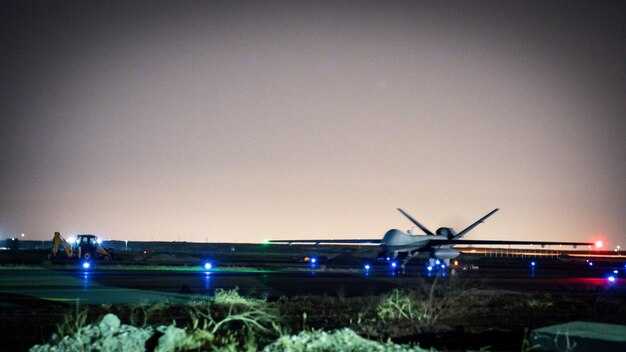
Install at every gate a modular charger system with 1–2 MVA capacity, paired with 2–5 MWh of on-site storage, and adopt smart charging that aligns with real-time grid signals and flight schedules. This setup could cut peak demand, reduce grid stress, and keep turnaround times predictable across airplanes. Engineers across the industry have demonstrated that scalable, interoperable charging can support both electric propulsion tests and routine operations, with power into electrical systems flowing smoothly as batteries recharge between flights. The approach also reduces diesel use on the tarmac and strengthens long-term resilience, supported by formal studies and pilot programs that completed rollout milestones in the last years.
Turnaround times drive practical choices. In a 30–60 minute window, many flights could top up their batteries to meaningful levels, especially when chargers run at 0.5–1.5 MW per aircraft. That rate translates to roughly 0.5–1.5 MWh of energy per hour, making full or partial top-ups feasible for seater and small to midsize airplanes when boards are coordinated with taxi-in and gate operations. Where fleets include larger airframes, partial optimizations plus battery conditioning during idle periods can keep schedule reliability intact while keeping electrical demand manageable.
Grid impacts push airport planners to balance local generation, storage, and interconnection upgrades. A hub with ten gates could see peak uplift in the 10–20 MW range if charging happens without coordination, feeder lines and transformers would face strain. Deploying on-site storage of 2–10 MWh and implementing demand response can shave peaks by 5–15 MW, turning a potentially disruptive spike into a manageable load. A studie completed at several pilot airports demonstrerat that coordinated, time-shifted charging delivers the strongest gains and reduces volatility across the electrical network. The queen of these strategies is disciplined scheduling that aligns gate assignments, aircraft type, and charging profiles to the grid’s power capability.
Technologies and innovations advance the feasibility of these plans. Engineers have demonstrerat propulsion and charging concepts, including the x-57 interface, which informs how high-current batterier and power electronics can operate in compact, durable enclosures. Four core innovations drive results: high-power chargers with robust cooling, plast enclosures that withstand airside conditions, advanced battery management that preserves pack health, and interoperable charging standards that support a range of aircraft. These elements together push power into reliable electrical supply for quick turnarounds och minska motor idling on the ground, delivering reduction in emissions and noise.
Long-term planning anchors a decade-scale roadmap. Completed analyses show that four to six regional hubs can achieve full gate upgrades within the next years, with ongoing cost-benefit tracking and risk mitigation. Across this horizon, studier indicate that standardization accelerates rollout, allows shared infrastructure like DC buses and medium-voltage feeders, and supports a growing fleet of flygplan transitioning from diesel to electric propulsion. That’s why the long-term strategy emphasizes early pilots, modular upgrades, and cross-airport cooperation to turn completed pilots into scalable, city-wide charging networks.
Certification and Safety: Timeline from Tests to Commercial Service
Begin certification planning from day one and coordinate with regulators early; align your original design data package for powertrain safety and battery management. Before first flight, complete ground tests and hazard analyses, and set a concrete plan for the flight-test program. Even with tight schedules, still maintain clear links between engineering milestones and legal milestones to prevent delays.
Electric powertrain development shifts risk profiles; the certification path covers generation, battery systems, energy management, and airworthiness integration. For aerospace engineering, the timeline includes design reviews, component and system certification, and a type certificate from european authorities; london acts as a hub for partnered workshops with regulators and airlines to validate performance on short routes and seat configurations, even when comparing to fuel-powered aircraft.
Safety cases rely on study data and deliverables: hazard analysis, failure modes and effects analysis (FMEA), reliability data, and human-factors validation. Legal requirements mandate traceability of components and production systems; regulators expect a robust quality-management framework and auditable records. Producing repeatable test results that regulators can review in parallel with the program accelerates approval, and this method can deliver faster certification decisions.
After certification, airlines take delivery of certified aircraft and move into commercial service. Operators work with legal teams to ensure compliance across routes, take-offs and landings; this alignment reduces risk during operations. In todays environment, demonstrations on european networks and london routes help quantify performance for short distances and seat configurations, which informs airlines about seating density and passenger flow. Ongoing monitoring, data-sharing with partner airlines, and updated maintenance plans support safe operations and prepare for the next generation.
Costs, Financing, and ROI for Airlines and Airports
Recommendation: Start a five-year phased rollout on four short-haul routes under 350 miles, pairing on-site electrical charging with government incentives and green financing to reach positive ROI.
The single up-front cost structure for electrification breaks into three parts: propulsion system and control electronics, the battery pack, and ground infrastructure. Battery packs for regional electrics typically cost about $140–$200 per kWh, with pack sizes commonly 200–500 kWh for four- to twenty-seat units. Retrofit campaigns generally run $1–3 million per aircraft, while new, purpose-built electric airframes can reach tens of millions per plane before payload and certification. For airports, installing high-power charging bays and the required grid upgrades runs roughly $1–2 million per site, with another $0.5–2 million to secure reliable power capacity and energy storage where needed. Across the system, maintenance costs tend to fall 15–30% due to fewer moving parts, while fuel costs disappear on zero-emission legs, though electricity prices and charging cycles create new cost considerations in the long term. This reality must cover these costs with a staged approach so the network remains affordable while keeping the focus on four short-haul routes, which helps cover the overall economics. A single platform supports the economics by aligning procurement, financing, and operations, and a dedicated hub strategy reduces duplicative capex.
Financing options blend debt, equity, and public funds. Government supports–grants, loan guarantees, and tax incentives–shape the economics, while green bonds and energy-performance contracts reduce initial cash pressure. A shared charging network across a hub lowers per-operator capex, and a PPA or utility-backed contract can fix year-to-year electricity costs to support predictable budgets. London serves as a key reference market, with policy frameworks that back electrification and a growing number of airports building similar plans. Analysts commented that early pilots determine whether the financial case reaches the required scale, and said investors want clear milestones. Early successes ring bells with backers and accelerators, while a documentary of pilots helps bring transparency to the process. Simultaneously, carrying these plans forward requires disciplined governance, and back offices can provide the support needed to reach the timeline. Back the investment with a stable revenue stream to improve lender confidence and keep the project moving.
ROI and timeline: Most operators should expect a long-term payback, typically 6–12 years depending on route mix, system scale, and electricity price trends. Short-haul legs under 350 miles with high utilization deliver the best ROI because fuel savings and maintenance reductions accrue quickly; a four-route model can reach break-even around year 7 if energy prices remain stable and airport charges stay flat. Sensitivity tests show that a 10% drop in battery costs or a 15% improvement in energy efficiency can shorten payback by 2–3 years. A robust model covers fuel, maintenance, crew and turnaround time, airport slot penalties, and potential revenue from faster turnovers or quieter nighttime operations. The long-term goal is to reach zero-emission operations on the most traveled links while maintaining the flexibility to cover distances where airports still rely on conventional aircraft. Carriers should keep track of grams of CO2 saved per passenger-km to quantify environmental ROI alongside financial metrics. The timeline should align with government emissions targets reached by mid-decade and a realistic plan for gradual expansion across the network.
Implementation steps: back a four-route pilot with shared charging, coordinate with the grid operator, and build a data-driven ROI model that updates as battery costs move. Extend monitoring to track energy use, emissions reductions in grams, and financial KPIs in real time. Use a single supplier strategy for propulsion and battery to simplify maintenance and reduce spares consumption. Simultaneously, airports must manage energy storage and grid constraints to avoid bottlenecks. Train crews and maintenance staff for electrical systems, and ensure airport operators can cover peak demand within the existing timetable. When these elements come together, the plan can scale to additional hubs and distances, supported by a clear legislative and policy pathway that keeps the timeline reachable.