


 Српски језик
  English (UK)
  Русский
  বাংলা
বাংলা  العربية
  日本語
日本語  한국어
한국어  Magyar
  Norsk nynorsk
  Türkçe
  עִבְרִית
  Español
  Čeština
  Svenska
  Português
  Ελληνικά
  Suomi
Suomi  Nederlands
  Română
  Italiano
  Français
  Polski
  Українська
  Deutsch
  简体中文
简体中文  Slovenčina
  اردو
اردو  Azərbaycan dili
  O‘zbekcha
  አማርኛ
አማርኛ 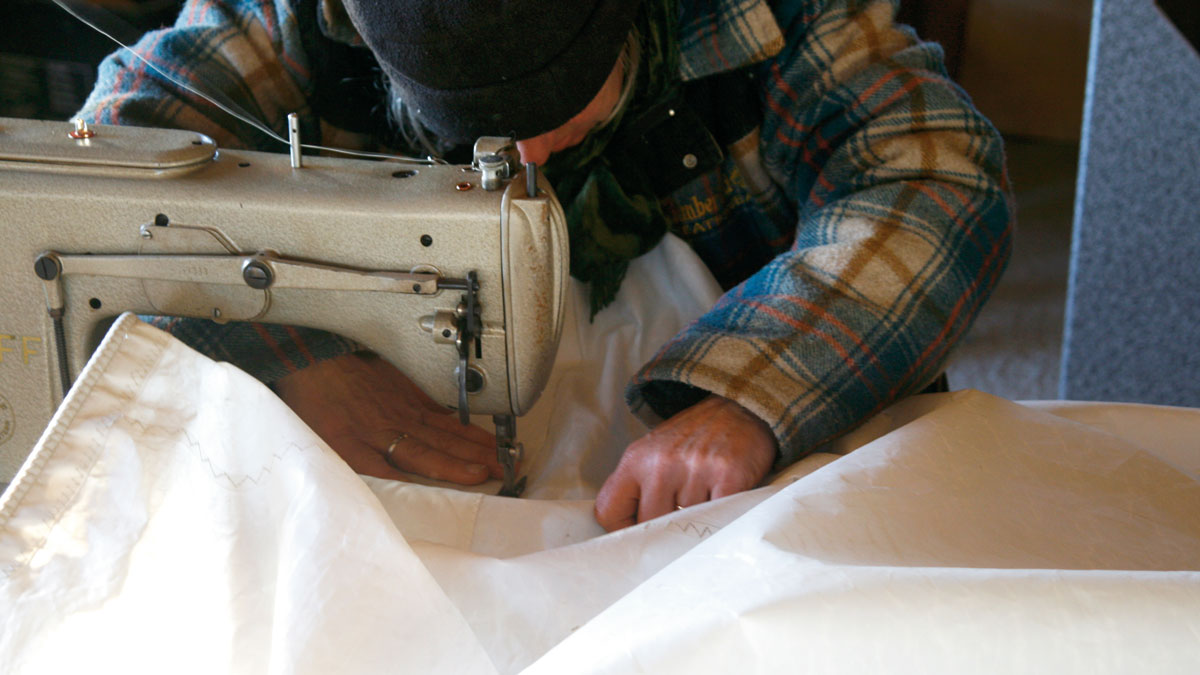 Минестроне — постављање кратних летака и клизача летака на једро главног једра Ечелса четврт‑тонца">

Reef dimensions and placement at a glance
On a Quarter‑Tonner fitted with an Etchells-type fractional rig, reefing positions were set to reduce the mainsail luff by 2.0m и 3.8m. Corresponding leech cringles were positioned at 2.35m и 4.35m from the foot to lift the boom by approximately 30cm и 15cm по реду.
| Карактеристика | Measurement from foot | Функција |
|---|---|---|
| First reef (luff) | 2.0m | Primary heavy weather reduction |
| Second reef (luff) | 3.8m | Further sail area reduction for strong winds |
| First reef (leech) | 2.35m | Raises boom ~30cm to restore trim |
| Second reef (leech) | 4.35m | Raises boom ~15cm for balance |
Materials and reinforcement strategy
Sails take concentrated loads at reef points, so reinforcement used Dacron cloth sized to match the sail’s specification. A rule of thumb of approximately 8% of each side length guided the largest patch dimensions, yielding roughly 85cm × 35cm patches for the most highly loaded areas. The leech patches received an extra layer because the leech sees the highest forces.
To spread load while keeping weight down, each additional layer was reduced in size (about 8cm on top/inner edges, 2.5cm on the base). A trimmed triangular/quadrilateral template was chosen to balance strength, construction speed and weight.
Preparing and cutting cloth
Sailcloth was cut and sealed using an electrically heated hot knife when available, otherwise a repeatedly heated blade. Individual patch elements were assembled with double-sided tape to hold them precisely in place before sewing; a generous length of tape is essential.
Step-by-step: sewing the reinforcement
- Unpick the stitching on the leech and luff tabling to slide patches beneath the tabling for a neat finish.
- Use card templates to confirm shape and appearance before cutting sailcloth.
- Pin the sail and patch to a board and align precisely; remove backing from tape only after alignment is certain.
- Practice stitching on scrap to set correct thread tension; a heavy‑grade needle is recommended.
- Sew smaller elements first, then stitch the largest layer in place and stitch through to anchor all layers together.
- Re-sew the luff and leech tapes to finish and to hide start/stop points of stitching.
Fitting cringles and ties
Cringles were chosen in two sizes: 20mm for the leech and 14 мм for clew/less-loaded points. Large cringles require a hydraulic press; smaller ones can be set with a punch and hammer. Non-load-bearing sail ties were fitted about 15cm below the cringle line with minimal 5cm² self-adhesive Dacron patches.
How the cringle line was determined
The exact line for cringles was checked by bending a batten between luff and leech cringles — reef points should ideally be spaced no more than 60cm apart along that line to avoid concentrated creasing when the sail is gathered.
Deck layout for cockpit reefing
For short‑handed operation the reefing lines were led aft to the cockpit. The depth of these reefs made single-line in-boom reefing impractical, so separate luff и leech pennants were rigged for each reef. Clutches were added aligned directly with the load, between the mast base and the coachroof winches, to minimise friction and keep handling straightforward.
Adding luff slides and piston hanks
Small eyelets were fitted just behind the luff using a die and punch, with spacing at roughly 60cm. Mainsail slides were secured with plastic shackles and matched to the mast’s groove to ensure a smooth run. For headsails, bronze piston hanks were closed over the eyes with a mallet; note they are often single‑use, so sewn-through hanks can be preferable where available.
Luff slides and fittings: how to pick the best
Choose slides that are an easy, non-binding fit for the mast groove. For older sails consider sewn hanks to allow future reuse; for modern rigs, ensure slide geometry matches the luff profile and batten layout.
Practical notes and tools
- Use a heavy-duty sewing machine when possible; domestic machines can work with practice.
- Keep a sturdy wooden anvil when punching eyelets and use proper dies for neat results.
- Allow time to tidy excess sail after reefing; very deep reefs can temporarily obstruct vision until the sail is bundled.
The measurements, reinforcement approach and deck layout described here make a small, performance‑oriented yacht far easier to handle short‑handed and reduce weather helm when conditions stiffen. Those planning charter sailing or private yacht upgrades should factor rigging changes into trip logistics and safety briefings.
Reefing and luff‑fitting details are useful to sailors and also relevant to those booking sailing travel experiences: precise upgrades improve comfort and safety on day sails, yacht parties and longer cruise packages. On GetExperience, you book your experience from verified providers at reasonable prices, with secure full payments and voucher confirmation issued afterward and the option to submit requests for tours or excursions tailored to your needs. This transparency and convenience help avoid surprises and make it easy to match sailing options to skill level and budget — Rezervišite svoje putovanjeGetExperience.com
Summary: fitting reefing points, reinforcing with layered Dacron, locating cringles to lift the boom, and adding correct luff slides or piston hanks will transform an unreefed Etchells mainsail into a manageable, short‑handed sail plan. Proper patch sizing, neat sewing, correct eyelet placement and a cockpit‑led deck layout deliver safer handling and better trim. Whether you’re preparing for adventure activities, yacht parties, cruise packages or eco‑friendly wildlife safaris, these sail improvements support a range of Travel experiences from luxury adventure travel experiences to interactive online cultural workshops and even specialist offerings like museum tours with live guides or Exclusive yacht charters for events. Personal reviews guide choices, but actual time on the water—whether for Safari tours or Adventure rafting trips for beginners—remains the truest test of suitability.