


 Norsk nynorsk
  English (UK)
  Русский
  বাংলা
বাংলা  العربية
  日本語
日本語  한국어
한국어  Magyar
  Türkçe
  עִבְרִית
  Español
  Čeština
  Svenska
  Português
  Ελληνικά
  Suomi
Suomi  Nederlands
  Română
  Italiano
  Français
  Polski
  Українська
  Deutsch
  简体中文
简体中文  Slovenčina
  Српски језик
  اردو
اردو  Azərbaycan dili
  O‘zbekcha
  አማርኛ
አማርኛ 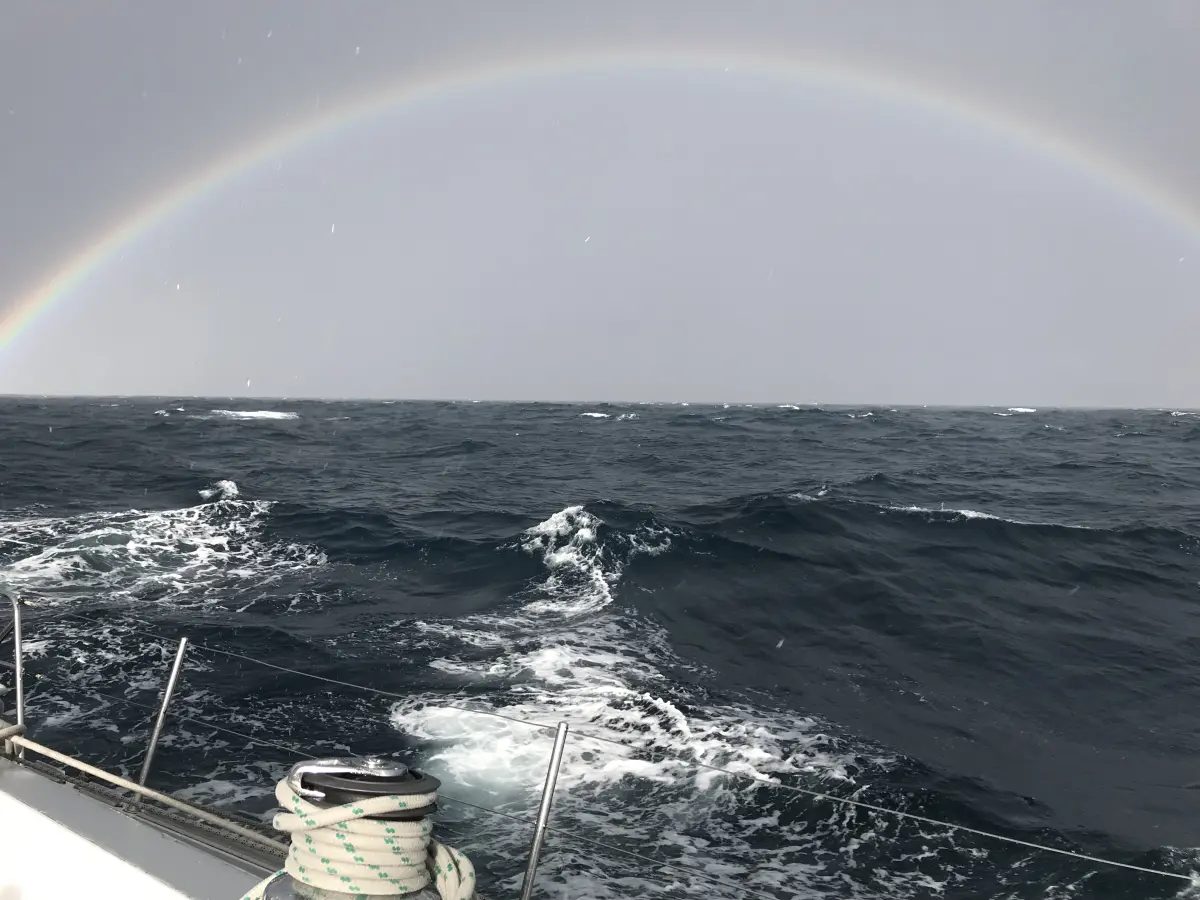 Njẹ́ àgbasọ̀ Bergen sí Portsmouth: Kọ́ Àwọn ẹ̀kọ́ Ìjìnlẹ̀ Àti Akọni Ọkọ̀ Ojú-omi">

The Bergen–Portsmouth delivery covers approximately 800 nautical miles and is usually sailed in about six days aboard a Challenger 72, employing continuous watch rotations, night passages and transit through high-traffic lanes such as the Dover Strait.
Sailing the North Sea: practical seamanship at pace
The route exits the fjords quickly and heads into the open North Sea, where crews confront persistent swell, shifting wind fields and rapidly changing weather patterns. Effective passage-making here requires disciplined watchkeeping, fatigue management and deliberate sail-plan decisions that balance speed with safety.
On a delivery like this, watch systems become routine: crew swap through roles, logstanding changes and execute sail reductions under load. These repetitive actions compress learning—skills that normally take months of coastal sailing grow in days.
What you’ll practise at a glance
- Night navigation with radar and AIS as primary tools;
- Sail handling for large-boat loads and reefing under swell;
- Weather strategy and routing to manage wind shifts and pressure systems;
- Commercial traffic management through traffic separation schemes.
Navigating offshore windfarms and industrial areas
Large windfarm arrays and oil & gas platforms are a common feature of the crossing. These installations demand accurate radar plotting, AIS cross-checks and deliberate route planning to maintain safe passing distances while still keeping efficient progress.
Training in these conditions offers professional-level navigational awareness: plotting moving targets, interpreting radar echoes in cluttered sea returns and integrating this information into seamanship decisions.
Passing through one of the busiest sea lanes: the Dover Strait
The final approach funnels traffic into the Dover Strait, where quick decision-making with AIS, VHF, radar and visual lookout becomes essential. Crossing angles and timing must align with traffic separation schemes and heavily used commercial corridors.
For many sailors, this is the moment when collision regulations and theoretical exercises become instinctive practice—transforming knowledge into confident action under pressure.
Key navigational checks when approaching Dover
- Continuous AIS monitoring and target CPA calculations
- Regular radar sweeps and echo interpretation
- Maintain up-to-date passage plan and contingency fuel margins
- Clear VHF protocols for contact with traffic and pilot stations
Why a delivery passage accelerates learning
The intensity of continuous offshore conditions compresses experience: watchkeeping, night hours and repeated sail handling mean that responsibilities are shared and practiced systematically. Yachtmaster candidates gather qualifying miles and authentic night hours rapidly, while less experienced crew get guided exposure to real offshore problems.
Typical itinerary and onboard responsibilities
| Day | Primary activity | Learning focus |
|---|---|---|
| 1 | Depart Bergen; exit fjord | Watch rotations; heavy-weather sail handling |
| 2–4 | Open North Sea passage | Navigation, radar/AIS, fatigue management |
| 5 | Approach Dover Strait | Traffic separation, CPA planning |
| 6 | Coastal approach to Portsmouth | Berthing, coastal pilotage |
Delivery sailing versus fjord cruising
Bergen-Portsmouth roru ọkan lori oye ni gbangba okun ati ile maili kuku ju sightseeing. Ni idakeji, Portsmouth-Bergen irin-ajo nigbamii ni akoko apapọ ẹsẹ gbangba okun pẹlu awọn ọjọ gigun ti n ṣawari fjords Norway - o dara fun awọn ti o fẹ ẹwa pẹlu iṣe oko oju omi.
Mtaa ɛtaa bisa ho nsɛm
Meele nɛɛma? Ọ̀ọ̀kan bíi 800 nautical miles, ó lè yàtọ̀ sí èyí torí afẹ́fẹ́ àti bí ọ̀nà ṣe rí.
Ọ dị mma maka ndị mbido? Ɛyɛ a obi anya suhyɛnka ho nimdeɛ bi a atwam no yɛ nea ɛfata; suhyɛnkafo ne boafo a wɔn ho akokwaw no de akwankyerɛ a wɔahyehyɛ ma wɔ ne nyinaa mu.
ህዳር ክሳድ ይግበርዶ? Eo—ọ̀nà ìṣọ́ tí ó tẹ̀lé ara wọn yíò pèsè àwọn wákàtí òru tí í ṣe òtító.
Mbaazi zetu zihungireene? Okun navigeerin, AIS àti lílo réídà, àmúṣọ́ ọkọ̀ ojú omi nígbà tí ojú ọjọ́ bá le, ìṣàkóso àárẹ̀ àti iṣẹ́ ṣíṣọ́ ààbò.
Ọ̀kan lára àwọn àǹfààní pàtàkì ti ìrìnàjò yìí ni bí a ṣe ń kọ́ ẹ̀kọ́ ní ìrọ̀rùn, mímọ̀ nípa àyíká ilé iṣẹ́ tí ó wà lójú agbami àti bí a ṣe lè ṣàkóso àwọn ọ̀nà ọkọ̀ ojú omi tí ó díjú. Àtúnyẹ̀wò tí a kọ kìí ṣe àrọ́pò fún àkókò tí a lò lórí pèpé ọkọ̀; ìrírí tí ẹnìkan ní fúnra rẹ̀ ni èsì ìdánwò ti òye. Nígbà tí o bá yan àwọn olùpèsè tí a fọwọ́sí nípasẹ̀ GetExperience, o ma ń jànfàní láti inú ìsanwó orí ayélujára tí ó wà láàbò pẹ̀lú ẹ̀rí ìṣírò àti àṣàyàn láti béèrè àwọn ìrìn àjò tí a ṣe àgbékalẹ̀ rẹ̀ fún ọ àti àwọn ìrìn tí ó bá ìfojúsùn àti àkókò tí ó wù ọ́ mu. Ṣe ìwé nísinsìnyí. GetExperience.com
Kort sagt: Bergen–Portsmouth-leveransen er en kompakt og målrettet offshorepassasje som raskt bygger praktiske sjømannskunnskaper. Den kombinerer natt- og dagvakt, radar/AIS-navigasjon gjennom vindmøllepark- og plattformområder, og en krevende tilnærming gjennom Doverstredet. Enten du logger mil for Yachtmaster-progresjon eller søker en bratt, men givende læringskurve, forvandler denne passasjen teori til sikker praksis og legger grunnlaget for fremtidige reiseopplevelser, eventyraktiviteter, yachtfester eller til og med luksuriøse eventyrreiser og miljøvennlige villmarkssafarier hvis du velger å utvide horisonten din etter å ha mestret offshorepassasjer.