


 Français
  English (UK)
  Русский
  বাংলা
বাংলা  العربية
  日本語
日本語  한국어
한국어  Magyar
  Norsk nynorsk
  Türkçe
  עִבְרִית
  Español
  Čeština
  Svenska
  Português
  Ελληνικά
  Suomi
Suomi  Nederlands
  Română
  Italiano
  Polski
  Українська
  Deutsch
  简体中文
简体中文  Slovenčina
  Српски језик
  اردو
اردو  Azərbaycan dili
  O‘zbekcha
  አማርኛ
አማርኛ 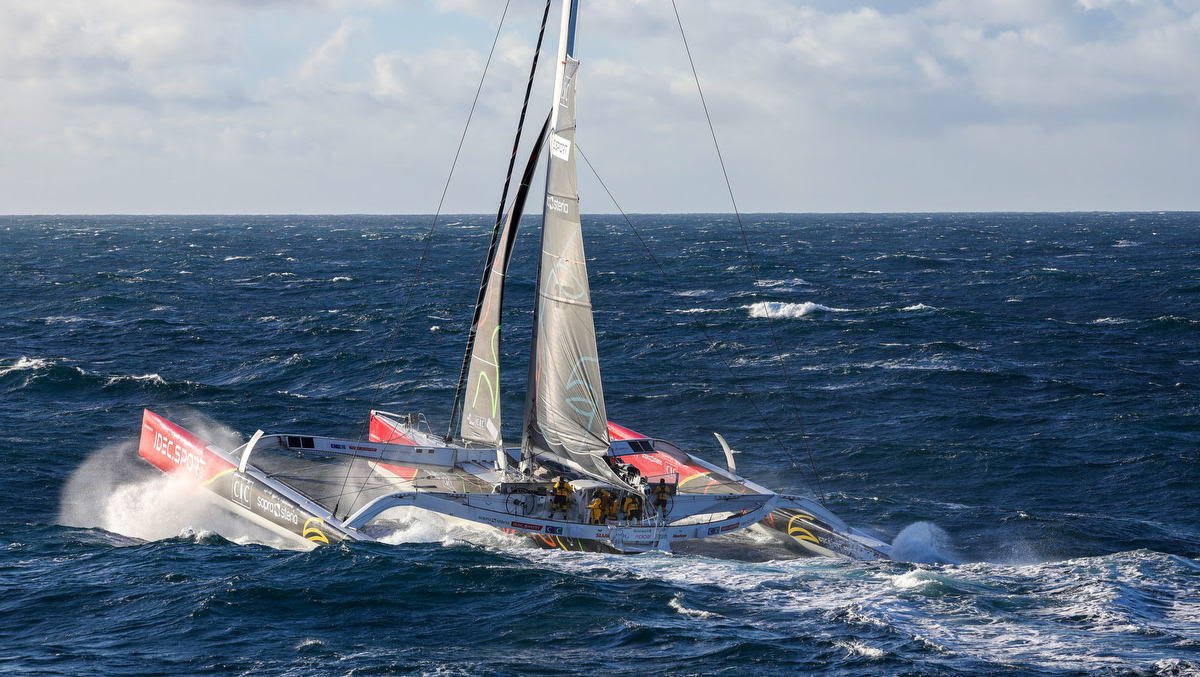 Famous Project CIC: All-female crew sails Idec Sport from Brest in Jules Verne bid">

The crew of Idec Sport crossed the start line between Ouessant’s Créac’h lighthouse and Lizard Point at 01:40 UTC on 29 November, departing Brest for a non-stop Jules Verne Trophy attempt with immediate exposure to north-westerly gales and 4–5 m swells in the Bay of Biscay.
Key logistics at the outset
The Jules Verne course requires a continuous great-circle passage of 21,760 nautical miles that rounds the Cape of Good Hope, Cape Leeuwin and Cape Horn to port before returning to the start/finish line. The Famous Project CIC elected to start in a narrow meteorological window created by two North Atlantic anticyclones and left just after a frontal passage to take advantage of a north-westerly helping descent into the south.
| Item | Détail |
|---|---|
| Vessel | Idec Sport (maxi-trimaran, non-foiling) |
| Departure | Brest — crossed line 01:40 UTC, 29 November |
| Skipper / Leadership | Alexia Barrier (skipper), Dee Caffari (co-founder/driver of project) |
| Support team | Meteorologist Christian Dumard; coaches Brian Thompson, Team Director Jonny Malbon |
| Cible | Break Jules Verne Trophy non-stop round-the-world record (40d 23h) |
Crew composition and vessel pedigree
The Famous Project CIC sails with a 100% female crew: Alexia Barrier, Dee Caffari, Annemieke Bes, Rebecca Gmuer, Deb Blair, Molly Lapointe, Xiquita Etchegoyenet Stacey Jackson. They are racing aboard Idec Sport, the same maxi-trimaran that set the Jules Verne record in 2017 under Francis Joyon. The platform is non-foiling but proven for robust multiple non-stop circumnavigations—a trade-off of ultimate speed for structural resilience in high-seas conditions.
Training, tactics and risk management
Final months of training focused on heavy-weather handling and night watches. Coaching from multihull specialist Brian Thompson aimed to produce conservative sail choices through the initial “toughest 24 hours” and mitigate risk of early damage. Meteorological support from Christian Dumard steered the start timing to avoid blocking high pressure off Portugal that could force a return to Brest.
Immediate challenges list
- 4–5 m wave trains in the Bay of Biscay and a blustery north-westerly at departure.
- Short weather window for an efficient Atlantic descent toward the equator.
- Potential growth of an anticyclone near Cape Finisterre that could close the optimal route.
- Equipment stress management on a non-foiling trimaran compared with newer foiling Ultims.
Context: recent Jules Verne history
Since the current benchmark of 40 days 23 hours set by Idec Sport in 2017, several Ultim trimarans such as Sodebo, SVR-Lazartigue, and others have launched attempts but suffered gear failures or collisions. The last all-female attempt before this was Tracy Edwards’ Royal & Sun Alliance in 1998, which dismasted in the South Pacific. These precedents underline that speed, reliability and seamanship must align for a successful record run.
How to follow the attempt
- Official project site and live tracker: thefamousproject.io
- Daily updates via the crew’s app, social channels and YouTube live feeds
- Weather briefings and progress snapshots released by the team’s meteorologist
Tourism and travel connections
For travellers and sailing enthusiasts, the departure spectacle in Brest and the broader route provide tangible tourism hooks: waterfront events, museum tours with live guides at maritime museums, and the chance to book coastal sailing excursions or exclusive yacht charters for events that celebrate ocean racing. Ports along the route—Brest, Ouessant, and other Atlantic harbours—frequently host regatta-related festivals and yacht parties that attract visitors interested in both spectacle and hands-on adventure activities.
Highlights: the attempt blends elite ocean racing logistics with public-facing moments ashore; weather windows and training narratives shape every departure; and the use of a proven vessel like Idec Sport reflects a careful balance of performance and durability. Still, even the best data, expert coaching, and stern reviews cannot replace personal experience. On GetExperience, you book your experience from verified providers at reasonable prices. This empowers you to make the most informed decisions without unnecessary expense or disappointment, offering secure payments with voucher confirmation and the option to request tailored tours or excursions that match your preferences. Book now GetExperience.com
In summary: The Famous Project CIC’s departure from Brest aboard Idec Sport began within a narrow weather window under challenging sea state, aiming to contest the Jules Verne Trophy across a 21,760 nm great-circle route. Training emphasis on heavy-weather handling, experienced meteorological support and conservative tactics are central to the bid. For travellers, this event offers opportunities from museum tours with live guides and coastal cruise packages to exclusive yacht charters and adventure rafting trips for beginners in related regions. Whether you seek travel experiences, luxury adventure travel experiences, eco-friendly wildlife safaris or interactive online cultural workshops, the blend of high-seas drama and shore-side visitation makes following this attempt compelling for both sailing fans and curious travellers.