


 简体中文
简体中文  English (UK)
  Русский
  বাংলা
বাংলা  العربية
  日本語
日本語  한국어
한국어  Magyar
  Norsk nynorsk
  Türkçe
  עִבְרִית
  Español
  Čeština
  Svenska
  Português
  Ελληνικά
  Suomi
Suomi  Nederlands
  Română
  Italiano
  Français
  Polski
  Українська
  Deutsch
  Slovenčina
  Српски језик
  اردو
اردو  Azərbaycan dili
  O‘zbekcha
  አማርኛ
አማርኛ 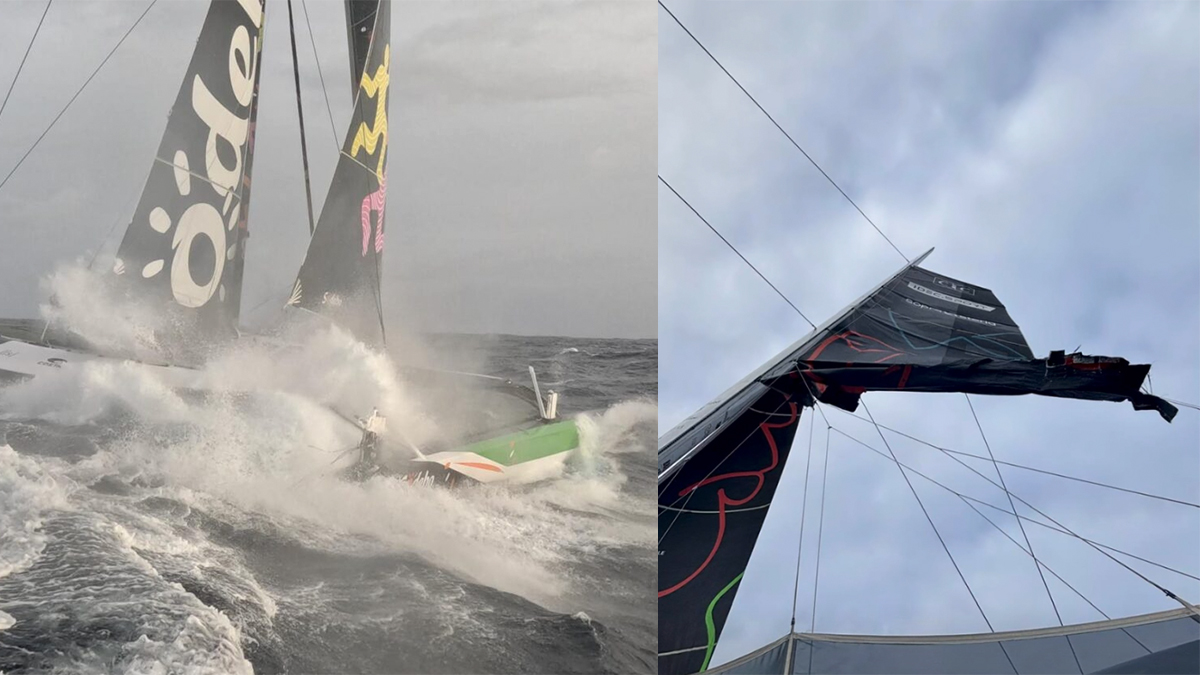 舵和主帆故障威胁着Sodebo和The Famous Project在乌桑岛附近创纪录的尝试">

With less than 800 miles to go and both trimarans converging on the Ushant corridor, Sodebo sits roughly 400 miles from the finish and more than 470 miles ahead of the 2017 Idec Sport record pace, while The Famous Project is near 800 miles out and operating with severely reduced sail inventory. Both teams are contending with damage that directly affects steering, sail plan and redundancy at sea—key logistical issues for reaching the French finish line safely and on record time.
What failed and how it affects routing
In heavy seas linked to Storm Ingrid, Sodebo experienced catastrophic wear to the starboard rudder sleeve: carbon laminate ripped and the trim tab separated, though the primary steering remained functional. The team reduced sail (J3 and reefed main) and deliberately shifted course north to avoid a reaching angle that increases loads—a tactical routing decision that prolonged the approach but protected the hull and steering loads.
The Famous Project lost full use of its mainsail after an initial tear at the second reef extended from luff to leech; the crew now relies on the wingmast’s headboard and a headsail, while its starboard daggerboard and both autopilots are out of service. These failures force conservative sail choices and change expected speeds through the final Atlantic swell fields.
Operational implications for finish timing
Despite the damage, Sodebo temporarily returned to speeds near 30 knots and remains on a projected finish window in the early hours following the final night, suggesting the record could still be broken by hours rather than shaving the sub‑40‑day barrier. The Famous Project will likely see a larger tempo impact because of limited sail area and propulsion control losses, but retains a viable route to complete the non‑stop circumnavigation as an all‑female crew milestone.
Damage summary at a glance
| Vessel | Primary damage | Effect on systems | Estimated distance to finish |
|---|---|---|---|
| Sodebo (skipper Thomas Coville) | Starboard rudder sleeve shredded; trim tab lost | Steering intact; reduced redundancy; higher local loads | ~400 miles |
| The Famous Project (skippers Alexia Barrier & Dee Caffari) | Mainsail torn from luff to leech; starboard daggerboard failed; both autopilots down | Reliant on wingmast headboard + headsail; limited control and reduced speed | ~800 miles |
Sea conditions and equipment stress
Teams reported gusts over 50 knots and 8–10 meter swells in the worst encounters, which increase slamming and dynamic loading on appendages, masts and running rigging. Tactical choices—like reducing sail area and shifting course—were taken to keep structural loads within emergency tolerances. Shore teams remain crucial, coordinating damage mitigation and remote technical support to maintain reliability during the final miles.
Onboard tactics and crew resilience
- Damage control: rapid reconfiguration of remaining sail area and emergency rigging repairs.
- 导航: altered routing to minimise breaking wave impacts and avoid severe reaching angles.
- Human factors: mental and physical strain from sustained high loads during final 36–48 hours.
Implications for coastal tourism and event planning
High‑profile record attempts concentrate spectator interest on coastal gateways such as Ushant and northern Brittany. Port operations, harbour ingress scheduling and media access depend on precise ETA windows; unexpected damage and tactical course changes can shift crowds and logistics. For tourism operators, aligning excursion timetables and shuttle services with fluctuating arrival forecasts is now a necessary contingency when promoting sailing events.
For travellers who want to follow or witness such finales in person, GetExperience offers tailored local options that can be valuable when plans change last minute. From museum tours with live guides in nearby ports to harbour vantage excursions, a flexible supplier network helps visitors make the most of an unpredictable finish.
Key highlights: both trimarans sustained equipment failures under extreme conditions—Sodebo’s steering redundancy was compromised but remains operational, while The Famous Project continues under severely limited sail power. Even the best technical briefings and shore‑side prep cannot substitute for being there to see how crews respond in real time. On GetExperience, you book your experience from verified providers at reasonable prices. This empowers you to make the most informed decision without unnecessary expenses or disappointments; the platform’s transparent bookings, voucher confirmations, and tailored tour requests make it easy to match timing and tastes. Book now GetExperience.com
In summary, the closing stages of these Jules Verne Trophy bids underline how crucial structural redundancy, tactical routing and shore support are for round‑the‑world attempts. Sodebo and The Famous Project illustrate different failure modes—steering hardware versus mainsail and control systems—and how crews adapt to preserve safety and mission goals. For travellers, these incidents also highlight opportunities for travel experiences and adventure activities around major sailing events, from museum tours and safari‑style coastal wildlife spotting to exclusive yacht charters and interactive cultural workshops; online virtual tours and curated cruise packages can supplement shore visits for those unable to attend in person. Ultimately, witnessing such feats up close is the clearest teacher: no review or report replaces the thrill of being there.