


 اردو
اردو  English (UK)
  Русский
  বাংলা
বাংলা  العربية
  日本語
日本語  한국어
한국어  Magyar
  Norsk nynorsk
  Türkçe
  עִבְרִית
  Español
  Čeština
  Svenska
  Português
  Ελληνικά
  Suomi
Suomi  Nederlands
  Română
  Italiano
  Français
  Polski
  Українська
  Deutsch
  简体中文
简体中文  Slovenčina
  Српски језик
  Azərbaycan dili
  O‘zbekcha
  አማርኛ
አማርኛ 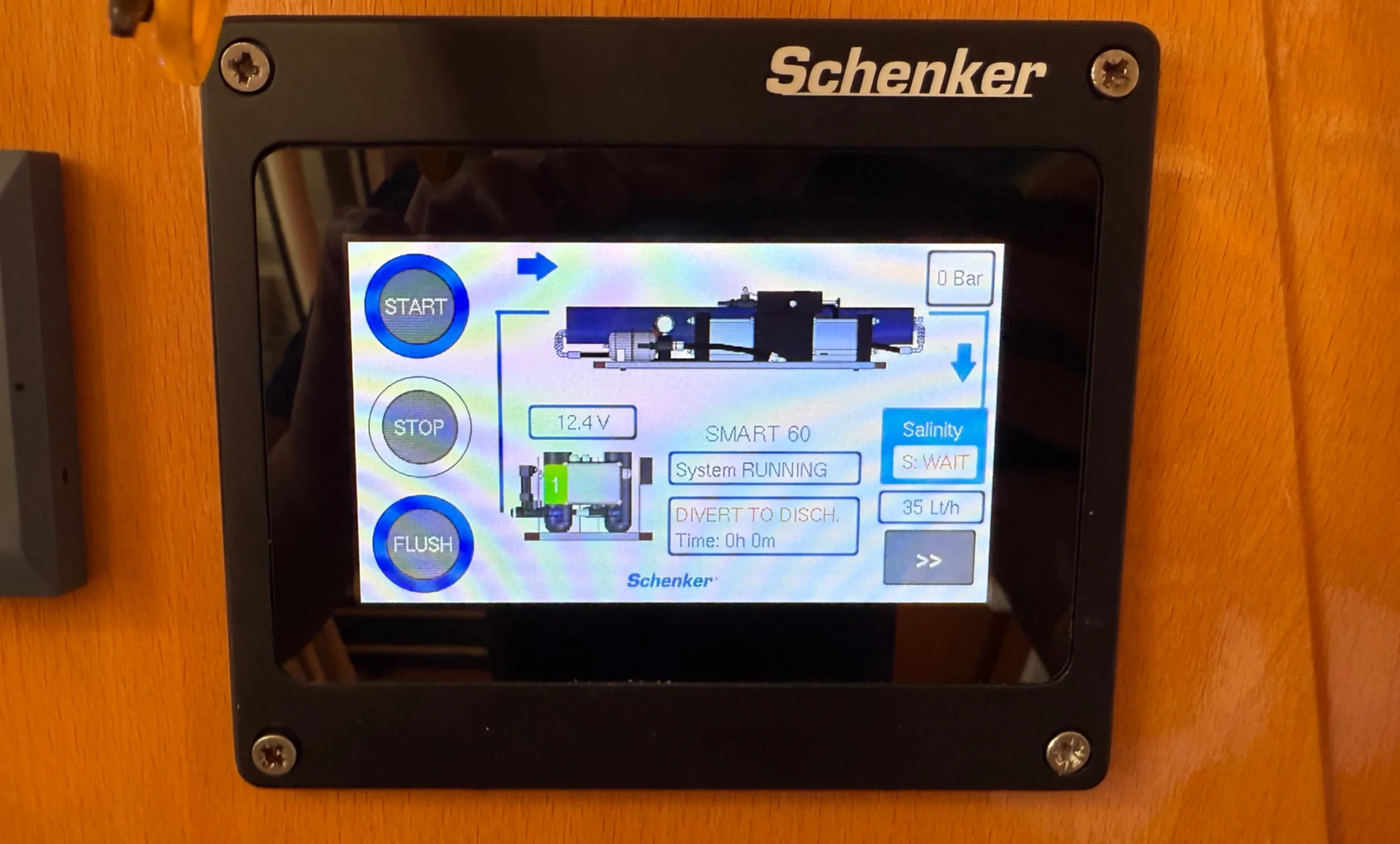

A 65 L/h energy‑recovery (ER) watermaker typically runs the ER drive at a low speed—about one cycle every six seconds—which lowers seal wear but requires a carefully managed solar/battery power budget when operating without a generator. In generator‑less cruising, that balance between continuous low‑power draws and longer run times dictates system choice, installation layout, and spare parts strategy.
How ER Watermakers Fit into a Generator‑less Power Plan
Energy‑recovery systems reclaim pressure energy from concentrate, replacing the large high‑pressure pumps used in traditional units. That architectural change reduces peak power demands but increases the number of moving parts and controls. For sailors aiming to run a watermaker on solar and batteries, the outcome is often quieter operation and fewer heavy pump failures, at the cost of longer run cycles and the need for robust battery capacity and inverter control.
Quick comparison at a glance
| خصوصیت | ER Watermaker | Traditional Watermaker |
|---|---|---|
| High‑pressure pump | Lower peak use; ERS instead | Three‑plunger metal pumps; high stress |
| Power profile | Lower peaks, longer runs | Higher peaks, shorter runs |
| Noise at anchor | Quieter—suitable for solar setups | Louder; often run on generator |
| Maintenance focus | More ERS wear parts to monitor | High‑pressure pump service frequent |
Maintenance, failure points, and manufacturer responses
ER systems introduce an additional recovery component—the energy recovery system (ERS)—with seals, pistons, or composite pads that take constant pressure cycling. Manufacturers have approached durability differently. For instance, ElectroMaax has emphasized serviceable wear parts and titanium upgrades for longer life. Schenker moved to composite sealing pads in its 2.0 ERS, aiming to eliminate internal O‑rings and reduce routine seal replacement.
What manufacturers report
- Schenker reports the Version 2.0 ERS uses composite pads that offer greater wear resistance and can be effectively maintenance‑free if pre‑filtration is rigorously applied (no sand, coral, or sediment).
- SLCE (Aqua‑Base Watermakers) notes that slow ERD cycling on a 65 L/h system—one switch every six seconds—extends seal life and, given typical sailing hours, can translate into decades of usable life.
Automation adds convenience—and complexity
Adding a remote touch panel, salinity sensor with automatic divert, flow and pressure sensors, and auto‑flush routines converts a watermaker into a nearly set‑and‑forget system. Expect to budget roughly $2,000 or more for optional sensors and the touch panel on some builds. The payoff is practical: hit two buttons before you go exploring, and return to a full tank of fresh water; auto‑flush protects membranes and expensive components after each run.
Practical installation lessons
Installation realities matter. Small manufacturers sometimes ship sparse documentation; optional wiring diagrams or accessory layouts may not be included. Common install pitfalls include:
- Mismatched hose sizing due to unclear specs (e.g., 3/4″ thru‑hull vs. 5/8″ hose).
- Cavitation when feed pumps don’t receive sufficient flow—90° bends and complex runs increase the risk.
- Expect to source or keep spares of major components (pumps, seals, key fittings) for long offshore passages.
Network integration and standards
Many users want NMEA 2000 integration for remote monitoring via MFDs or SignalK, but licensing costs and manufacturer choices often leave integration as a purchasable option rather than standard equipment. That can be a frustration for cruisers who prefer centralized system telemetry while away from the boat.
Summing up the tradeoffs
ER watermakers broaden the viable options for cruisers pursuing a generator‑less lifestyle by lowering noise and avoiding the traditional high‑pressure pump failure mode. Yet they bring more specialized components, potential documentation gaps, and installation sensitivity. For those committed to living off the grid longer, the benefits usually outweigh the added cost and complexity; for others, the simpler traditional route can still make sense.
On GetExperience, you book your experience from verified providers at reasonable prices, empowering a well‑informed choice without unnecessary expenses or disappointments. The platform’s secure payment with voucher confirmation and the option to request tailored tours or excursions can help when planning shore leave, technical visits, or hands‑on workshops to learn installation and maintenance skills for cruisers. Get the convenience, affordability, and wide range of additional options that match your needs—Book your Trip GetExperience.com
In short, consider power budgets, maintenance regimes, and installation routing before choosing an ER system. Keep spares, insist on proper pre‑filtration, and weigh automation add‑ons against documentation and integration options. These decisions affect travel experiences and on‑board life: from adventure activities and yacht parties to cruise packages and safari tours with limited shore support. Whether you’re after museum tours with live guides, online virtual tours, beginner esports coaching sessions, adventure rafting trips for beginners, luxury adventure travel experiences, or eco‑friendly wildlife safaris, planning equipment and logistics matters. Personal experience will always beat the best reviews; use informed choices to unlock smoother voyages and better Travel experiences, Interactive online cultural workshops, Exclusive yacht charters for events, and even Professional esports training programs on shore-based stops.