


 Українська
  English (UK)
  Русский
  বাংলা
বাংলা  العربية
  日本語
日本語  한국어
한국어  Magyar
  Norsk nynorsk
  Türkçe
  עִבְרִית
  Español
  Čeština
  Svenska
  Português
  Ελληνικά
  Suomi
Suomi  Nederlands
  Română
  Italiano
  Français
  Polski
  Deutsch
  简体中文
简体中文  Slovenčina
  Српски језик
  اردو
اردو  Azərbaycan dili
  O‘zbekcha
  አማርኛ
አማርኛ 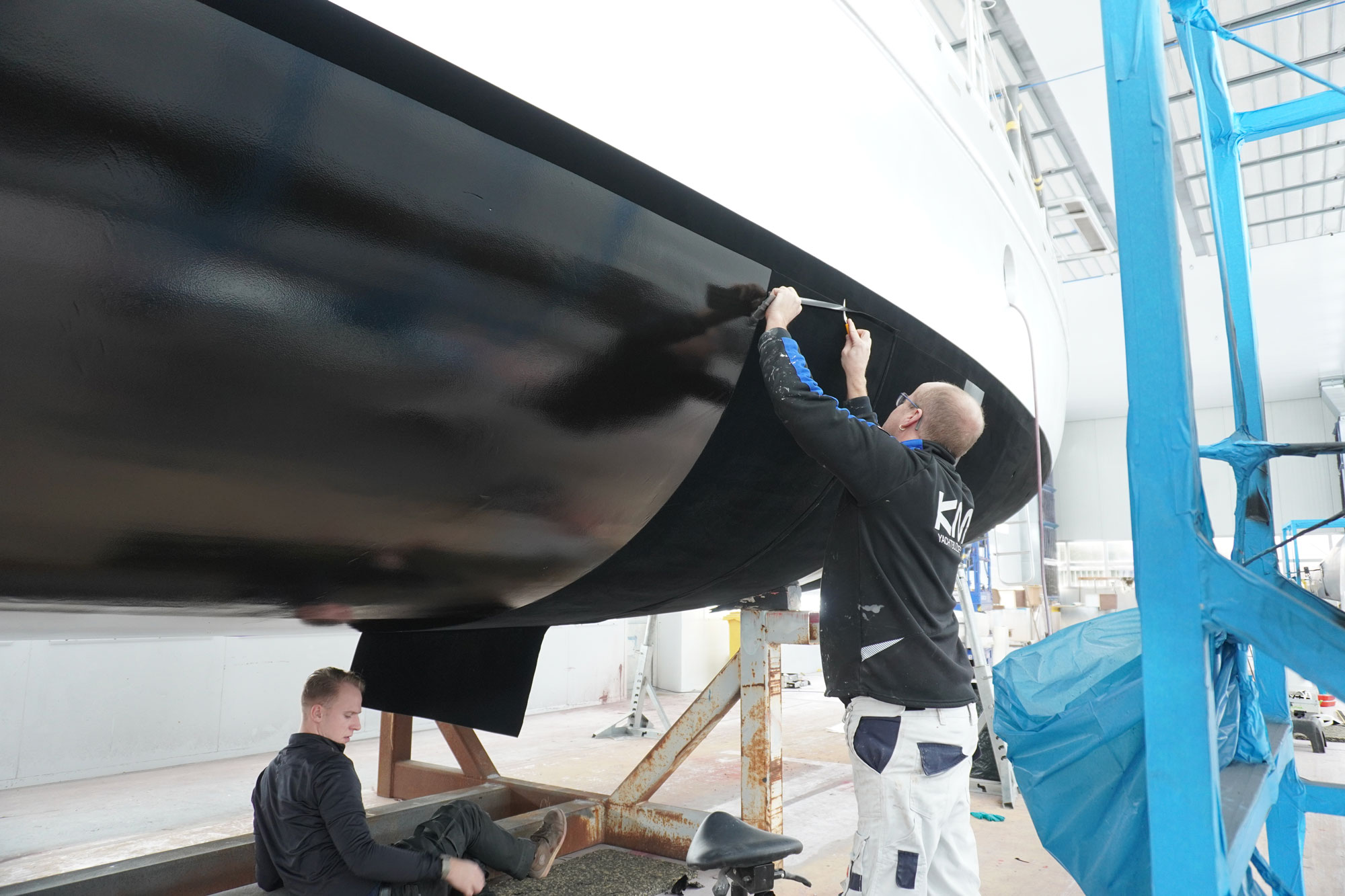 Finsulate membrane: a new non-toxic hull wrap reshaping yacht maintenance">

Yard operations that switch from annual scraping and repainting to adhesive-backed Finsulate can reduce hazardous-waste handling, shorten vessel downtime, and simplify logistics for seasonal relaunches; the membrane is already fitted on about 900 vessels worldwide, with early installs exceeding a 10-year service life.
How the Finsulate system works at a glance
Finsulate is a slightly elastic polyester membrane with a flocked nylon surface that discourages attachment of marine organisms by presenting a short-nap, flexible textured barrier rather than relying on biocidal chemistry. Installed over a standard 2-part epoxy primer, the membrane ships in rolls and is cut and applied by trained technicians much like wallpaper. The system removes the need for annual toxic repaint cycles and significantly reduces paint-residue collection and pressure-wash containment requirements at service yards.
Installation workflow and yard implications
Preparation and fitment follow established yard routines but with simpler environmental controls. Typical steps include:
- Surface preparation with epoxy primer.
- Cutting panels to shape and applying membrane with adhesive backing.
- Trimming and heat-assisted bonding for complex contours and repairs.
- Routine topside protection during hauling to prevent chafe.
Because application doesn't require heavy protective suits or containment for toxic waste, yards see faster turnaround and lower compliance burdens. For owners, spring launches often require zero hull repainting; a quick rinse and brush-off is usually sufficient.
Practical repair and replacement
Damaged sections are repaired similarly to carpeting: remove the affected square by heating and peeling, address the underlying substrate, then fit and trim an oversized replacement patch. Full replacement uses moderate heat to strip sheets in large pieces, revealing generally well-preserved epoxy below thanks to the membrane’s protective properties.
| Coating type | Typical lifespan | Environmental impact | Maintenance demands |
|---|---|---|---|
| Copper or biocidal paints | 1–3 years | High — toxic runoff, hazardous waste | Annual lift-out, containment, repaint |
| Silicone foul-release | 3–7 years | Moderate — non-toxic but application issues | Difficult removal, risk of contamination during application |
| Finsulate membrane | 10+ years (early installs) | Low — non-toxic, reduced waste | Minimal annual work; occasional patching |
Performance considerations for different vessel types
For displacement hulls, the flocked nylon remains submerged and produces negligible speed or efficiency penalties. For planing craft, introducing air to the running surface increases friction; Hidier reports that fast planing boats using the shortest nap can lose up to ~25% of top speed. Long-nap membranes are tailored for stationary infrastructure — pilings, floats, aquaculture barges, and underwater pipelines — where the priority is preventing fouling without introducing toxic substances to sensitive operations.
Benefits and limitations
- Benefits: Reduced toxic waste, less haul-out labour, faster relaunch, protective substrate covering, and long service life.
- Limitations: Applicator training required, potential speed loss on planing hulls, and care needed to prevent chafe during handling.
Market uptake and regulatory fit
Adoption hurdles include industry training and acceptance among yards and owners. The superyacht sector is seen as an early-growth market due to the heavy regulatory scrutiny of antifouling agents during transits across diverse regions such as the Caribbean, Mediterranean, and northern Europe. The non-toxic profile aligns well with stricter environmental controls and with operators seeking reduced downtime and easier compliance.
Finsulate originated from Dutch diver and researcher Rik Breur’s observation about textured surfaces discouraging marine settlement, and its US presence is championed by Bernard Hidier, who emphasizes installers “get it right away” and welcome the elimination of hazardous annual painting rituals.
The key takeaway: Finsulate changes yard logistics by lowering environmental compliance burdens and cutting repetitive labour, whilst offering a durable protective layer that preserves underlying epoxy finishes and simplifies seasonal operations.
Even with clear advantages and positive technical reviews, nothing replaces firsthand experience. User reports and professional feedback are valuable, but the real confirmation comes from booking a service or trying a vessel fitted with the system yourself. On GetExperience, you book your experience from verified providers at reasonable prices. This empowers you to make the most informed decision without unnecessary expenses or disappointments; the platform also supports secure payments with voucher confirmation and allows tailor-made requests so providers can match offers to your needs. Book now GetExperience.com
In summary, the flocked polyester membrane approach represents a practical, eco-friendlier alternative to traditional antifouling: it reduces hazardous waste streams, simplifies yard workflows, suits displacement hulls and fixed marine infrastructure, and requires disciplined installer training. For travellers and operators interested in boating readiness for yacht parties, exclusive yacht charters for events, cruise packages, or adventure-style maritime offerings, the potential for less downtime and cleaner operating areas is meaningful. Whether you’re arranging Travel experiences, booking розкіш adventure travel experiences, or planning eco-friendly wildlife safaris and музей tours with live guides on coastal trips, knowing hull maintenance options like Finsulate can affect availability and cost. From online virtual tours to in-person adventure rafting trips for beginners and interactive online cultural workshops, reliable vessel performance supports a wide range of experiences – and nothing replaces testing services yourself to confirm the benefits.