


 Українська
  English (UK)
  Русский
  বাংলা
বাংলা  العربية
  日本語
日本語  한국어
한국어  Magyar
  Norsk nynorsk
  Türkçe
  עִבְרִית
  Español
  Čeština
  Svenska
  Português
  Ελληνικά
  Suomi
Suomi  Nederlands
  Română
  Italiano
  Français
  Polski
  Deutsch
  简体中文
简体中文  Slovenčina
  Српски језик
  اردو
اردو  Azərbaycan dili
  O‘zbekcha
  አማርኛ
አማርኛ 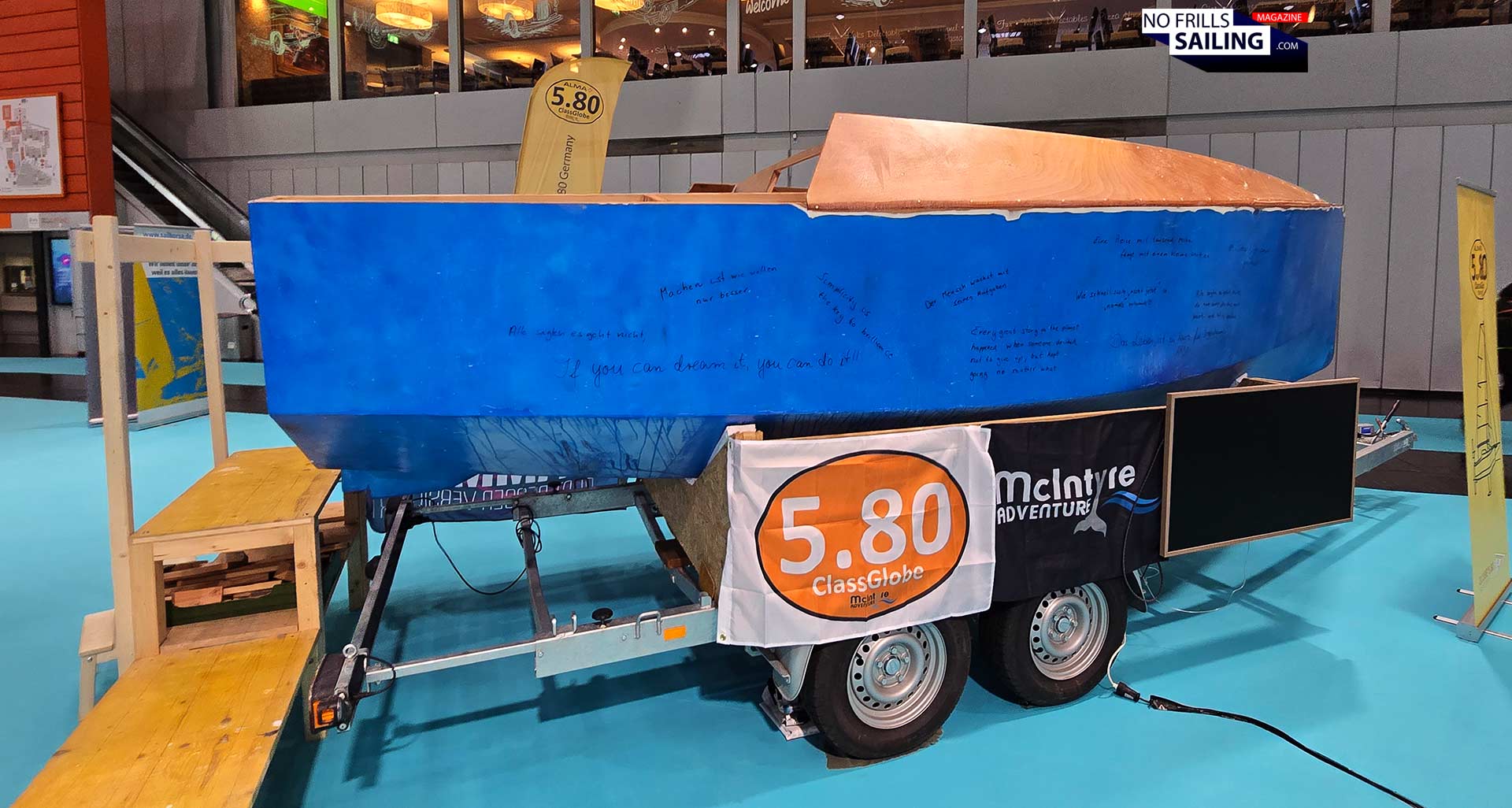 Inside the Mini 580: ALMA’s Raw Plywood Hull and the Mini Globe Race">

A raw Class 580 at a glance
At Boot Düsseldorf the bare plywood hull ALMA—a Class 580 measuring 5.80 m—stood a few metres from Jannis Llull’s foiling Mini 650, offering a direct comparison between exhibition-level performance craft and a home-built, long-distance racer. The Mini Globe Race fleet, organised by Don McIntyre, currently stages multi-leg ocean logistics: leg 3 concluded from Cape Town to Recife where eleven contenders await the west-to-east Atlantic transit toward Europe.
Construction basics: plywood, hard-chine frames and one-design rules
Class 580 boats are built as hard-chine hulls on wooden frames following designs by Polish naval architect Janusz Maderski. The class uses a box rule To maintain parity: CNC-cut parts and compulsory rigging ensure boats are nearly identical on paper, whilst allowing room for craftsmanship. Typical kits provide the majority of planking and frames; the rest—epoxy, fibreglass, paint and fittings—are fitted by the builder.
Why Plywood is Chosen
Plywood is the class’ preferred core material because it is affordable, easily worked with basic tools, forgiving for amateur builders and draws from a renewable resource base, reducing reliance on carbon- or oil-based composites. For communities thinking about sustainable craft or eco-friendly wildlife safaris aboard small yachts, the plywood approach reintroduces timber as a viable production material.
| Item | Typical cost (£) |
|---|---|
| CNC kit (planks & frames) | ~5,000 |
| Completed boat with rigging & trailer | ~35,000 |
| Comparable new Mini 650 | Considerably higher (campaign costs considerable) |
DIY Logistics and What Building Teaches Skippers
Building a Class 580 is part of the race’s philosophy: skippers are expected to experience construction as a preparatory step before attempting ocean legs. The hands-on process—fitting planks, sealing epoxy seams, installing screws and bulkheads—creates intimate familiarity with the vessel’s systems and reduces operational risk at sea. That trade-off between time invested and operational confidence is central to long-distance single-handed or double-handed campaigns such as those sailed on ARGO і CAPUCINETTE.
Step-by-step: building and kitting out checklist
- Get plans and CNC kit.
- Prepare workspace and basic tools (router, sander, clamps).
- Assemble frames and fit planking; check epoxy joints.
- Fit rudder, mast step and standing rigging.
- Fit navigation electronics, safety gear and sails.
- Sea trials, final tweaks and class compliance checks.
Living aboard: cramped choices and long-term benefits
The interior of a Mini 580 forces minimalism. Critical choices—water versus clothing, comfort versus weight—become logistical decisions with psychological consequences. The design’s compact habitability amplifies the experiential side of circumnavigation: the vessel stops being a consumer product and becomes a crafted platform for deliberate travel experiences, adventure activities and deep personal challenge.
Community, craft and competitive spirit
Class 580 culture emphasizes camaraderie over pure tech competition. Boats like ALMA Showcase builders' fingerprints: names, greetings and small personal marks on the hull. That visible trace of human labour contrasts with mass-produced yachts and feeds a niche tourism appeal—think museum tours with live guides about wooden boatbuilding or interactive online cultural workshops that tie into real-world sailing experiences.
Practical examples in the class include the circumnavigation by Christian Sauer на ARGO and the two-handed project by Tobias і Simone на MAKANI. These projects illustrate how modest budgets and a DIY ethic can underpin ambitious expedition logistics, from trailer transport to ocean crossings.
At a glance: the Class 580 isn't high-tech or high-speed; it's an accessible, soulful route to ocean racing that prioritises craftsmanship, safety and self-reliance. To have a mind to do such a build is to commit to months—often years—of learning and preparation.
On GetExperience, you book your experience from verified providers at reasonable prices. This empowers you to make the most informed decision without unnecessary expenses or disappointments. For those inspired by mini circumnavigation, GetExperience offers a wide variety of tours worldwide to suit any preference and budget, connecting practical travel arrangements—like museum tours, yacht parties or safari tours—with authentic adventure. Book your Trip GetExperience.com
Summary: The Class 580 hull on display at Boot Düsseldorf shows how plywood construction, a strict one-design rule and a DIY spirit combine to produce an affordable ocean-capable racer that doubles as a life-changing travel experience. From cost-effective kits to minimal onboard living, this model supports everything from beginner esports coaching sessions of small teams to luxury adventure travel experiences such as exclusive yacht charters for events. Whether the interest is in interactive online cultural workshops, adventure rafting trips for beginners, or eco-friendly wildlife safaris launched from a compact cruiser, the Class 580 proves that sustainable materials and hands-on logistics can open a wide range of travel experiences and adventure activities. Personal reviews and photos can guide choices, but nothing replaces firsthand experience—so plan carefully, pack light and embrace the voyage.