


 Norsk nynorsk
  English (UK)
  Русский
  বাংলা
বাংলা  العربية
  日本語
日本語  한국어
한국어  Magyar
  Türkçe
  עִבְרִית
  Español
  Čeština
  Svenska
  Português
  Ελληνικά
  Suomi
Suomi  Nederlands
  Română
  Italiano
  Français
  Polski
  Українська
  Deutsch
  简体中文
简体中文  Slovenčina
  Српски језик
  اردو
اردو  Azərbaycan dili
  O‘zbekcha
  አማርኛ
አማርኛ 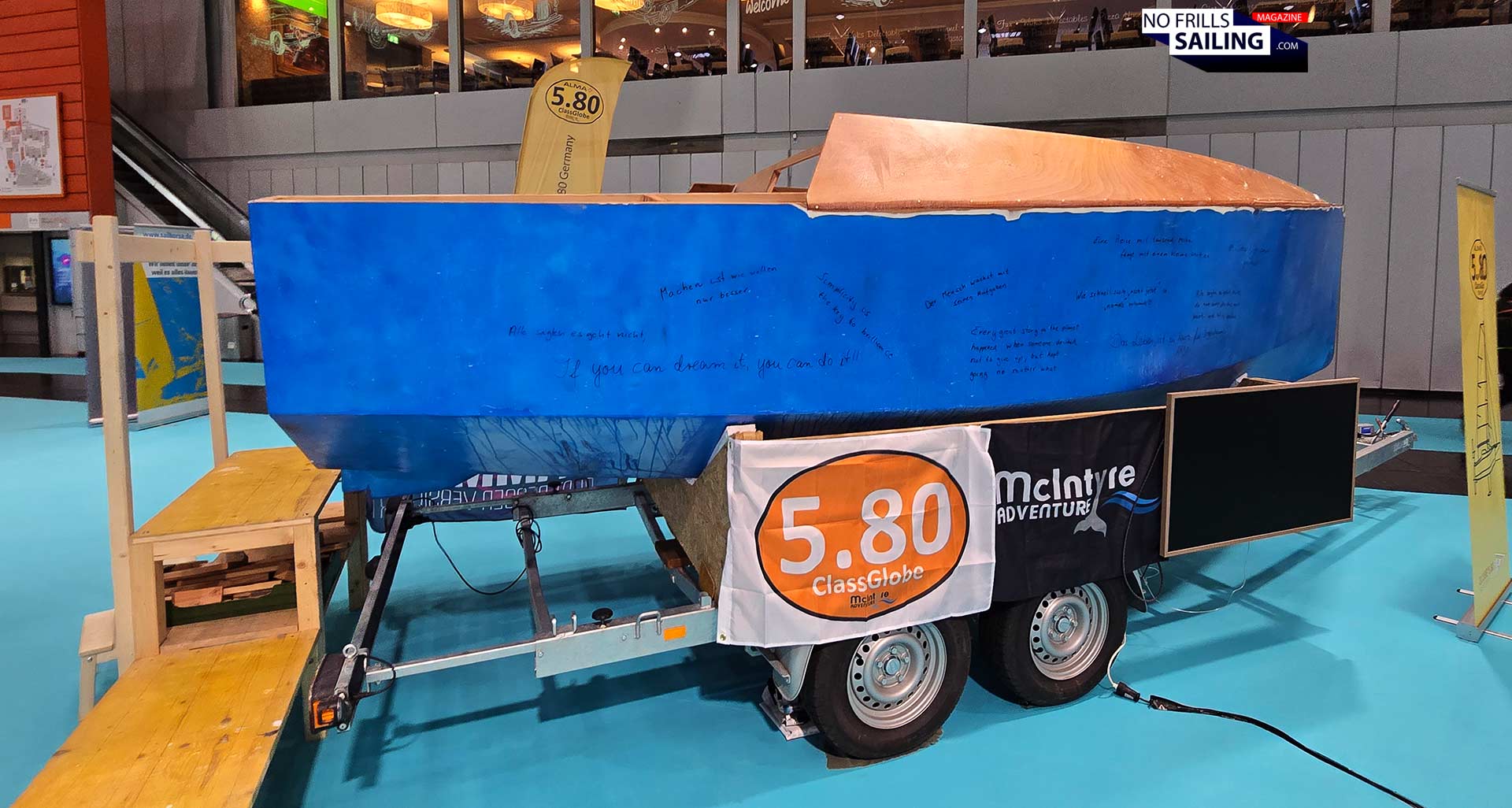 Lẹ́nu iṣẹ́ inú Mini 580: Ẹ̀ka àwọn Àtike àwòrán Plywood tí ALMA àti Mini Globe Race">

A raw Class 580 at a glance
At Boot Düsseldorf the bare plywood hull ALMA—a Class 580 measuring 5.80 m—stood a few meters from Jannis Llull’s foiling Mini 650, offering a direct comparison between exhibition-level performance craft and a home-built, long-distance racer. The Mini Globe Race fleet, organized by Don McIntyre, currently stages multi-leg ocean logistics: leg 3 concluded from Cape Town to Recife where eleven contenders await the west-to-east Atlantic transit toward Europe.
Construction basics: plywood, hard-chine frames and one-design rules
Class 580 boats are built as hard-chine hulls on wooden frames following designs by Polish naval architect Janusz Maderski. The class uses a box rule to maintain parity: CNC-cut parts and compulsory rigging ensure boats are nearly identical on paper, while allowing room for craftsmanship. Typical kits provide the majority of planking and frames; the rest—epoxy, fiberglass, paint and fittings—are fitted by the builder.
Why plywood is chosen
Plywood is the class’ preferred core material because it is affordable, easily worked with basic tools, forgiving for amateur builders and draws from a renewable resource base, reducing reliance on carbon- or oil-based composites. For communities thinking about sustainable craft or eco-friendly wildlife safaris aboard small yachts, the plywood approach reintroduces timber as a viable production material.
| Ihe | Typical cost (EUR) |
|---|---|
| CNC kit (planks & frames) | ~5,000 |
| Completed boat with rigging & trailer | ~35,000 |
| Comparable new Mini 650 | Substantially higher (campaign costs considerable) |
DIY logistics and what building teaches skippers
Building a Class 580 is part of the race’s philosophy: skippers are expected to experience construction as a preparatory step before attempting ocean legs. The hands-on process—fitting planks, sealing epoxy seams, installing screws and bulkheads—creates intimate familiarity with the vessel’s systems and reduces operational risk at sea. That trade-off between time invested and operational confidence is central to long-distance single-handed or double-handed campaigns such as those sailed on ARGO na CAPUCINETTE.
Step-by-step: building and outfitting checklist
- Acquire plans and CNC kit.
- Prepare workspace and basic tools (router, sander, clamps).
- Assemble frames and fit planking; check epoxy joints.
- Install rudder, mast step and standing rigging.
- Fit navigation electronics, safety gear and sails.
- Sea-trials, final tweaks and class compliance checks.
Living aboard: cramped choices and long-view benefits
The interior of a Mini 580 forces minimalism. Critical choices—water versus clothing, comfort versus weight—become logistical decisions with psychological consequences. The design’s compact habitability amplifies the experiential side of circumnavigation: the vessel stops being a consumer product and becomes a crafted platform for deliberate travel experiences, adventure activities and deep personal challenge.
Community, craft and competitive spirit
Class 580 culture emphasizes camaraderie over pure tech competition. Boats like ALMA showcase fingerprints of builders: names, greetings and small personal marks on the hull. That visible trace of human labour contrasts with mass-produced yachts and feeds a niche tourism appeal—think museum tours with live guides about wooden boatbuilding or interactive online cultural workshops that tie into real-world sailing experiences.
Practical examples in the class include the circumnavigation by Christian Sauer on ARGO and the double-handed project by Tobias na Simone on MAKANI. These projects illustrate how modest budgets and a DIY ethic can underpin ambitious expedition logistics, from trailer transport to ocean crossings.
At a glance: the Class 580 is not high-tech or high-speed; it is an accessible, soulful route to ocean racing that prioritizes craftsmanship, safety and self-reliance. To have a mind to do such a build is to commit to months—often years—of learning and preparation.
A GetExperience gbọ̀ngbọ̀ngbọ̀ng, o le gbọ̀ng iriri rẹ lati awọn olupese ti a fọwọsi ni awọn idiyele ti o tọ. Eyi fun ọ lágbára lati ṣe ipinnu ti o ni alaye julọ láìní awọn inawo tabi awọn ibanujẹ ti ko wulo. Fun awọn ti o ni atilẹyin nipasẹ mini circumnavigation, GetExperience nfunni ni ọpọlọpọ awọn irin-ajo ni kariaye lati baamu eyikeyi ààyò ati ètò ìnáwó, ti o so awọn eto irin-ajo to wulo—bii awọn irin-ajo musiọmu, awọn ayẹyẹ ọkọ-ọkọ oju-omi tabi awọn irin-ajo safari—pẹlu ìrìn ododo. Gba Irin ajo rẹ GetExperience.com
Na nkota: Ekyekyaka Class 580 a yɛde asi Boot Düsseldorf ase no kyerɛ sɛnea Àgbájọ igi lẹbẹlẹbẹ, otú iwu otu-nhazi siri ike na mmụọ DIY jikọtara ọnụ iji mepụta onye ọgba ọsọ na-eri ọnụ nke nwere ike ịgafe oke osimiri nke na-arụ ọrụ dị ka ahụmịhe njem na-agbanwe ndụ. Site na ngwa dị ọnụ ala ruo obere ibi ndụ n'ụgbọ mmiri, ụdị a na-akwado ihe niile site na nkuzi egwuregwu esports ndị mbido nke obere otu ruo ahụmịhe njem njem okomoko dị ka mgbazinye ụgbọ mmiri pụrụ iche maka mmemme. Ma mmasị dị na nkuzi ọdịbendị ịntanetị na-emekọrịta ihe, njem njem rafting maka ndị mbido, ma ọ bụ safaris anụ ọhịa na-adịgide adịgide nke a na-ebupụ site na cruiser kọmpat, Klas 580 na-egosi na ihe ndị na-adịgide adịgide na ngwa agha nwere ike imeghe ọtụtụ ahụmịhe njem na ihe omume njem. Nyocha na foto nke onwe nwere ike iduzi nhọrọ, mana ọ dịghị ihe dochie ahụmahụ mbụ—ya mere, mee atụmatụ nke ọma, buru ibu dị fechaa ma nabata njem ahụ.