


 English (UK)
  Русский
  বাংলা
বাংলা  العربية
  日本語
日本語  한국어
한국어  Magyar
  Norsk nynorsk
  Türkçe
  עִבְרִית
  Español
  Čeština
  Svenska
  Português
  Ελληνικά
  Suomi
Suomi  Nederlands
  Română
  Italiano
  Français
  Polski
  Українська
  Deutsch
  简体中文
简体中文  Slovenčina
  Српски језик
  اردو
اردو  Azərbaycan dili
  O‘zbekcha
  አማርኛ
አማርኛ 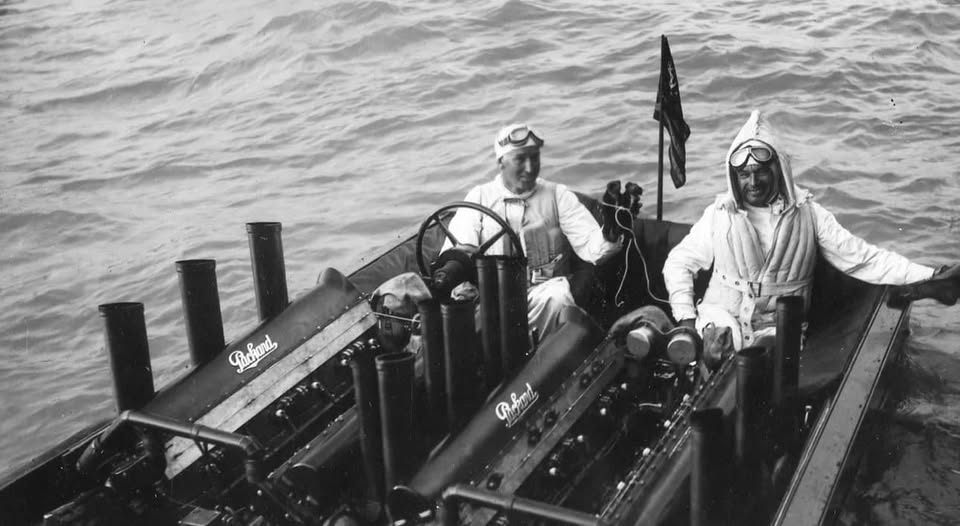

By 1932, record runs like Gar Wood’s 125 mph in Miss America X demanded industrial-scale logistics: four supercharged Packard V-12 engines producing over 7,000 hp, shore-side fuel and maintenance support, multiple tow and service craft, and carefully chosen river or lake stretches with predictable currents and rescue contingencies.
Early propulsion and hull innovations at a glance
Internal combustion and steam power produced the first measurable gains on water, but it was hull form and weight distribution that accelerated progress. The shift from displacement hulls to planing and stepped designs — notably John L. Hacker’s shallow V-bottom and stepped hulls — allowed boats to climb onto the surface, reducing drag and enabling higher sustained speeds. By the 1910s and 1920s, designers married aircraft powerplants to marine frames: Napier, Packard and Rolls Royce aero engines became common choices for record seekers.
Key technical breakthroughs
- Planing and stepped hulls: reduced wetted surface area and wave-making resistance.
- Hydrofoils: Alexander Graham Bell’s HD-4 used foils to lift hulls clear of the water, proving the concept with a 71 mph run in 1919.
- Aircraft engines for marine use: the Napier Lion, Liberty V-12s, and Rolls Royce aero motors offered the power-to-weight necessary for 100+ mph runs.
- Support logistics: coordinated shore teams, fuel planning, and recovery vessels became as critical as raw horsepower.
Notable milestones and record chronology
| Year | Boat | Top Speed | Power/Notes |
|---|---|---|---|
| 1903 | Napier I (Dorothy Levitt) | 21 mph (34 km/h) | Early ICE record at Harmsworth Cup |
| 1919 | HD-4 (Alexander Graham Bell) | 71 mph (114 km/h) | Hydrofoil with 350 hp engines |
| 1920–1932 | Miss America series (Gar Wood) | 75–125 mph (121–201 km/h) | Packard V-12s; four-engine Miss America X hit 125 mph |
| 1931–1932 | Miss England II / III | 99–120+ mph (160–193+ km/h) | Rolls Royce aero engines; removable step innovation |
Human factors and safety: crew, design, and risk
High-speed runs demanded more than horsepower: cockpit ergonomics, center-line seating, and redundant engineering were introduced to mitigate risk. Teams often included a mechanic and engineer in the cockpit to tend engines and trim while the driver focused on steering over chop and wakes. The tragedy of Henry Segrave’s 1930 crash illustrated the thin margin between record and disaster and changed how organizers planned runs and recovery operations.
Why these advances matter to travelers and tourism
Historic speedboats and their courses are now part of waterfront heritage trails, museum exhibits, and themed tours. Sites like the Detroit River, Loch Lomond, and Bras d’Or Lake attract visitors wanting to stand where records were set. For the modern traveler with a mind to do something more than a museum visit, chartered yacht experiences or themed coastal excursions link maritime history to contemporary leisure—the same waterways that once hosted racers now host yacht parties, sightseeing cruises and educational museum tours with live guides.
What modern visitors can expect
Many maritime museums and waterfront operators offer interpretive tours, boat demos, and interactive exhibits that connect engineering history with hands-on travel experiences. For travelers planning themed trips, GetExperience.com helps pair visitors with verified providers—from guided museum tours to exclusive charter options—allowing secure online payments and tailor-made excursions.
The tale of the race to 100 mph blends technical ingenuity, daring drivers, and evolving logistics. Highlights include the emergence of the three-point hydroplane, the use of aircraft engines like Rolls Royce and Packard in marine applications, and the role of inventors such as Alexander Graham Bell in pioneering hydrofoil technology.
These milestones make for memorable travel narratives: visitors may choose from curated historical tours, luxury adventure travel experiences, or even eco-friendly wildlife safaris combined with coastal history stops. On GetExperience, you book experiences from verified providers at reasonable prices, empowering informed choices without unnecessary expenses or disappointments; the platform’s transparency, convenient voucher-confirmation system, and tailored request options help you secure the best match for your itinerary. Book now GetExperience.com
In summary, the progression from early planing hulls to multi-engined record breakers reshaped both marine engineering and the visitor appeal of waterfronts. These innovations created legacies that now underpin travel experiences ranging from museum tours with live guides to exclusive yacht charters for events. Whether seeking adventure activities like adventure rafting trips for beginners or luxury adventure travel experiences, or even interactive online cultural workshops and online virtual tours, the water-speed era remains a compelling chapter in maritime tourism and engineering history.