


 Français
  English (UK)
  Русский
  বাংলা
বাংলা  العربية
  日本語
日本語  한국어
한국어  Magyar
  Norsk nynorsk
  Türkçe
  עִבְרִית
  Español
  Čeština
  Svenska
  Português
  Ελληνικά
  Suomi
Suomi  Nederlands
  Română
  Italiano
  Polski
  Українська
  Deutsch
  简体中文
简体中文  Slovenčina
  Српски језик
  اردو
اردو  Azərbaycan dili
  O‘zbekcha
  አማርኛ
አማርኛ 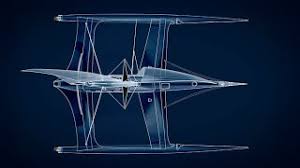 Comment WDS et Gitana Team façonnent le pilote automatique du Maxi Gitana 18 pour le vol océanique à grande vitesse">

Under Ultim class regulations the autopilot is currently limited to commanding the Safrans de gouvernail, a constraint that dictates both crew logistics and onboard control interfaces during high‑speed passages and flight transitions on Maxi Gitana 18.
Digital modelling and simulation: the backbone of autopilot development
WDS, We.Deploy(science), developed the software architecture and control models using fully integrated digital twins of the trimaran: central hull, floats, rudders, foils and onboard weight distribution were all encoded into a simulation environment. This allowed teams to tune gains, filters and intervention thresholds across every point of sail—upwind, reaching and downwind—before committing hardware to the sea.
What simulations deliver at a glance
| Capacité | Benefit in testing | Limitations vs. sea |
|---|---|---|
| Full‑boat dynamics | Safe parameter sweeps without risk to vessel | Can’t capture random gust clusters or chaotic waves |
| Control algorithm tuning | Rapid iteration on gains and filters | Real hydrodynamic hysteresis under load differs |
| Scenario testing | Reproducible test cases for design review | Sea state variability often breaks assumptions |
Sea observation informs the models
Before software implementation, Nedeleg Bigi sailed aboard Gitana 17 to record empirical responses of the trimaran under varying sea states and points of sail. Those logged observations—trim changes, accelerations, angle of attack variations—were translated into parameters that feed the autopilot algorithm, blending scientific modeling with sailing experience.
Field data vs. simulation: a practical checklist
- Record helm inputs and corresponding craft response across speeds.
- Identify non‑linear responses during flight transitions.
- Flag conditions where abrupt rudder inputs cause instability.
Human–machine interface: a work in progress
The system currently operates through a screen interface rather than a dedicated helm keyboard. Engineers and sailors from the Gitana Team debate which controls are essential: too many modes distract the helmsman and increase cognitive load; too few options reduce the craft’s potential in complex conditions.
Design priorities for the helm interface
- Immediate engagement/disengagement of steering modes with minimal taps.
- Clear visual feedback that does not obscure sightlines to water.
- Reduction of menu depth: essential actions accessible at helm.
Regulation, appendages and potential evolutions
Under current Ultim rules, autopilot action is limited to rudders. This keeps crew central to decisions about trim and flight, especially during critical phases such as load changes or when entering and leaving flight. However, discussions are underway about future rules: if regulations evolve, autopilots could potentially command selected load‑bearing planes (foils or daggerboards) to improve longitudinal or lateral stability.
Operational implications for logistics and safety
Allowing autopilot control over foils would change maintenance regimes, spares lists and electrical/hydraulic architecture onboard. Crews would need new checklists, and race support logistics would have to accommodate additional sensors and actuators. For the tourism sector—charter operators and race‑spectator services—this evolution could affect how yachts are staffed and what safety briefings are mandatory.
Balancing code and sea spray
Maxi Gitana 18’s autopilot development illustrates the growing integration of digital engineering into ocean performance. While virtual testing accelerates development and reduces risk, only sea trials reveal how systems cope with unstructured waves, gust clusters and the unpredictable nature of ocean logistics. The shipyard masting and the team’s exchanges ashore underline how software and hardware development run in parallel with traditional sailing know‑how.
Highlights: the project pairs rigorous digital modeling by WDS with hands‑on observation from Gitana 17 cruises, focuses on a minimal yet effective helm interface, and adheres to Ultim regulations that currently confine autopilot actions to rudders. Nevertheless, potential rule changes could expand autopilot authority to foils, shifting both performance and onshore logistics.
On GetExperience, you book your experience from verified providers at reasonable prices. This empowers you to make the most informed decision without unnecessary expenses or disappointments. GetExperience offers a wide variety of tours worldwide to suit any preference and budget—everything from exclusive yacht charters for events and cruise packages to museum tours with live guides and eco‑friendly wildlife safaris. Book now GetExperience.com
In summary, the Maxi Gitana 18 autopilot program combines advanced simulation, empirical sea observation and careful human‑machine interface design to enhance performance while staying within current Ultim class limits. The focus on rudder‑only control preserves crew authority today, but evolving rules could unlock active management of foils and other appendages. For travelers and enthusiasts, these developments hint at new kinds of travel experiences—from luxury adventure travel experiences and exclusive yacht charters to adventure rafting trips for beginners and interactive online cultural workshops—where technology and human skill blend to create safer, more thrilling maritime adventures. Whether your interest is in professional esports training programs, beginner esports coaching sessions, or real‑world safari tours, nothing replaces personal experience: book thoughtfully and enjoy the ride.