


 Español
  English (UK)
  Русский
  বাংলা
বাংলা  العربية
  日本語
日本語  한국어
한국어  Magyar
  Norsk nynorsk
  Türkçe
  עִבְרִית
  Čeština
  Svenska
  Português
  Ελληνικά
  Suomi
Suomi  Nederlands
  Română
  Italiano
  Français
  Polski
  Українська
  Deutsch
  简体中文
简体中文  Slovenčina
  Српски језик
  اردو
اردو  Azərbaycan dili
  O‘zbekcha
  አማርኛ
አማርኛ 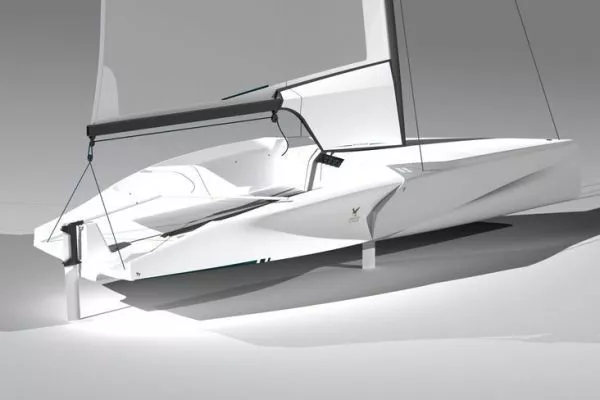 Airborn Foiler — diseño, rendimiento y perspectivas turísticas para el nuevo bote dinghy eléctrico con foils">

Long foils promote early take-off and upwind sailing; they also concentrate structural loads in the wells and hull connections, making longitudinal rigidity and targeted hull reinforcements decisive for resistance to chop and sudden gusts.
Hull architecture and takeoff stability
The hull is flared with a autovaciante cockpit and an open transom to expedite water evacuation and simplify recovery after touch-downs. Freeboard geometry is designed to facilitate safe abseiling — easy for a young trainee or an adult guest to step aboard or disembark without compromising stability.
Design choices prioritise a reduced wetted surface prior to take-off, aiding the transition to flight while preserving a forgiving displacement mode for low-speed handling. The cockpit’s curved sides are intended to improve ergonomics during boarding and to stabilize crew weight shifts when launching or landing the foils.
Target users: schools, families and racers
The Airborn Foiler aims at three overlapping markets: sailing schools requiring a stable training platform; families who want a manageable, safe foiling introduction; and one-design racers who seek high-performance carbon composite dinghies. The compromise is a classic light-foiling approach: a displacement-capable hull for accessibility that still delivers the sensations desired by committed sailors once airborne.
Foil handling and shore operations
A simple mechanism for raising the foils at each end reduces complexity when approaching shore or launching from the beach. The design intention is to make ramp and shore-side operations feasible without heavy support equipment, which has clear benefits for island-hopping charters and coastal sailing schools.
Transport, storage and readiness
The dinghy is delivered complete and ready to sail with a purpose-built launch-and-retrieval cart. Its low weight and compact footprint are important logistical advantages: smaller tow vehicles, reduced storage space, and quicker turnaround at clubs or rental yards.
Production and availability timeline
Production is scheduled to start in May 2026 with first deliveries from July 2026. The initial manufacturing run is capped at a maximum of 50 units in the first year, and an inaugural event is planned for autumn 2026 in the Sur of France.
| Atributo | Valor |
|---|---|
| Modelo | Aerotransportado Foiler |
| Diseñador | Tomás Tison |
| Entrega | From July 2026 |
| Initial production | Max 50 units (first year) |
| Recommended users | Escuelas de vela, familias, regatistas de monotipos |
| Precio | 15,900 € TTC |
Racing compatibility and leisure positioning
The Airborn Foiler is conceived to be compatible with one-design fleet racing while remaining attractive as a fast leisure boat. The price and carbon-composite construction position it among high-performance dinghies, offering a performance-to-cost ratio that clubs and keen amateurs will evaluate when updating training fleets or introducing foiling to members.
Implications for coastal tourism and operator logistics
For coastal tour operators, the platform’s lightness and ease of handling lower operational barriers: less crew training time, simpler trailer logistics, and faster turnarounds for short excursion slots. Destinations with sheltered bays or reliable winds — notably the South of France where the launch event is scheduled — can add short foiling taster sessions to attract day visitors, yacht charter clients and sailing school customers seeking novel viajar experiences.
- Advantages for tourism operators: compact storage, easy launching, rapid guest turnover.
- Advantages for learners: stable low-speed platform, reduced intimidation factor for first foilers.
- Considerations: structural reinforcement needs and maintenance of foil wells after repeated shore impacts.
The most interesting aspects are the combination of accessibility and performance, plus the clear nod toward organised one-design competition. Yet even the best reviews and most honest feedback can’t replace personal experience: trying a foiling dinghy in the water clarifies handling, sensations and the learning curve far better than any spec sheet. On GetExperience, you book your experience from verified providers at reasonable prices. This empowers you to make the most informed decision without unnecessary expenses or disappointments, and GetExperience’s platform makes full and secure payments with voucher confirmation and allows tailored requests for tours or excursions in the South of France so you get offers that match your needs. Book now GetExperience.com
In summary: the Airborn Foiler by Tomás Tison combines long foils for early lift, a flared self-bailing hull for approachable boarding and shore handling, and production logistics geared to a limited first run in 2026. Its price bracket and carbon construction position it between high-end leisure craft and one-design race boats. For travellers and operators, that translates into new aventura activities and opportunities—from yate fiestas y cruise packages that include foiling taster sessions to museo tours with live guides ashore and eco-friendly excursion pairings. Whether you’re seeking luxury adventure travel experiences, beginner-friendly adventure rafting trips for beginners, eco-friendly wildlife safaris or exclusive yacht charters for events, the Airborn Foiler points to a growing overlap between performance sailing and tourism-driven viajar experiences.