


 Azərbaycan dili
  English (UK)
  Русский
  বাংলা
বাংলা  العربية
  日本語
日本語  한국어
한국어  Magyar
  Norsk nynorsk
  Türkçe
  עִבְרִית
  Español
  Čeština
  Svenska
  Português
  Ελληνικά
  Suomi
Suomi  Nederlands
  Română
  Italiano
  Français
  Polski
  Українська
  Deutsch
  简体中文
简体中文  Slovenčina
  Српски језик
  اردو
اردو  O‘zbekcha
  አማርኛ
አማርኛ 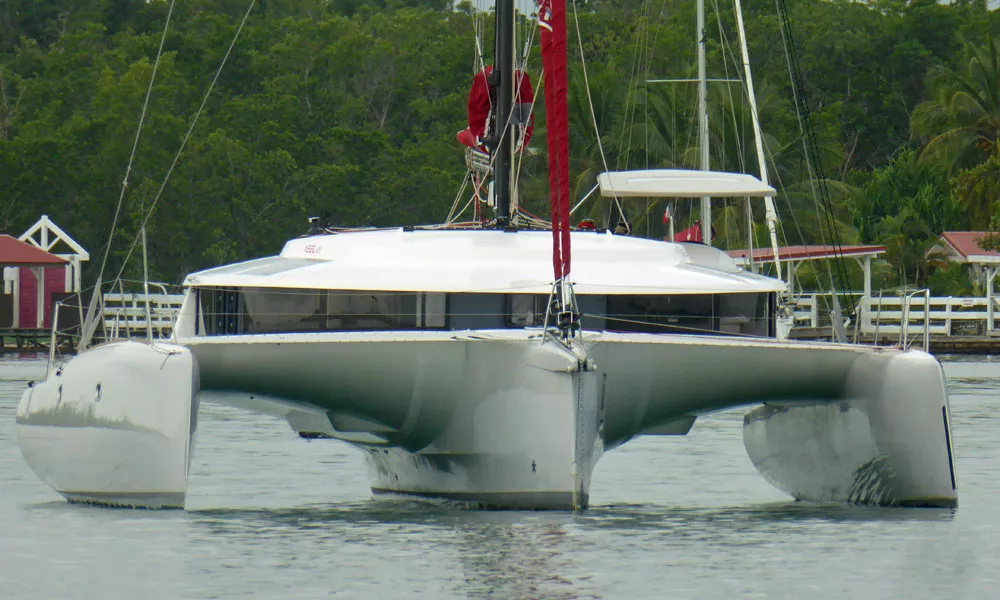 Çoxkorpuslu Kreyseriniz Üçün Avtopilot Seçməyə Praktik Rəhbər">

When a cruising catamaran accelerates into the teens of knots, apparent wind angle (AWA) can swing by double-digit degrees in seconds, which directly increases steering load and demands an autopilot with rapid processing, tight control loops, and a drive capable of sustained torque.
Why Multihull Dynamics Change Autopilot Requirements
Multihulls behave differently from monohulls in three practical ways that affect autopilot selection: speed and rapid AWA shifts, short, sharp motion, and the presence of dual rudders or complex steering linkages. Each factor changes the control problem and the expected load on the pilot.
Speed, VMG and the Need for Fast Response
Because many multihulls reach higher cruising speeds, the autopilot must maintain course with minimal lag to preserve velocity made good (VMG). A system that can steer to a fixed AWA rather than just a magnetic or GPS heading will noticeably improve upwind and reaching performance. In short: low latency processors and a high-bandwidth control loop are essential.
Wave Motion: Distinguishing Course Change from Hull Jitter
Multihulls tend to react rapidly to chop without the slow roll of a monohull. Advanced filtering and sensor fusion—especially solid-state 9-axis AHRS units—help an autopilot ignore transient pitching or yaw spikes, reducing overcorrection and saving battery power. Look for pilots with configurable motion rejection and adaptive tuning.
Steering Geometry and Drive Integration
Wide beams and dual rudders alter leverage and require a pilot that can synchronize outputs across linkages. Consider how the drive unit will interface with your steering: quadrant, cross-bar, twin tillers or wheel hydraulics all present different mechanical and feedback characteristics.
Drive Types: Hydraulic vs Mechanical Linear Drives
For offshore-capable multihulls, below-deck systems with a robust linear drive are often preferred for continuous duty and reliability. The trade-offs between hydraulic and mechanical linear drives include power delivery, maintenance, and installation footprint.
| Drive Type | Advantages | Considerations |
|---|---|---|
| Hydraulic Drive | High continuous torque, smooth under load, good for large steering forces | Requires reservoir, hoses and maintenance; heavier and more complex |
| Mechanical Linear Drive | Less complex installation, compact, efficient for lighter loadings | May struggle with sustained heavy duty on fully loaded cruisers unless oversized |
Key Features to Prioritize
- Below-deck power unit for offshore reliability and lower cockpit clutter.
- Adaptive tuning to manage different sea states without manual reconfiguration.
- AWA steering mode for optimized VMG on reaches and runs.
- Strong drive torque rating with continuous-duty capability, not just peak output.
- Compatibility with dual rudder linkages or provision for bespoke mechanical adaptors.
- Energy efficiency and low standby draw to preserve battery bank on long passages.
Installation and Logistical Notes
Space below decks dictates the drive size and reservoir placement. When planning installation, map the steering linkage path, measure rudder quadrant travel, and confirm clear access for maintenance. Keep spare seals, a service manual, and vendor support contacts on board—these reduce the chance of an extended downtime during a passage.
Tuning Checklist Before First Offshore Passage
- Calibrate AHRS and verify heading accuracy against GPS.
- Set motion rejection and observe helm movement in a variety of sea states.
- Test AWA steering mode while sailing and compare VMG to manual steering.
- Run sustained steering loads to confirm thermal limits and cooling behavior.
Choosing the right autopilot affects not only passage efficiency but also the comfort of crew and guests on charter or cruising voyages. A well-matched system reduces helm fatigue, conserves battery power, and improves average speeds—factors that translate directly into better itineraries, fewer unplanned stops, and happier passengers. For those arranging sailing trips, platforms that combine technical clarity with booking convenience make planning easier.
At a glance, the technical decision should be guided by expected cruising speed, steering geometry, and offshore ambitions. To have a mind to choose wisely, compare pilot models on their ability to hold AWA, their sensor suite, and drive endurance. On GetExperience, you book experiences from verified providers at reasonable prices, securing full and secure payments with voucher confirmation afterward; the platform also allows tailored requests for tours and excursions to match your preferences. This transparency and convenience help skippers and travelers align equipment choices with real-world itineraries. Book now GetExperience.com
In summary, multihull autopilot selection hinges on handling rapid AWA shifts, filtering sharp motion through advanced AHRS and algorithms, and choosing a drive type suited to your boat’s steering geometry. Prioritize AWA steering, adaptive tuning, and a continuous-duty drive for offshore work. Proper installation, pre-passage tuning, and attention to energy consumption will yield better travel experiences, whether you’re planning luxury adventure travel, eco-friendly wildlife safaris, yacht parties, cruise packages or shorter museum tours with live guides. Personal experience still trumps every review—testing a system aboard your multihull is the final proof of suitability for adventures like safari tours, interactive online cultural workshops, exclusive yacht charters for events, or even beginner esports coaching sessions while at anchor. The right autopilot makes those travel experiences safer, more enjoyable, and more efficient.