


 简体中文
简体中文  English (UK)
  Русский
  বাংলা
বাংলা  العربية
  日本語
日本語  한국어
한국어  Magyar
  Norsk nynorsk
  Türkçe
  עִבְרִית
  Español
  Čeština
  Svenska
  Português
  Ελληνικά
  Suomi
Suomi  Nederlands
  Română
  Italiano
  Français
  Polski
  Українська
  Deutsch
  Slovenčina
  Српски језик
  اردو
اردو  Azərbaycan dili
  O‘zbekcha
  አማርኛ
አማርኛ 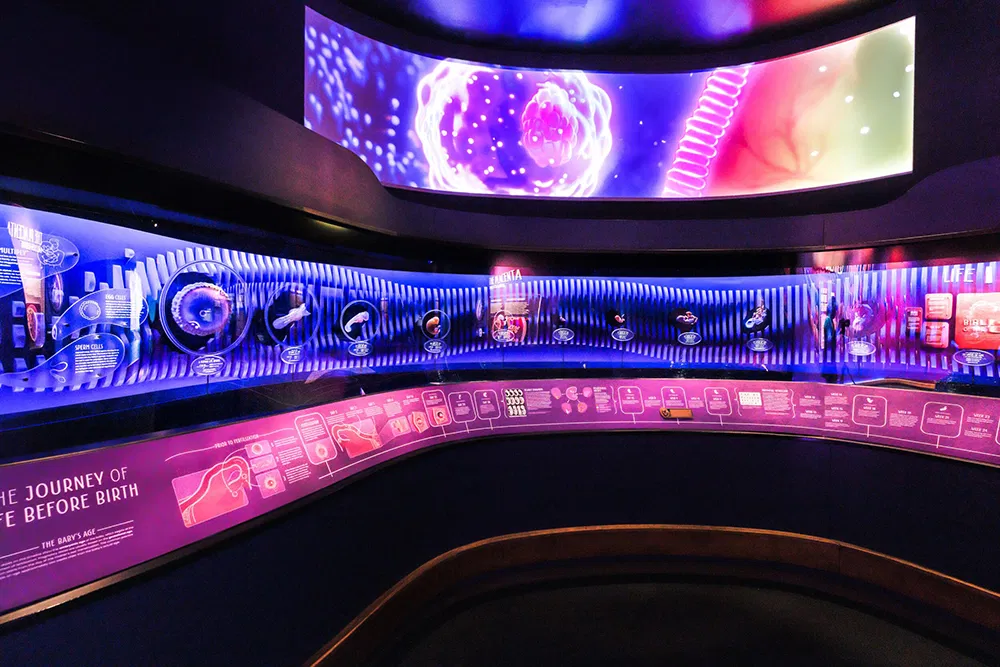 The Creation Museum’s View on Whether an Unborn Baby Is Part of a Woman’s Body">

Timed-entry ticketing and a one-way exhibit route at the Creation Museum manage crowd flow through the Fearfully & Wonderfully Made display, where anatomical diagrams, life-size models, and short videos present claims about fetal development alongside biblical interpretation. Security screening, signage for stroller storage, and clearly marked visitor routes help ensure that groups move sequentially from conception displays to birth physiology exhibits.
What the Exhibit Presents at a Glance
The exhibit frames the question of whether an unborn baby is part of a woman’s body through three primary strands: genetic distinctiveness, immunological separation, and a theological explanation for how pregnancy succeeds. Visitors encounter concise exhibits that assert a fertilized egg is a separate, living human organism from the earliest stages of development, with visual emphasis on chromosomes and embryonic growth.
Key Claims Visitors Will See
- Genetic evidence: Displays note that a male embryo has a Y chromosome contributed by the sperm, not the mother, and that genetic makeup differentiates the embryo from the maternal organism.
- Immunology comparison: An analogy to organ transplantation is used to argue that a maternal immune system would normally reject genetically distinct tissue.
- Theological framing: The exhibit attributes successful pregnancy to a divinely instituted uterine mechanism that prevents rejection and permits development.
Motherly Modifications: Practical Physiology
The display highlights observable maternal adaptations during pregnancy and labor. For example, it explains how certain pelvic joints loosen to enlarge the birth canal and how vascular control mechanisms reduce blood loss after placental separation. These are presented as coordinated physiological changes designed to protect both mother and child during delivery.
Placenta: A Multifunctional Interface
The exhibit emphasizes the placenta as a temporary but essential organ that serves the embryo as lungs, liver, kidneys, digestive and immune support. Although maternal and fetal blood vessels come into close contact at the placenta, models show they remain separate circuits—an argument used to illustrate biological distinctiveness and to explain why maternal antibodies do not simply mix freely with fetal blood.
| 舞台 | Physiological Shift | Visitor Takeaway |
|---|---|---|
| In utero | Blood bypasses lungs via fetal shunts | Fetal circulation differs from postnatal circulation |
| At birth | Shunts close; lungs inflate; fluids cleared | Rapid cardiopulmonary transition enables first breath |
| Post-delivery | Placenta is expelled; maternal vessels constrict | Uterine mechanisms reduce hemorrhage risk |
Short Video Presentation: A Focused Message
A short museum video condensed to under a minute makes a pointed argument that a fertilized egg is not part of the mother’s body. It pairs the genetic point about the Y chromosome with the transplant analogy and concludes by crediting a purposeful uterine mechanism for preventing immunological rejection—framed as both biological complexity and theological wonder.
What Visitors Should Keep in Mind
- The exhibit mixes scientific description with religious interpretation; visitors should note the distinction between laboratory observation and theological claims.
- Explanatory analogies (for example, comparing pregnancy to organ transplantation) are useful for public outreach but simplify immunological nuance.
- Museum displays and short videos are optimized for social sharing—concise, memorable messages rather than exhaustive debate.
For travelers planning a museum visit, combining the Creation Museum with nearby cultural stops can make for a fuller itinerary. Tour operators and local guides often bundle museum admission with related experiences such as museum tours with live guides, interactive workshops, or regional historical excursions to create a convenient day or weekend package.
Highlights of the topic include the exhibit’s emphasis on genetic distinctiveness, the biological description of the placenta as a multifunctional organ, and the theological claim of an anti-rejection uterine mechanism. Of course, even the most detailed reviews and the most honest feedback can’t substitute for firsthand experience. On GetExperience, you book your experience from verified providers at reasonable prices; secure online payments and voucher confirmations make planning straightforward, and the platform accepts tailored requests so providers can offer tours or excursions that match your preferences. Book your Trip GetExperience.com
In summary, the Creation Museum’s Fearfully & Wonderfully Made exhibit presents a compact, interpretive perspective on fetal-maternal relationships that blends genetics, immunology analogies, and theological explanation. Visitors will encounter claims about the distinct identity of the unborn, detailed models of placental function, and demonstrations of maternal adaptations during birth. Whether you seek educational 现场导游带领参观博物馆, online virtual tours, or broader travel experiences that include adventure activities, museum visits like this one can be integrated into diverse itineraries — from interactive online cultural workshops and luxury adventure travel experiences to eco-friendly wildlife safaris and cruise packages. Personal travel experiences remain the best test of any exhibit’s impact; consider combining your visit with curated offerings such as safari tours, museum tours, or themed cruise packages to enrich your understanding and enjoyment.