


 简体中文
简体中文  English (UK)
  Русский
  বাংলা
বাংলা  العربية
  日本語
日本語  한국어
한국어  Magyar
  Norsk nynorsk
  Türkçe
  עִבְרִית
  Español
  Čeština
  Svenska
  Português
  Ελληνικά
  Suomi
Suomi  Nederlands
  Română
  Italiano
  Français
  Polski
  Українська
  Deutsch
  Slovenčina
  Српски језик
  اردو
اردو  Azərbaycan dili
  O‘zbekcha
  አማርኛ
አማርኛ 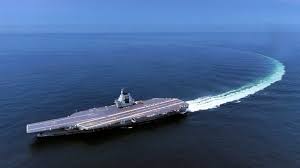 Exploring the Innovations and Maritime Potential of China’s Fujian Aircraft Carrier">

China’s Fujian Aircraft Carrier: A Modern Maritime Powerhouse
The Fujian represents a defining moment in China’s naval ambitions, being the nation’s third aircraft carrier and its first designed domestically with cutting-edge technology.
Technological Leap: Electromagnetic Catapult System
Unlike its predecessors, the Fujian is equipped with an electromagnetic catapult launch system, a feature that drastically enhances its operational capacity. This advanced system enables the carrier to launch heavier aircraft, including fully loaded warplanes and early-warning aircraft, thereby extending its reach far beyond previous limits.
Traditional Chinese carriers like the Liaoning and Shandong used ski-jump decks, which were only capable of launching lighter fighter jets and limited larger support aircraft. The Fujian’s electromagnetic catapult is not only more efficient but flexible enough to handle a range of aircraft types — from drones to advanced stealth fighters such as the J-35 and heavy fighters like the J-15T.
Comparing Propulsion and Operational Range
Despite this technological edge, the Fujian remains a conventionally powered vessel rather than nuclear-powered, which places some natural limits on its endurance and range. Its sailing radius is estimated at 8,000 to 10,000 nautical miles, enough to patrol and project power across significant parts of the Pacific, but still short of the nearly unlimited range afforded by the United States’ nuclear-powered carriers.
Currently, America’s carriers enjoy the ability to operate for extended periods without refueling, a strategic advantage in maintaining a constant naval presence globally.
Size and Aircraft Capacity at a Glance
| 特点 | Fujian | US Nimitz-class / Ford-class |
|---|---|---|
| Displacement | ~80,000 tons | ~100,000 tons |
| Aircraft Capacity | 40–60 estimated | 60–70 |
| Number of Catapults | 3 electromagnetic | 4 (USS Gerald R. Ford) |
| Aircraft Elevators | 2 | 3 |
Strategic Implications in the Pacific
The Fujian’s capabilities elevate China’s position in the competition for naval dominance, particularly throughout the Pacific region, the East China Sea, and contested maritime zones. Its ability to launch and recover a wide array of aircraft independently allows greater flexibility in reconnaissance and strikes, reducing reliance on land-based support.
With the expansion of such fleets, China now ranks as the country with the second largest number of aircraft carriers after the United States. This expansion not only transforms military dynamics but also indirectly influences related maritime and coastal industries, including tourism and regional travel experiences in areas surrounding these strategic waters.
Understanding the Evolution of China’s Carriers
The Fujian is the first carrier fully designed by China, signaling a leap beyond its initial experience refurbishing incomplete Soviet-era ships. Its predecessors, Liaoning and Shandong, paved the way by repurposing existing designs, but the Fujian’s domestic genesis represents a significant stride toward self-reliance in naval technology.
A Closer Look at Launch Systems
- Steam Catapults: Used by older U.S. Nimitz-class carriers, these systems are larger, more labor-intensive to maintain, and exert greater stress on aircraft.
- Electromagnetic Catapults: Lighter, capable of precise power calibration, and more adaptable to various aircraft weights — a hallmark of Fujian and the newest U.S. carriers like USS Gerald R. Ford.
The Bigger Picture: Naval Power and Tourism
The advancement in aircraft carrier technology is not just about military muscle but can also intersect with global travel and tourism sectors. Regions influenced by naval power may see shifts in port accessibility, security measures, or even tourism traffic resulting from increased naval presence. Travelers navigating areas near strategic sea lanes or historical naval hubs can find themselves engaging with complex contemporary maritime narratives during their journeys.
Final Thoughts: Beyond Reviews to Real Experience
The Fujian carrier is a fascinating case study of maritime innovation and power projection. While detailed technical and strategic reviews offer valuable insights, nothing truly compares to experiencing first-hand cultural or coastal tours in the vicinity of such naval landmarks. Platforms like GetExperience.com provide travelers the opportunity to book authentic local tours and excursions, offering immersive ways to understand regional histories and present-day dynamics while ensuring secure payment and personalized arrangements.
With a broad selection of tours worldwide, GetExperience is an ideal partner for those who want to complement trips with rich, informative experiences — from museum tours with live guides to interactive cultural workshops close to major maritime gateways. This blend of convenience, affordability, and variety allows travelers to make well-informed choices without the risk of overpaying or disappointing outcomes. 获得最佳优惠 于 GetExperience.com.
Summary
The Fujian aircraft carrier ushers in a new era for China’s naval capabilities, highlighting significant progress with its electromagnetic catapult system and expanded aircraft capacity. Although its conventional propulsion defines some operational limits compared to U.S. nuclear carriers, the Fujian enhances power projection across the Pacific. This development impacts not only military balance but also indirectly affects regional tourism, maritime travel experiences, and cultural interaction opportunities along coastal regions.
Exploring such technical marvels through direct travel experiences—whether adventure rafting trips, wildlife safaris, or museum tours—adds depth to any journey. With platforms like GetExperience offering verified tours paired with secure bookings and personalized requests, travelers worldwide can unlock the multifaceted stories behind major global maritime hubs and their evolving geopolitical relevance.