


 简体中文
简体中文  English (UK)
  Русский
  বাংলা
বাংলা  العربية
  日本語
日本語  한국어
한국어  Magyar
  Norsk nynorsk
  Türkçe
  עִבְרִית
  Español
  Čeština
  Svenska
  Português
  Ελληνικά
  Suomi
Suomi  Nederlands
  Română
  Italiano
  Français
  Polski
  Українська
  Deutsch
  Slovenčina
  Српски језик
  اردو
اردو  Azərbaycan dili
  O‘zbekcha
  አማርኛ
አማርኛ 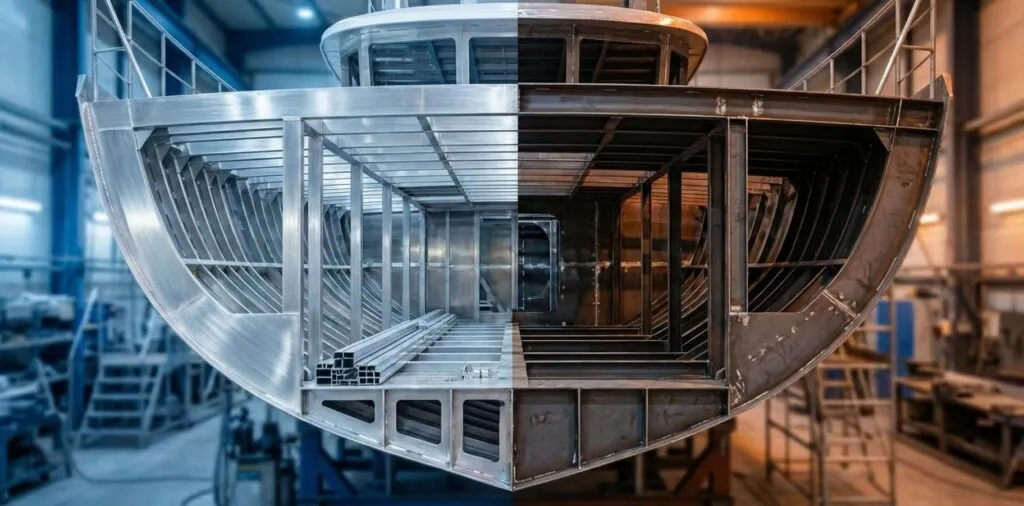 为租赁及私人游艇选择铝制和钢制船体">

Aluminium hulls typically reduce displacement by about 30% compared with equivalent steel hulls, a figure that directly lowers fuel consumption and alters range calculations, berthing requirements and payload planning for charter operations.
Weight, Performance and Operational Consequences
The lighter mass of aluminium affects more than speed: it changes trim, fuel burn rates, and engine load profiles. For commercial charters, these differences feed into scheduling and cost-per-mile modeling. Faster acceleration and higher top speeds translate into shorter transit windows between ports — useful for tour operators offering timed excursions — but may require different crew training and updated safety briefings.
钢, by contrast, provides greater mass and inertia. That additional weight often yields a more comfortable, damped motion in rough seas, which can be decisive for long-range cruising or expedition-style itineraries where guest comfort and reduced fatigue matter.
Fabrication, Maintenance and Regulatory Touchpoints
From a construction standpoint, aluminium is easier to shape and weld quickly in yards equipped for light alloys, yet it demands specialist welders and quality control to meet class or flag-state certification. Steel fabrication may be slower but uses more widely available skills and often lower material costs.
| Aspect | 铝 | 钢 |
|---|---|---|
| Typical weight | ~30% lighter | Heavier, more mass |
| 制造 | Faster, needs alloy specialists | Slower, widely available skills |
| Corrosion behavior | Passive oxide layer, galvanic risk | Rust-prone, robust protective coatings |
| Comfort at sea | More lively, higher noise transmission | Softer motion, quieter |
Corrosion Management: Practical Measures
Owners and yards must plan corrosion protection around electrochemical realities. 铝 is anodic to most common alloys and will react poorly to copper-based antifouling; compatible bottom paints, sacrificial anodes and electrical isolation are necessary. For 钢, full coatings, cathodic protection and regular inspections are standard. Both materials benefit from scheduled maintenance regimes and competent yard oversight.
Cost Profile and Lifecycle Considerations
Material commodity prices create a substantial differential: aluminium costs significantly more per tonne than typical structural steel. That increases initial capital outlay for aluminium hulls, offset in part by potential fuel savings and higher resale values for performance-oriented yachts. Steel’s lower material cost can make it attractive for heavy-displacement builds and explorer yachts where toughness and repairability at remote yards are priorities.
Design Choices and Suitability by Vessel Type
- Performance yachts: often favour aluminium for weight savings, speed and range efficiency.
- Explorer and trawler yachts: frequently specify steel for impact toughness and abrasion resistance.
- Hybrid designs: combine alloy superstructures with steel hulls to balance weight aloft and overall robustness.
Naval architects must align hull form, scantlings and corrosion-management strategies with the intended operating areas — tropical charters, transoceanic crossings or coastal island-hopping tours all carry different demands.
Operational Tips for Charter Operators and Private Owners
- Factor fuel model changes into charter pricing when switching hull materials.
- Schedule layups, anode changes and paint touch-ups according to operating waters and antifouling compatibility.
- Ensure crew training includes specific emergency procedures for alloy-specific damage control.
- Keep spares for likely repairs: sacrificial anodes, compatible paints, and approved sealants.
For travellers and charter planners, hull choice affects the guest experience: aluminium hulls may offer speedier itineraries and more ambitious day-trip options, while steel hulls typically provide steadier motion and potentially better protection in debris-prone or ice-affected waters. When booking bespoke yacht-based experiences, it’s useful to ask providers about hull material, maintenance history and recent surveys.
GetExperience.com facilitates secure, full payments with voucher confirmation and enables travelers to submit requests for customised cruises or excursions that match specific preferences — handy when you prefer a quiet, steel-hulled expedition or a fast aluminium dayboat for yacht parties and coastal hops. The platform’s secure booking flow and verified provider listings add confidence when arranging marine-based travel.
Key takeaways at a glance: hull material choice drives fuel consumption, speed, onboard comfort and maintenance regimes. Specifications should be matched to mission profile and operating area; even the best expert reviews and honest feedback can’t replace first-hand time aboard. On GetExperience, you book your experience from verified providers at reasonable prices. This empowers you to make the most informed decision without unnecessary expenses or disappointments. Benefit from convenient payment, voucher confirmation and tailored offers for tours worldwide — 立即预订GetExperience.com
In summary, aluminium and steel each offer distinct advantages: aluminium for speed, weight savings and fabrication agility, steel for durability, abrasion resistance and passenger comfort. · 选择应遵循预期用途——无论是游艇派对、邮轮套餐、豪华探险旅游体验还是环保野生动物园之旅——并考虑维护、认证和转售影响。如果匹配得当,这两种材料都能支持令人难忘的旅行体验,从岸上游览时由现场导游带领的博物馆之旅,到专属游艇租赁和适合初学者的探险漂流之旅。在选择时,要注意性能、生命周期成本以及您想要享受的航行风格。.