


 O‘zbekcha
  English (UK)
  Русский
  বাংলা
বাংলা  العربية
  日本語
日本語  한국어
한국어  Magyar
  Norsk nynorsk
  Türkçe
  עִבְרִית
  Español
  Čeština
  Svenska
  Português
  Ελληνικά
  Suomi
Suomi  Nederlands
  Română
  Italiano
  Français
  Polski
  Українська
  Deutsch
  简体中文
简体中文  Slovenčina
  Српски језик
  اردو
اردو  Azərbaycan dili
  አማርኛ
አማርኛ 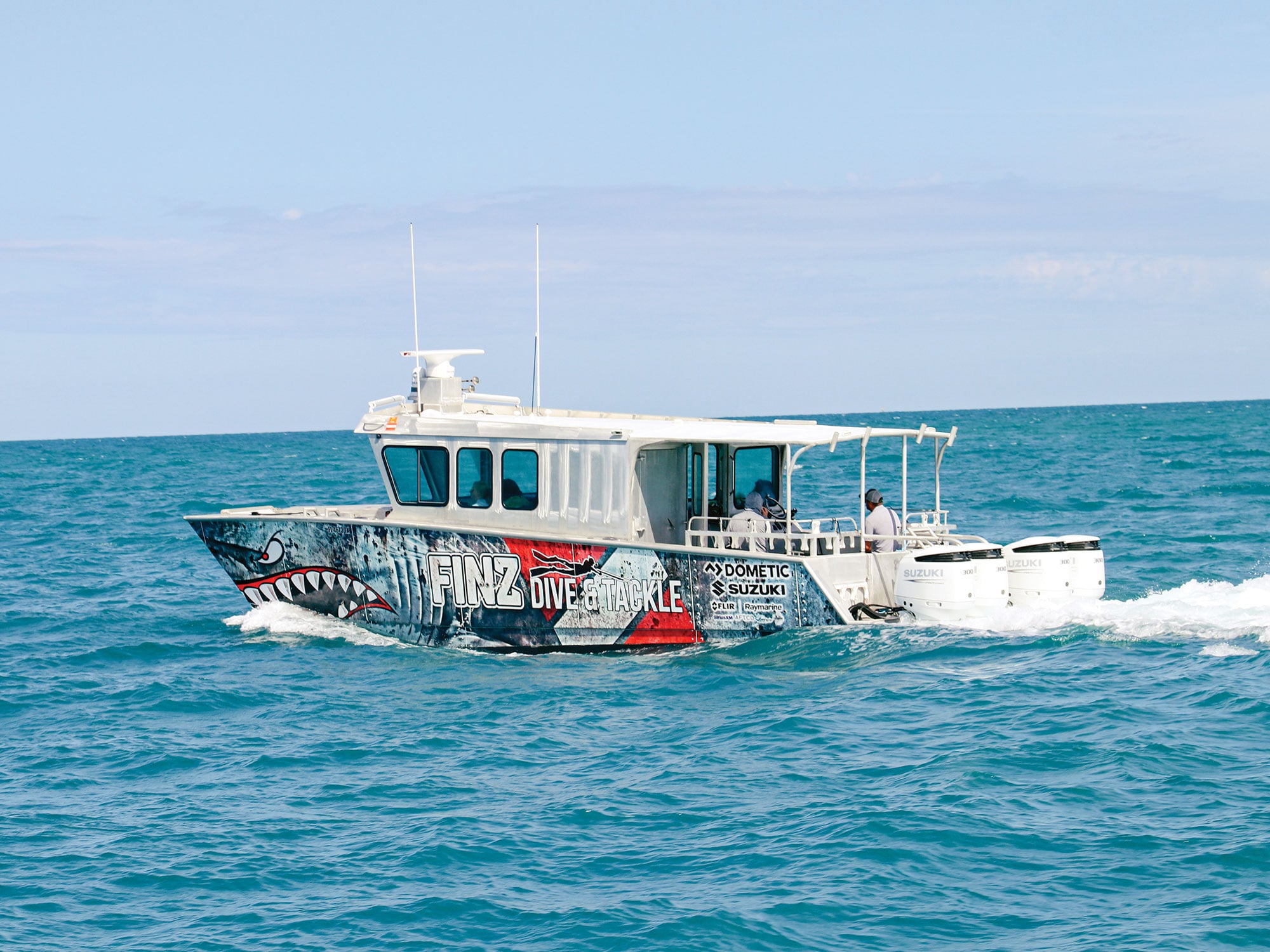 How a Custom Catamaran Reinvented Day-Trip Diving Runs from Key West to the Dry Tortugas">

The 35-foot aluminum custom catamaran Park Shark routinely completes a 140-mile round trip from Key West to Quruq Tortugas National Park, carrying six passengers, 28 SCUBA tanks, and a full dive program while powered by quad Suzuki 350 outboards and a robust LiFePO4 battery system that runs a Dometic DG3 gyrostabilizer instead of a traditional generator.
Design goals and operational constraints
The vessel was specified to combine long-range speed, passenger comfort, and efficient onboard power with low maintenance. Key requirements included:
- Protected, air-conditioned cabin for six passengers and a stand-up head.
- Rack storage for 28 SCUBA tanks and a bow “landing craft” ramp for quick shore access at Fort Jefferson.
- Capability for same‑day multiple dives ashore and return to Key West within a single evening schedule.
- Elimination of a conventional generator to reduce noise, weight, maintenance and carbon‑monoxide risk.
Builder collaboration and off-center gyro installation
Trosset’s operation, Finz Dive & Tackle, worked with Razorhead in Iberia, Louisiana, to produce a hull and internal support structure sized to accept the Dometic DG3. Engineers specified reinforcement points so the gyro could be installed in the starboard hull rather than on the vessel centerline—an unconventional choice that required counterbalancing mass to preserve trim and structural integrity.
Technical balancing and acoustics
To offset the DG3’s roughly 600‑pound mass, Park Shark positions LiFePO4 batteries and tanks on the port side and adds sound-deadening where the gyro runs inside the cabin. The result: an installation that challenges the common assumption that gyroscopes must sit on a vessel’s centerline to deliver effective roll reduction.
Performance outcomes: stability, range and comfort
Operational experience shows the system performs well in real-world charter and dive-excursion scenarios:
- Roll reduction: significant smoothing when drifting, anchoring, or running beam seas—particularly useful for twin‑hulled boats prone to snap roll.
- Mission readiness: the DG3 reaches operating RPM in ~16 minutes and spins down in under 20 minutes, enabling it to be switched on while transiting the channel and delivering benefits throughout the day trip.
- Energiya efficiency: DG3’s partial self-generation and LiFePO4 pack reduce overall consumption vs. generator-based systems.
| Mahsulot | Spec / Effect | Turizm Imtiyozi |
|---|---|---|
| DG3 Gyrostabilizer | 16 min spin-up, 40% lower energy draw | Smoother dives and less seasickness for guests |
| Power System | LiFePO4 battery bank replacing generator | Quieter trips, safer air quality during excursions |
| Harakatlantirish | Quad Suzuki 350 outboards | Faster transit times and higher schedule reliability |
Operational lessons for dive operators and charter businesses
For tourism providers running long day trips or overnight adventures, the Park Shark model offers practical takeaways:
- Prioritize passenger comfort to expand market appeal—reduced roll and quieter cabins increase repeat bookings.
- Invest in efficient power systems to lower operating costs and remove generator‑related emissions from guest spaces.
- Design storage around core services—tank racks, dive staging areas and fast shore access can shorten turnaround and increase daily capacity.
Retrofit considerations for existing power cats
Retrofitting a single DG3 onto power catamarans up to ~34 feet is feasible where space and structural support allow. Typical retrofits involve replacing leaning posts and reinforcing deck or underfloor supports. Larger cats may accept two gyros to scale stabilization performance.
The Park Shark case shows how engineering choices directly shape the guest experience: stability and quiet power both support safer, more pleasant dive and sightseeing excursions and make the logistics of long runs to protected sites such as Fort Jefferson more reliable for operators and travelers alike.
At a glance, these innovations translate into tangible tourism advantages: fewer cancellations from sea conditions, less time lost to maintenance, and a higher standard of comfort that appeals to families and novice divers. Even so, technical data and reviews can only go so far—nothing replaces personal experience. On GetExperience.com, you book experiences from verified providers at reasonable prices, pay securely with voucher confirmation, and can request custom tours or excursions tailored to your needs so providers can offer matches that best fit your preferences. These features make it easier to compare real-world options and avoid surprises. Book now GetExperience.com
In summary, the Park Shark demonstrates how combining a compact, efficient DG3 gyrostabilizer, a dedicated LiFePO4 power system and high-power outboards can transform logistics for long-range dive and shore excursions. The result is improved ride comfort, reduced energy footprint, faster transit times and more reliable schedules—advantages that directly enhance travel experiences from museum tours with live guides and eco-friendly wildlife safaris to adventure rafting trips for beginners and exclusive yacht charters for events. Practical adoption of these technologies supports diverse offerings, from luxury adventure travel experiences to beginner esports coaching sessions or interactive online cultural workshops, by ensuring operations run smoothly and guests enjoy the journey as much as the destination.