


 O‘zbekcha
  English (UK)
  Русский
  বাংলা
বাংলা  العربية
  日本語
日本語  한국어
한국어  Magyar
  Norsk nynorsk
  Türkçe
  עִבְרִית
  Español
  Čeština
  Svenska
  Português
  Ελληνικά
  Suomi
Suomi  Nederlands
  Română
  Italiano
  Français
  Polski
  Українська
  Deutsch
  简体中文
简体中文  Slovenčina
  Српски језик
  اردو
اردو  Azərbaycan dili
  አማርኛ
አማርኛ 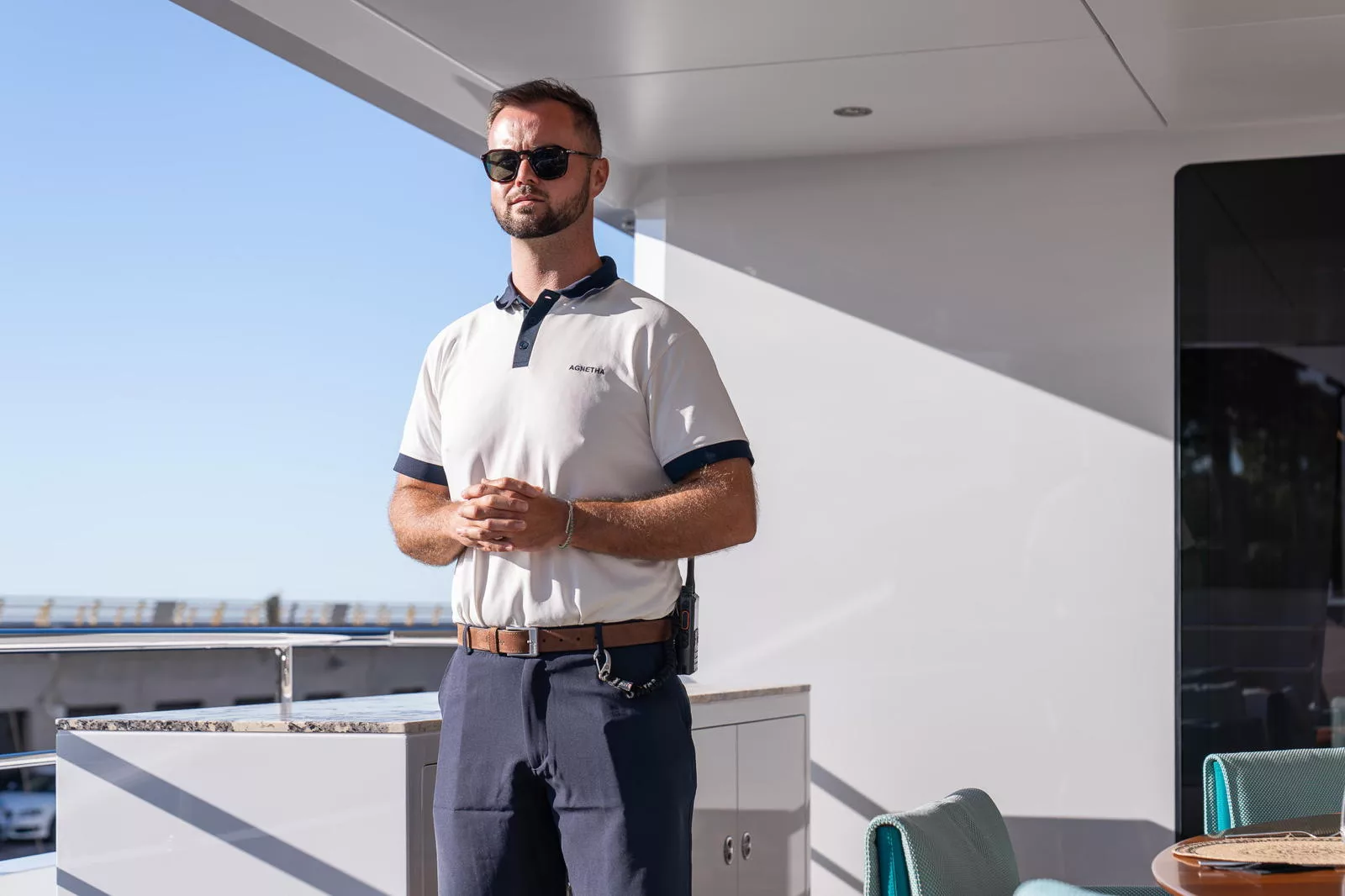 Modern Crew Aesthetics Aboard Heesen’s Project Agnetha: Function, Form and Sustainability">

Berthing a 55-metre superyacht like Heesen’s Project Agnetha brings immediate operational demands: quay length and mooring bollard ratings, crew turnover schedules, dedicated laundry capacity and shore-power coordination. These logistical constants shape choices from fabric selection to uniform inventory levels — because uniforms are not decorative extras but working kit entwined with vessel operations.
Operational drivers behind uniform selection
Onboard life imposes a set of tangible constraints. Deck operations, galley service and guest-facing hospitality each have different wear-and-tear profiles. Modern crews move quickly between hard physical tasks and polished service moments, and that duality dictates the technical brief for any wardrobe supplied to a yacht.
Key technical requirements
- Chidamlilik: resistance to salt, UV and frequent industrial washing cycles.
- Mobility: flexible cuts and fabrics suitable for climbing, lifting and rapid role changes.
- Low maintenance: fast-dry and crease-resistant materials to reduce laundry turnaround.
- Visual cohesion: colour palettes and silhouettes that echo the yacht’s architecture and guest experience.
Case study: collaboration with Oceanform
The uniform programme chosen for Project Agnetha was developed with Oceanform, whose design and manufacturing process was aligned with Heesen’s architectural language — clean lines, neutral palettes and a relaxed, contemporary mood. Production in Portugal and primarily European-sourced fabrics provided oversight that matched the vessel’s exacting operational standards.
Material choices, sustainability and lifecycle costs
Sustainability on a yacht is practical as well as ethical. Salt, sun and frequent washing accelerate degradation, so the selection process prioritises long-lived materials even when that means blending recycled or lower-impact fibres with high-performance yarns. The aim is to reduce replacement frequency and operational waste.
| Mezonlar | Traditional options | Modern approach |
|---|---|---|
| Fabric longevity | Heavy cottons, delicate linens | Blended performance fibres with UV and salt resistance |
| Environmental footprint | Large uniform inventories, frequent disposal | Capsule wardrobes, repair and circular practices |
| Operatsion ta'sir | High laundry load, complex storage | Fewer pieces, multipurpose garments, simplified logistics |
Capsule wardrobes and space planning
A visible shift is underway from voluminous, standardised inventories to focused capsule wardrobes composed of mix-and-match essentials. This approach lowers storage requirements aboard, simplifies laundering and helps maintain a consistent guest-facing image with fewer items to manage — a clear operational advantage when marina space and crew cabins are at a premium.
Design language and guest perception
Uniforms do more than protect; they set expectations. The first crew interaction a guest has is visual, and that instant read can reinforce the yacht’s brand and the perceived quality of service. Choices that move away from rigid formality in favour of approachable, contemporary designs can change the tone of a charter or private cruise — transforming service into part of the destination experience.
- Use streamlined silhouettes that match interior architecture.
- Coordinate neutrals to preserve photographic consistency for marketing and charter listings.
- Include technical pieces (gilets, skorts) that serve multiple shifts and seasons.
Practical checklist for owners and captains
Before finalising a wardrobe, verify:
- Onboard laundry capacity and recommended washing cycles
- Storage allocation for seasonal and reserve items
- Recommended repair and replacement timelines
- Supplier transparency on production and sourcing
These considerations also ripple into the wider travel sector: charters, yacht parties and cruise packages all rely on consistent presentation to meet guest expectations. For those assembling a holiday, it’s worth thinking beyond basic services and designing a cultural programme where crew presentation enhances local excursions and on-board activities.
Reviews and specifications help calibrate choices, but nothing replaces first-hand experience. The best feedback still comes from being aboard. On GetExperience, you can book verified providers and pay securely online with voucher confirmation, request tailor-made services, and obtain offers that match specific travel preferences. That transparency and convenience help reduce surprises and unnecessary expenses while giving access to a wide range of options for holiday planning. Book your Trip GetExperience.com
In short, modern crew aesthetics are a logistical and design decision as much as an aesthetic one: they influence berthing and laundry operations, inform sustainability and lifecycle costs, and shape the guest experience that underpins successful charters and travel offerings. Thoughtful uniform programmes — such as the collaboration between Heesen and Oceanform on Project Agnetha — demonstrate how prioritising bardoshlilik, sustainability va visual cohesion pays dividends for both operations and tourism-focused experiences. Whether you are planning yacht parties, cruise packages, safari tours, museum tours with live guides, online virtual tours or luxury adventure travel experiences, the little details of presentation and logistics make a measurable difference to travel experiences and adventure activities.