


 O‘zbekcha
  English (UK)
  Русский
  বাংলা
বাংলা  العربية
  日本語
日本語  한국어
한국어  Magyar
  Norsk nynorsk
  Türkçe
  עִבְרִית
  Español
  Čeština
  Svenska
  Português
  Ελληνικά
  Suomi
Suomi  Nederlands
  Română
  Italiano
  Français
  Polski
  Українська
  Deutsch
  简体中文
简体中文  Slovenčina
  Српски језик
  اردو
اردو  Azərbaycan dili
  አማርኛ
አማርኛ 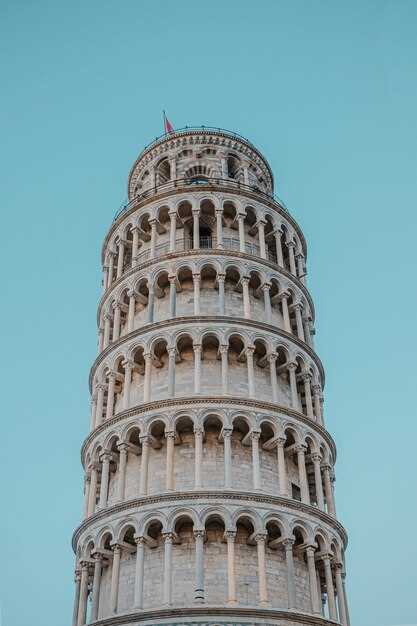 Leaning Tower of Pisa – 10 Incredible Facts, Secrets, and Curiosities You Didn’t Know">
Chiptangizni onlayn bron qiling va markaziy maydonni sokin holatda ko'rish uchun ertalabki 8:30 da yetib boring, so'ngra muhandislik mo''jizalarining jozibasi hanuzgacha tashrif buyuruvchilarni hayratda qoldiradigan dunyoga qadam qo'ying.
Minora 12-asrda qurilgan. pisano brigadalari tomonidan 1173-yilda boshlangan. Ikkinchi qavat ko'tarilgandan so'ng, yumshoq tuproq qiyalikni keltirib chiqardi va muhandislar restavratsiya ishlarini boshlagunga qadar og'ish o'sdi. Minorani ushlab turish uchun muhandislar ehtiyotkorlik bilan stabilizatsiya qilib, qiyaligi taxminan 45 santimetrga kamaytirdilar. Bugungi kunda qiyalik taxminan 3,97 gradusni tashkil etadi, balandligi esa baland tomonda taxminan 56 metr va past tomonda 57 metrga yaqin.
Bu yerda odatdagi sayyohlik fotosuratlaridan tashqari narsalarni ko'rasiz. Bu joy o'zini his qiladi... har xil har bir toshi o'z hikoyasiga ega bo'lgani uchun boshqa diqqatga sazovor joylardan farq qiladi: quruvchilar qanday qilib darajalarni o'lchaganlari, ulkan qo'ng'iroqboz qanday chayqalishi va toshlar shamolga qarshi turish uchun qanday qilib bir-biriga mos kelishi. Minora qanday qilib yana bir davr minorni tik turishga muvaffaq bo'lganini bilish uchun zinapoyalar yaqinidagi lavhalarni o'qishingiz mumkin. Minoraning dizayni kino sahnalariga ilhom berdi va hashamat hamda sayohatlar tarixida o'z o'rnini saqlab qolmoqda.
Bugun minora butun dunyo bo'ylab tashrif buyuruvchilar uchun ochiq, shu jumladan, amerikalik sayohatchilar ham ark ostida turib, og'ishni shaxsan his qilish uchun kelishadi. Ta'mirlash guruhi amaliy tuyg'uni saqlab qoladi va gidlar muhandislar joyning go'zalligiga putur etkazmasdan, og'ishni sozlash uchun to'g'ri usullardan qanday foydalanganliklarini tushuntiradilar. Hatto qadam-baqadam ko'tarilish ham – siz tor zinapoyadan yuqoriga chiqa olasiz – hissini beradi. yashamoq va umid mahalliy aholi o'z shaharlarini shakllantirgan mo''jizalar haqidagi hikoyalarini baham ko'rar ekan, umid qiling. Ba'zi galereyalarda kino va kino minorlar Italiya jozibasining ramziga aylanishiga yordam bergan lahzalar.
Ushbu qo'llanmada siz quyidagilar haqida o'qiysiz: o'nta ajoyib fakt, o'lchovlar, tarixiy qaydlar va mahalliy gidlardan olingan birinchi qo'l hikoyalar bilan tasdiqlangan. Biz ta'kidlaymiz markaziy lahzalar, qanday qilib ekanligini ko'rsatadi tiklash jamoa asl materialni saqlab qoldi va aqlli tashrif uchun amaliy maslahatlar beradi: eng yaxshi fotosuratlar uchun qayerga borish, terastada qancha vaqt qolish va qo'ng'iroqlar xonasi bo'ylab kino uslubidagi ekskursiyaga qo'shilganingizda nimalarni so'rash kerak. Agar siz diqqatga sazovor joylar uchun kelsangiz, siz chuqurroq tushuncha bilan qaytasiz go'zallik va haqiqiy hope bu saytni tadqiqotchilar avlodlari, jumladan, ochiq saqlashga yordam beradi american sayohatchilar va mahalliy aholi uchun ham.
Pizada qiyalikni oʻrganayotgan oʻquvchilar va sayohatchilar uchun amaliy nuqtayi nazarlar
Ertalabki ko'tarilishga joy band qiling, joyingiz tasdiqlangan bo'lsin va shimoliy tomondan boshlang; siz graduslarda aniq og'ishni his qilasiz va har bir kishini hayajonga soladigan qilib qurilgan ikonik minoradan ajoyib suratlar olasiz, bu mukammal birinchi kadr bo'ladi.
Mana sizga minorani kuzatishda yordam beradigan yetti nuqta, poydevordan tortib osmongacha, ularning har biri o‘ziga xos qiziqarli burchakni va minoraning barqarorligini sinab ko‘rish imkoniyatini taqdim etadi.
Quyidagi jadvaldan yo'nalishingiz va vaqtlaringizni rejalashtirish uchun foydalaning, og'ishni ko'rish uchun eng yaxshi vaqtlarni va ohaktosh va toshning minoraning go'zalligini ta'kidlaydigan tirnoqqa o'xshash choklarni qanday hosil qilishini qayd eting.
| Burchak (Nuqta) | Ko'rishga arziydigan joylar | Eng yaxshi vaqt | Eslatmalar |
|---|---|---|---|
| Baza tashqi ko'rinishi (shimoli-g'arbiy burchak) | Ohaktosh choklarida o‘qish mumkin bo‘lgan og‘ish; tirnoqsimon toshlar egilishni ta’kidlaydi | Xayrli tong | Gradusdagi og‘ishni kuzating; bu kichik ko‘rsatkich keyingi burchaklar bilan solishtirishga yordam beradi. |
| Piazza darajasidagi ko'rinish | Sobor fasadiga qarama-qarshi o'rnatilgan ikonik siluet; bu yerdan butun manzara ko'zga mos keladi | Kechki payt | Minora va uning atrofini qamrab olgan keng tasvirlar uchun ajoyib |
| Zinapoya ichida | Tog'ga ko'tarilayotganda muvozanatni yo'qotayotgandek his qiling; zinapoyalar biroz noto'g'ri joylashgandek ko'rinadi | Ertalabmi yoki kunning ikkinchi yarmimi? | Tutqichga tayaning; ko'tarilish bo'ylab yettita mos yozuvlar nuqtasini qayd eting |
| Qo'ng'iroq xonasi tepaligi | Qo'ng'iroqlar sadosi ravoqlar ichida aks-sado beradi; sokin havo arxitektura chiziqlarini ta'kidlaydi. | Tushlik vaqti | Barqaror kamera ichki detallar va tashqi kadrlarga yordam beradi |
| Yuqori balkon (choʻqqi) | Ajoyib panorama; siz pastdan ozg‘inlikni va butun maydonni ko‘rasiz | Quyosh botishi | Eng kam odam bo'lgan deraza yonidagi o'rindiq; uzoqdan suratga olish uchun ideal |
| Janubiy tomon tashqi ko'rinishi | Fasad boʻylab egilishning nozik yoyini kuzating | Kechqurun | Soyalar tekstura va ohak naqshlarini chuqurlashtiradi. |
| Atrofdagi maydonlar va muzey | Xaritalar yetti barqarorlik tayanchlariga ishora qiladi; lavhalarda Michele Bonannoning ismi yozilgan | Kechki payt | Kontekstli fotosuratlar va tarixga bir oz tegish uchun ajoyib. |
Og'ishning asosiy sababi: tuproq tarkibi, cho'kish va poydevor loyihasi
Tavsiya: stabilize the base through targeted underpinning on the high-subsidence side, improve drainage to slow ground movement, and install continuous monitoring to balance future loads. This three‑part approach directly tackles soil behavior and ring‑foundation performance.
The soil beneath the tower is a layered alluvial mix–stiff clay, silt, and sand–with high water content that shifts with tides and rain. When groundwater rises, the soil loses shear strength and compresses unevenly, producing differential settlement that slowly shifts the structure. The north side often sinks more than the adjacent land on the opposite flank, amplifying the tilt during periods of high moisture. These dynamics align with galileis-era observations that small ground movements translate into noticeable shifts in a heavy stone landmark.
The foundation forms a circular ring, built on relatively shallow bearing strata and carved from durable travertine. Because this ring sits on soft, variably compacted soil, loads concentrate unevenly and cause subtle arching and localized settlement. Engineers addressed this by underpinning on the affected side, implementing soil stabilization, and distributing loads with anchor systems and, where appropriate, counterweights, all while preserving the ring’s integrity and contact with the ground.
Key facts show the scale of the challenge: before stabilization, the lean reached about 5.5 degrees; after interventions in the 1990s–2000s, the tilt reduced to roughly 3.97 degrees. The approach combined soil extraction on the raised side with lead counterweights and careful load transfer to multiple bearing points. The result is less tilt and a safer structure that can withstand wind, traffic, and seasonal cycles against future disturbances.
For your visit and ongoing study, ongoing tilt meters, drainage maintenance, and periodic underpinning checks with tight tolerances are essential. With consistent monitoring, the tower remains resilient against shifting water tables and ground gradients, allowing visitors to enjoy landsapes around pisas and the distinctive pind of pisan architecture without compromising safety. Today, instagram posts and likes from fans reflect a living process–newsletter updates keep your interest informed, and the public can follow the ongoing work as a mural in motion against the town’s skyline.
Trivia and facts aside, the born lesson is clear: multiple factors–soil composition, subsidence, and foundation design–shape every arch and ring of this spectacular landmark. The ball of balance rests on the land’s complex layers, and slow, deliberate engineering ensures the pisan landscape and architecture endure for coming generations, with the north‑south gradients of the land guiding continued stewardship and care for your experience as a visitor. Perhaps this is why the history of pisas draws such dedicated fans, who follow each update as a living timeline rather than a single moment on a wall.
Stabilization and preservation: what engineering solved the tilt and when
The concrete answer: stabilization came from north-side soil removal paired with a cable-and-weight reinforcement. The project began in 1990, when risk rose and engineers decided to act, and ended in 2001, leaving the pisan citys landmark stable and ready for everyone who visits.
Key steps and numbers to guide planning and restoration:
- Approach and timing: begin with targeted soil extraction on the north side (about 40 cm) to re-center the base, then install counterweights totaling around 1,000 tons and an array of steel tie rods to resist overturning. Engineers kept the tilt within safe limits while maintaining the tower’s historic mass and texture. This was just the start of a longer restoration that required careful coordination.
- Monitoring and coordination: dedicated teams used a dense sensor network and regular surveys. The work required collaboration among the citys planning office, universities, and restoration specialists who themselves committed to precision. The process lasted through the 1990s, with adjustments made as data came in.
- Outcome for access and preservation: the reduced tilt (to roughly 3.97 degrees) allowed the tower to reopen to tourists in 2001. The restoration doesnt end with a one-time fix and demands ongoing monitoring to ensure long-term stability. The solution offers a stable foundation for ongoing restoration and ensures a safe touch for visitors who want to view the treasures of Pisa up close.
Beyond the mechanics, the effort connects with local culture: a santa croce mural in the neighborhood reflects the dedication; guides offer tours that let someone feel the history with their own hands. By preserving the tower, the citys landscapes, the Santa area, and the public spaces around it become less overlooked, and the entire experience invites everyone to vivere the moment of this iconic monument.
10 surprising facts with practical takeaways for visitors
Begin at the center of Pisa early to beat the least crowds and probably snap the most iconic first photo of this amazing Italian landmark.
Actually, the lean grew from a soft foundation since construction began in the 12th century, not from a single collapse. To minimize distortion, shoot from a low angle with a wide lens to emphasize the tilt without warping straight lines.
Citys Piazza dei Miracoli is a UNESCO-listed complex, so expect preserved facades, tidy lawns, and well-marked paths. Respect the preservation rules and stay on paved routes to help keep the center safe.
To climb the tower, you must have a timed ticket; first come, first served policies apply, and the ascent is limited for safety. Book ahead online and allocate five minutes at the top for a clear shot.
From multiple viewpoints around the center, you can capture the tower with the cathedral and baptistery for that classic composition. Keith, a local photographer, suggests this little-known mural as a colorful extra backdrop for your shots.
Free access to the piazza lets you come and linger without a ticket, making the area great for a relaxed visit. Be mindful of the edge to avoid a fall; keep kids close and watch your footing. If you want a playful prop for scale, try holding a ball in frame.
Modern travel tips help you avoid crowds: use a map app that works offline and keep your camera ready for spontaneous, high-quality shots at dusk or dawn. This approach eventually leads to calmer, more relaxed visits.
Five practical stops form a simple route: the lawn view, the north side, the baptistery, the cathedral, and a final street overlook for a different perspective.
Nearby, the santa Maria area bells chime on the hour, offering a natural timer for your next shot and a hint of local rhythm that adds character to your visit.
Sign up for the official newsletter to get first-hand updates and coming events in Pisa; your plans will be smoother and you’ll discover options you hadn’t expected. We hope these tips help you enjoy the visit even more.
Planning a visit: best times, tickets, and photography tips
Buy your Pisa ticket online and choose a morning slot to beat crowds and catch soft light on the leaning Tower of Pisa.
Best times are early morning (7:00–9:00) or late afternoon (16:30–18:30) when the citys square is cooler and the light flatters the architecture. During these windows, youre less likely to wait in long lines and youve got enough time for a relaxed stroll around the piazza. If you think it would be crowded, that wasnt the case in these hours.
Tickets go live online and include bundled access to the cathedral and baptistery; prices typically range from €18 to €25 depending on bundled options; verify on the official site before you go. If you would like local tips, contact michele at the information desk to confirm availability.
Photography tips: During photography near the tower, choose a wide-angle lens to capture the plaza and arcades, or a moderate telephoto to emphasize the leaning with context. Set aperture to f/8–f/11 for edge-to-edge sharpness, keep ISO low, and use a polarizing filter to reduce glare from the marble. Brainstorm–think about lines, symmetry, and how different angles frame the field around the attraction. Youve got plenty of angles to explore, so take your time and avoid rushing shots.
Be mindful of etiquette, and plan to explore other citys attractions as well. Fans and visitors often have a favorite angle, and photos you post on social often gather likes from fans. The site hosts maps, books, and tips to help you see near-by landmarks, and michele can point you to the best viewpoints. The leaning tower can be dramatic at sunset, and the surrounding streets offer intriguing views that refine your story about the city.
Beyond the famous tower: other leaning towers in Pisa and what to see
Start your Pisa walk with a quick stop at two lesser-known leaning towers in the center. Michele, a local guide, recommends taking 20–30 minutes to compare their silhouettes with the famous Miracoli icons, then head toward the streets that feed the city’s history.
Two smaller bell towers lean subtly among the center’s churches, offering photogenic angles for instagram posts and a tangible sense of how soil and centuries of stability work shape architecture. They belong to the same urban fabric that built the Miracoli complex, yet they remain approachable and less crowded.
What to see and how to plan: walk from the Miracoli precinct to the center along selected routes that pass by these towers, then stop at a cafe to compare notes with fellow sayyohlar. Read the plaques to learn about their history and the stability methods that preserved them for generations.
Take practical steps: wear comfortable shoes, bring water, and take a moment to listen to the bells ring from nearby towers without disturbing residents. If you crave deeper context, subscribe to a xabarnoma or ask a local guide for a dedicated short talk that covers restoration works and the city’s past challenges.
Selected viewpoints along the center let you capture the brick textures, the tilt, and the surrounding architecture. For families and visitors, easy paths and short stops make it possible to explore the full area in a relaxed morning or afternoon without rushing to the main highlight alone. The result is a fuller sense of Pisa, not just the famous tower, a journey you’ll want to repeat to discover new curiosities.