


 اردو
اردو  English (UK)
  Русский
  বাংলা
বাংলা  العربية
  日本語
日本語  한국어
한국어  Magyar
  Norsk nynorsk
  Türkçe
  עִבְרִית
  Español
  Čeština
  Svenska
  Português
  Ελληνικά
  Suomi
Suomi  Nederlands
  Română
  Italiano
  Français
  Polski
  Українська
  Deutsch
  简体中文
简体中文  Slovenčina
  Српски језик
  Azərbaycan dili
  O‘zbekcha
  አማርኛ
አማርኛ 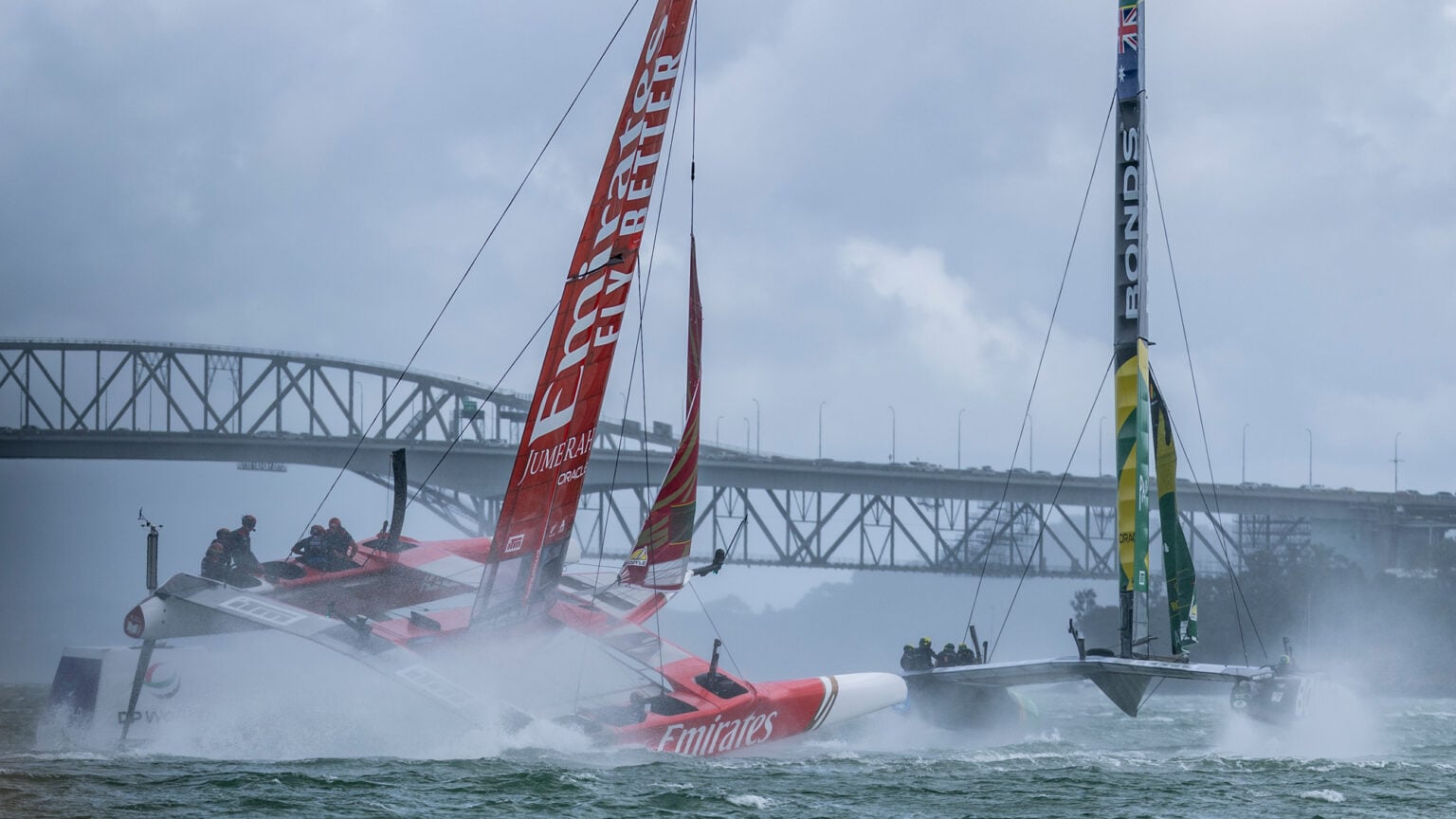 Tom Slingsby’s Australia Wins SailGP Auckland as Sinclair and Audinet Hurt in Crash">

Organisers implemented a split-fleet format for the 11-team regatta on the Waitematā Harbour after a high-speed collision forced immediate changes to race sequencing, berthing rotations and emergency response procedures.
Race summary and immediate operational changes
Tom Slingsby’s Australia secured victory in the ITM New Zealand SailGP final, prevailing in a rain-affected decider against ایمریٹس جی بی آر اور Spain. The win marked the Australian team’s second consecutive success on the Waitematā, but it followed a day dominated by a violent collision between the سیاہ ورق اور DS Automobiles Team France F50s.
Following the crash, event management adjusted start windows, transfer runs for support craft, and the timetable for shore-side race services to prioritise medical clearance and hull inspections. Several scheduled public hospitality activities were delayed while recovery teams removed wreckage from the racing area.
Confirmed injuries and boat damage
During the first leg of Race 3, سیاہ ورق grinder Louis Sinclair suffered compound fractures to both legs and was transported to hospital in stable condition. DS Automobiles Team France strategist Manon Audinet experienced blunt abdominal trauma after being thrown forward into the steering wheel and was under assessment as of the following morning.
Both teams were forced to withdraw after structural inspections revealed significant damage to hulls and foils. Team captains reported extensive repairs would be required before any return to international circuits.
Tactical shifts in challenging conditions
With gusts up to 25 ناٹ the revised course layout aimed to reduce traffic density, splitting the fleet into two groups to increase spacing on the water. Crews reported “pretty loose moments” as they battled gust variability and heavy spray; several teams adjusted foil angles and sail trim to prioritise control over outright speed.
Key operational takeaways
- Split-fleet scheduling reduces collision risk but complicates television broadcasting and shore-side programming.
- Increased need for on-water medical evacuation readiness and rapid-response tow capabilities.
- Greater emphasis on pre-race equipment checks and redundant safety restraints for crew working in exposed cockpits.
Timeline of events
| Time (local) | واقعہ | Action taken |
|---|---|---|
| Race 3, Leg 1 | Collision between Black Foils and DS Automobiles Team France | Immediate extraction, medical response, hull assessment |
| Post-crash | Split-fleet introduced | Revised start sequence and spectator zone adjustments |
| آخری | Australia wins in wet, gusty conditions | Podium ceremony held with modified shore operations |
Implications for event organisers and local tourism
Major regattas like SailGP bring significant visitor flows, affecting ferry schedules, harbour cruise operations and waterfront businesses. The incident required reallocation of port services and affected planned yacht parties and spectator cruises. Organisers and local authorities must now reassess contingency plans for both on-water safety and the visitor economy tied to high-profile sailing events.
For travellers and tour operators, the disruption highlights the importance of flexible bookings and clear refund policies when events influence transport timetables and shore-side activities.
Practical advice for visitors to Auckland during major regattas
- Monitor official race updates and harbour notices for service changes.
- Allow extra time for transfers to waterfront events; expect adjusted ferry and coach schedules.
- Consider booking tours and experiences with providers who offer flexible vouchers and clear cancellation terms.
At a glance: the weekend combined high-performance racing with serious safety lessons—organisers adapted quickly, but the human and infrastructure costs were real. While media focus landed on the crash and injuries to Louis Sinclair and Manon Audinet, the Australian team’s tactical composure under wet, gusty conditions secured the on-water result.
Highlights include the operational pivot to a split-fleet format, the enforced withdrawals of two teams due to structural damage, and the need for reinforced safety protocols for F50 operations. Still, even the most detailed reviews and honest feedback can’t replace firsthand experience. On GetExperience, you book your experience from verified providers at reasonable prices. This empowers you to make the most informed decision without unnecessary expenses or disappointments. GetExperience offers a diverse selection of tours in the Auckland area, including harbour cruises and museum tours with live guides that cater to varied interests and budgets — Get the best offers GetExperience.com
In conclusion, SailGP Auckland combined elite racing with hard lessons for event logistics, safety management and visitor services. The immediate operational responses—split-fleet scheduling, enhanced medical readiness and revised port operations—mitigated further risk, while Australia’s win underlined the tactical demands of high-wind foiling. For travellers, organisers and tour operators alike, the episode reinforces the value of flexible planning for travel experiences, adventure activities, cruise packages, luxury adventure travel experiences, museum tours with live guides, eco-friendly wildlife safaris and exclusive yacht charters—because the best information can’t replace actually showing up and taking part in the adventure.