


 اردو
اردو  English (UK)
  Русский
  বাংলা
বাংলা  العربية
  日本語
日本語  한국어
한국어  Magyar
  Norsk nynorsk
  Türkçe
  עִבְרִית
  Español
  Čeština
  Svenska
  Português
  Ελληνικά
  Suomi
Suomi  Nederlands
  Română
  Italiano
  Français
  Polski
  Українська
  Deutsch
  简体中文
简体中文  Slovenčina
  Српски језик
  Azərbaycan dili
  O‘zbekcha
  አማርኛ
አማርኛ 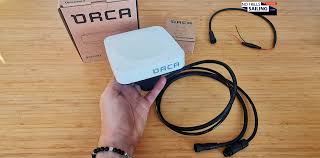 Orca Core کو انسٹال اور کیلیبریٹ کرنا: چارٹر آپریٹرز اور کروزر کو کیا جاننے کی ضرورت ہے۔">

A centralized navigation unit like the Orca Core consolidates heading, GPS and speed inputs, reducing instrument-check time before departures and helping meet passenger-safety and regulatory requirements for small charter and excursion vessels.
Core installation and sensor integration at a glance
Orca’s Core is designed to sit at the heart of a vessel’s data network and publish a unified set of navigation variables over Wi‑Fi and NMEA networks. Typical installations position the Core where it can access antenna feedlines for GNSS and be close to primary sensor cabling, while keeping it dry and ventilated. Important practical points for installers and skippers:
- Sensor consolidation: Connect heading, GPS, depth and speed sources so Core can act as a single source of truth for chartplotters and displays.
- Antenna placement: GPS antennas should be topside and clear of obstructions; internal tablet GPS units are less accurate than Core’s dedicated receiver.
- Boat material considerations:Fluxgate compasses perform poorly on steel hulls due to local magnetic distortion; aluminium and composite hulls are more compatible.
- Speed sensing: Core documentation encourages modern sensors such as ultrasonic boat speed sensors for reliable speed-through-water data where paddlewheel reception is inconsistent.
Choosing the right compass and speed sensors
A quick comparison helps operators decide what to fit or retain when installing Core.
| Sensor Type | Pros | Cons |
|---|---|---|
| Fluxgate compass | Rugged, low power, good for aluminium/composite hulls | Sensitive to local ferrous interference; limited on steel boats |
| GPS compass | Excellent heading at anchor or low speed; integrates GNSS | Costly compared to fluxgate; requires good satellite reception |
| Paddlewheel log | Proven and inexpensive | Prone to fouling and failure; poor down‑below reception for wireless units |
| Ultrasonic log | Maintenance‑free, accurate speed‑through‑water | Higher up‑front cost, requires correct installation |
Data sources, priorities and failure modes
Orca Core allows selection of data sources but does not expose a complex, user-editable priority queue for automatic failover in the same way as some high‑end race systems. In practice, Core will use the selected inputs and is expected to accept alternate available sources if the primary disappears, though automatic recovery to the higher‑priority source after a failure should be verified in testing prior to carrying passengers.
Calibration: why it matters and how Core helps
Sensors rarely output final, usable values without calibration. Anemometers output pulse frequencies, depth sounders produce analog waveforms, and speed sensors must be translated into accurate speed-through-water numbers. Effective calibration compensates for:
- Hull condition changes (fouling or paint)
- Instrument drift or replacement
- Different sails, rigging changes or loading variations
Orca places a clear emphasis on simplifying calibration workflows and automating much of the process. For operators used to systems like B&G H5000, which require detailed manual steps and polar updates, Orca aims to deliver the bulk of the practical benefits with considerably less administrative overhead.
Best practices for calibration on charter and tour boats
- Perform a baseline calibration in calm conditions and record the boat’s calibration history.
- Repeat calibration after significant changes: new prop, antifouling, repairs or different sail inventory.
- Use speed-through-water measurements (ultrasonic logs recommended) where precise true-wind calculations are needed.
- Run a failover test: simulate sensor loss and confirm Core and displays recover sensibly.
Operational implications for tourism and charter operators
For day‑charter operators, liveaboard tours, and yacht charter companies, a dependable central unit like Orca Core can reduce pre-departure checks and improve navigation confidence. Reliable heading and true-wind data improve passenger comfort and safety, and they streamline the work of skippers who must maintain regulatory compliance while delivering experiences such as sunset cruises, eco‑wildlife safaris, and luxury yacht charters for events.
Feedback from users highlights that Core can deliver most of the functionality demanded by race-caliber systems at a fraction of the operational complexity, which translates directly into better on-water time for commercial operators and fewer technical headaches for charter guests.
On GetExperience, you book your experience from verified providers at reasonable prices. This empowers you to make the most informed decision without unnecessary expenses or disappointments. When you’re arranging tours or bespoke excursions that rely on safe, well-equipped boats, GetExperience offers a wide variety of tours worldwide to suit any preference and budget; the platform supports full and secure payments with voucher confirmation and lets you submit tailored requests so providers can match your needs. Book your Trip GetExperience.com
In summary, Orca Core streamlines sensor integration, eases calibration burdens and improves operational reliability for both private cruisers and commercial tourism operators. Choosing the right compass and speed sensors, establishing a clear calibration routine, and testing failover behavior are key steps before carrying paying guests. Proper setup makes it simpler to deliver superior travel experiences—whether adventure rafting trips for beginners, eco-friendly wildlife safaris, museum tours with live guides or exclusive yacht charters—while keeping instrumentation maintenance and operator stress to a minimum.