


 Українська
  English (UK)
  Русский
  বাংলা
বাংলা  العربية
  日本語
日本語  한국어
한국어  Magyar
  Norsk nynorsk
  Türkçe
  עִבְרִית
  Español
  Čeština
  Svenska
  Português
  Ελληνικά
  Suomi
Suomi  Nederlands
  Română
  Italiano
  Français
  Polski
  Deutsch
  简体中文
简体中文  Slovenčina
  Српски језик
  اردو
اردو  Azərbaycan dili
  O‘zbekcha
  አማርኛ
አማርኛ 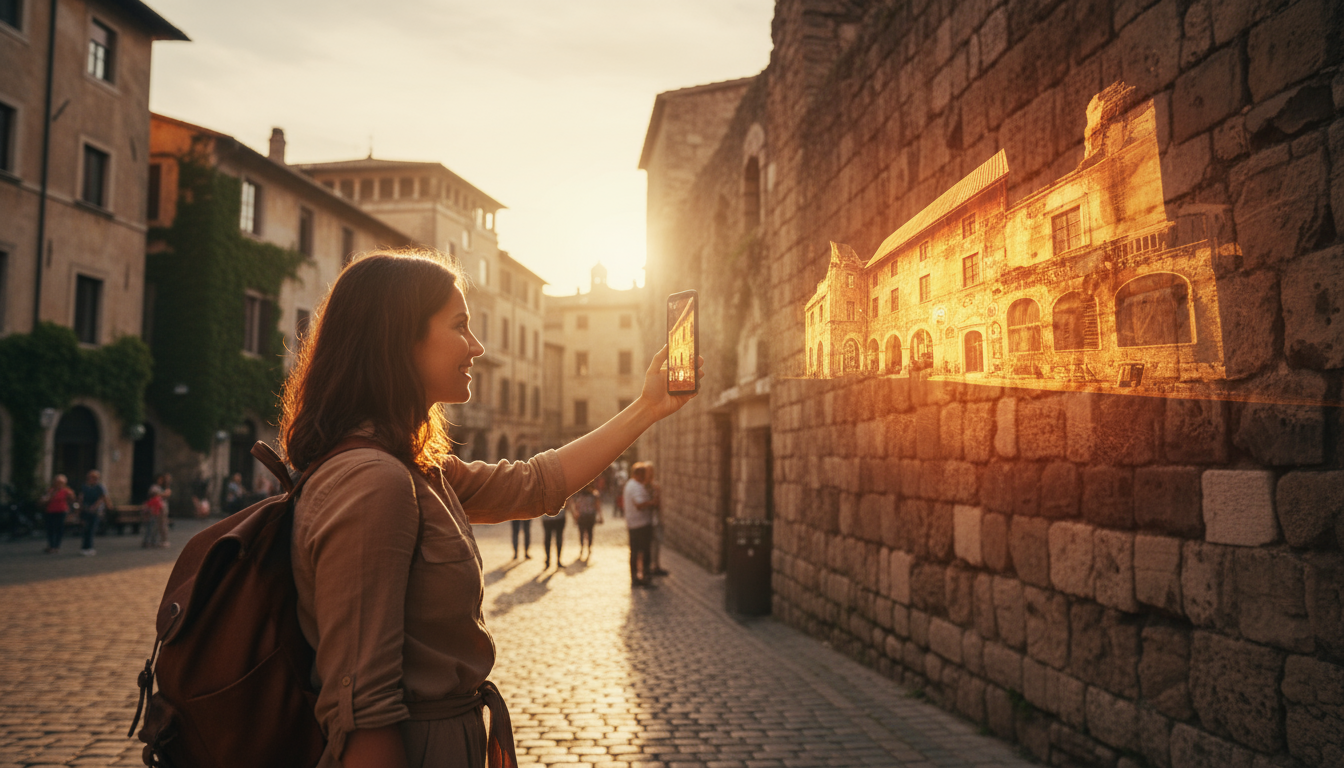 Цифровий компас: Як доповнена реальність переосмислює туристичний досвід">

The world of travel is undergoing a profound transformation, moving beyond static guidebooks and pre-recorded audio tours. At the heart of this revolution is Augmented Reality in Travel—a technology that seamlessly overlays digital information onto the physical world, creating interactive and deeply personal journeys for the modern explorer. No longer a futuristic concept, AR is now the digital compass guiding travelers to richer, more immersive experiences.
Augmented Reality in Travel (AR) is distinguished from Virtual Reality (VR) by its ability to keep the user grounded in their real-world environment while enhancing it with digital content. This blending of the physical and virtual is what makes it uniquely powerful for tourism, turning every landmark, street sign, and even menu into a source of real-time, context-aware information.
The Pillars of Immersive Exploration: Key Applications of AR in Tourism
The application of Augmented Reality in Travel extends far beyond simple novelty; it addresses fundamental traveler needs, from navigation to cultural understanding. By leveraging the power of mobile devices, AR solutions are becoming ubiquitous, transforming mundane aspects of a trip into engaging adventures. This technological shift is increasing visitor engagement, providing richer insights, and fundamentally changing how destinations market themselves.
Bringing History to Life: The Immersive Storyteller
One of the most compelling uses of Augmented Reality in Travel is its capacity to resurrect the past. Imagine standing before the ruins of an ancient temple or a partially destroyed castle. Traditional interpretation relies on plaques or static images. AR, however, allows travelers to point their phone or a dedicated device at the site and see a vivid, 3D reconstruction of the structure as it once stood. This is not just a visual aid; it is an act of historical resurrection, offering a deeper connection to the site’s original context and significance.
For example, at historical sites like the Colosseum in Rome, AR apps can overlay reconstructions of gladiatorial combat or show the building in its prime, offering a deeper connection to the site’s history. This technique is used in museums, art galleries, and archaeological sites, providing interactive tours that move beyond passive listening. By viewing 3D models of iconic buildings like the Eiffel Tower or taking virtual walking tours, travelers can explore these wonders before they even leave home, increasing the likelihood of booking.
Seamless Navigation and Wayfinding
Getting lost in an unfamiliar city is a classic travel trope, but AR technology is making it obsolete. AR navigation apps, such as integrated features in Google Maps and CityMapper, overlay virtual directions directly onto the live camera feed of a user’s device, providing clear, interactive pathfinding guidance. Instead of constantly checking a map, the directions are superimposed onto the street view, making orientation intuitive and reducing confusion, especially in large, complex spaces like airports or sprawling tourist attractions.
This real-time, location-based information simplifies the process of finding points of interest, restaurants, public transport, and accommodations. Furthermore, for the adventurous solo traveler, having a reliable AR navigation tool adds a layer of safety and confidence when exploring new territories. This application of Augmented Reality in Travel makes navigating foreign cities, even with complicated transit systems, much easier and more secure.
Beyond Sightseeing: Practical and Personalized AR Tools
The utility of Augmented Reality in Travel extends into practical, day-to-day scenarios, making travel smoother, safer, and more personalized. These tools streamline experiences, from check-in to ordering a meal.
Bridging the Language Barrier Instantly
Language is often the most significant barrier to deep cultural immersion. AR provides an instant solution through real-time language translation. Travelers can simply point their camera at a foreign sign, menu, or document, and the AR app translates the text instantly on the screen, overlaying the foreign characters with the local language. This capability eliminates the need to stop and ask for directions and facilitates easier communication between tourists and locals, transforming communication for travelers in non-English speaking areas.
The Personalized Hospitality Experience
The hospitality sector is rapidly adopting Augmented Reality in Travel to enhance the guest experience from pre-booking to check-out. Before committing to a reservation, potential guests can use AR features on hotel websites to explore 3D models of rooms, visualize different views, and get a better sense of the ambiance.
Once a traveler arrives, AR-based indoor navigation can help them navigate vast resorts or cruise ships, directing them seamlessly to amenities like pools, conference halls, or specific restaurants. Starwood Hotels, for instance, has used beacon technology to allow customers to unlock rooms or receive special deals via their devices when in close proximity. The integration of Augmented Reality in Travel here is all about convenience, personalization, and enhancing customer confidence.
The Future Trajectory: AR for Sustainable and Confident Travel
As the technology matures, Augmented Reality in Travel is poised to become an indispensable component of every journey. Its role is expanding to encompass not just experiential enhancement but also responsible tourism.
One promising direction is the use of AR to promote responsible and sustainable tourism. AR overlays can reveal the environmental impact of over-visitation on fragile ecosystems or highlight conservation projects in real time. By educating travelers about their impact as they explore, AR encourages more mindful and sustainable behavior, helping to preserve the destinations we love.
The benefits for the tourism industry itself are clear: enhanced visitor engagement, new revenue opportunities, better customer insights, and improved destination marketing. AR features can captivate visitors and streamline the travel experience, ultimately driving engagement, confidence, and consumer spending. From informative overlays to real-time translations, Augmented Reality in Travel is creating a new era of proactive, knowledgeable, and deeply connected travel.
Ultimately, AR transforms the traveler from a passive observer into an active participant. It provides a layer of digital intelligence that makes the world more legible, more historically rich, and profoundly more accessible. For any traveler seeking a deeper, more informed, and more seamless experience, the use of Augmented Reality in Travel is no longer a luxury—it is an expectation.