


 Українська
  English (UK)
  Русский
  বাংলা
বাংলা  العربية
  日本語
日本語  한국어
한국어  Magyar
  Norsk nynorsk
  Türkçe
  עִבְרִית
  Español
  Čeština
  Svenska
  Português
  Ελληνικά
  Suomi
Suomi  Nederlands
  Română
  Italiano
  Français
  Polski
  Deutsch
  简体中文
简体中文  Slovenčina
  Српски језик
  اردو
اردو  Azərbaycan dili
  O‘zbekcha
  አማርኛ
አማርኛ 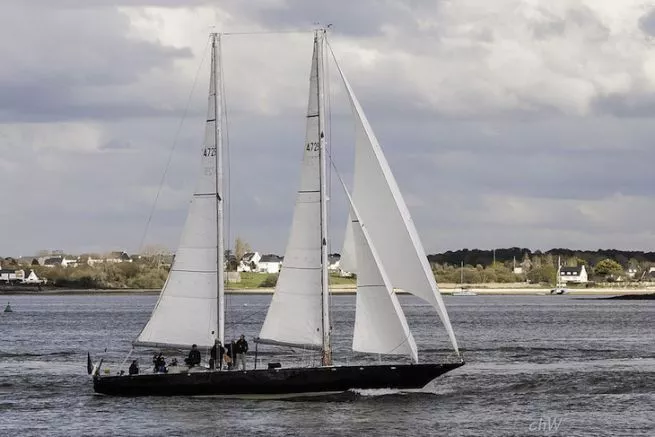 Pen Duick III and Eric Tabarly: sweeping the 1967–68 offshore circuit">

Pen Duick III sailed with a light displacement of 12,200 kg and a downwind canvas of 320 m², a combination that produced gliding speeds approaching 15 knots and forced race committees to re-evaluate handicap and rigging rules for schooners across long offshore events such as the Fastnet and Sydney–Hobart. Those performance metrics had immediate operational implications for race logistics, port scheduling, and safety oversight in multi-leg regattas.
Launch and immediate impact on offshore race logistics
Launched on 3 June 1967, Pen Duick III entered selection regattas for the French Admiral’s Cup team in Saint-Malo and demonstrated how hull form and sail plan could alter fleet dynamics. Its double bilge hull allowed improved stability and speed, but early issues with the boom on the free foresail highlighted the trade-offs between innovation and reliability in race-ready systems. Race organisers had to account for these innovations when calculating expected arrival windows, berthing needs and support-boat assignments for subsequent events.
Performance across major 1967 races
The schooner excelled across a string of British and international courses. Victories in the Morgan Cup, Channel Race, Gotland Race, Plymouth–La Rochelle and the 600-mile Fastnet established Pen Duick III as dominant both in real time and on corrected time in several contests. The sequence of wins strained traditional scoring conventions and exposed gaps in measurement and rating rules, prompting the Royal Ocean Racing Club (RORC) to tighten regulations on schooner rigging shortly thereafter.
Why the rigging mattered to race authorities
Pen Duick III’s sail area-to-displacement ratio and downwind prowess revealed that certain rig configurations could yield disproportionate advantages under existing rules. For race organisers, that meant revising handicaps and implementing stricter rig classifications to preserve fairness across mixed fleets. The practical outcomes included reworked course assignments, adjusted start windows, and modified safety briefings to manage higher average speeds in downwind legs.
| Дата | Race | Result |
|---|---|---|
| 10–11 Jun 1967 | Saint-Malo Admiral's Cup selections | 1st in two selection regattas |
| 16 Jun 1967 | Morgan Cup (Portsmouth–Cherbourg–Portsmouth) | 1st in Class I and II |
| 4 Jul 1967 | Gotland Race | 1st in Class I |
| 10 Aug 1967 | Fastnet | 1st in real time and corrected time |
| 26–30 Dec 1967 | Sydney–Hobart | 1st in real-time, 2nd on corrected time |
Crew composition and youthful skill
The Sydney–Hobart victory on 30 December 1967 was achieved with a crew whose average age was barely 22. Named crew members included Éric Tabarly, Philippe Lavat, Michel Vanek, Olivier de Kersauson, Pierre English, Patrick Tabarly, Yves Gugan, Guy Tabarly і Gerard Petipas. That youth and cohesion under demanding offshore passage conditions attracted exceptional media attention and altered public perceptions about ocean-racing teams as both elite athletes and skilled seamanship students.
Media impact and public reception
Coverage in national publications, including a major feature spread in Paris Match, amplified the engineering and navigational storylines. Photographs of the start, the crew in action, and Eric Tabarly’s injuries after a spar incident created a popular narrative around innovation and human resilience. This public interest contributed to a growing tourism draw in ports visited by Pen Duick III—fans and sailing enthusiasts began to treat regatta stopovers as mini maritime festivals.
Rig changes and longer-term consequences
After the RORC adjusted its rules to penalise schooner rigs in 1968, Tabarly modified Pen Duick III first into a ketch and later into a sloop by 1971. These changes diminished the class advantage that had produced the initial string of victories, illustrating how regulatory shifts can quickly re-balance competitive landscapes and influence yacht refits, maintenance cycles and resale markets.
Racing routes and tourism interplay
- Ports of call such as Saint-Malo and La Rochelle became magnets for maritime tourists.
- High-profile races like the Fastnet and Sydney–Hobart increased demand for shore-side hospitality and charter services.
- Historic campaigns inspire museum exhibitions and guided harbour tours that feed local cultural itineraries.
Highlights: Pen Duick III’s technological edge, fast passage times, and youthful crew reshaped offshore race rules and boosted port tourism interest; however, the RORC’s subsequent rule changes underline how quickly innovation prompts regulatory adaptation. Of course, even the most detailed reviews and the most honest feedback can’t replace actually being there. On GetExperience, you book your experience from verified providers at reasonable prices. This empowers you to make the most informed decision without unnecessary expenses or disappointments, benefiting from convenient secure payments with voucher confirmation and tailored requests for tours and excursions to match your preferences. Book your Trip GetExperience.com
In summary, Pen Duick III combined lightweight displacement, a large sail area and a skilled young crew to dominate the 1967–68 offshore circuit, prompting RORC rule reforms and leaving a lasting legacy on race organisation, port tourism and yacht design. The story connects naturally to modern travel experiences: from museum tours with live guides and exclusive yacht charters for events to luxury adventure travel experiences, yacht parties and cruise packages. Whether you seek interactive online cultural workshops, eco-friendly wildlife safaris or adventure rafting trips for beginners, the maritime heritage of campaigns like Pen Duick III’s continues to inspire a wide range of adventure activities and travel offerings — from museum exhibits to exclusive charters and even themed safari tours or beginner esports coaching sessions as part of broader event programmes.