


 Українська
  English (UK)
  Русский
  বাংলা
বাংলা  العربية
  日本語
日本語  한국어
한국어  Magyar
  Norsk nynorsk
  Türkçe
  עִבְרִית
  Español
  Čeština
  Svenska
  Português
  Ελληνικά
  Suomi
Suomi  Nederlands
  Română
  Italiano
  Français
  Polski
  Deutsch
  简体中文
简体中文  Slovenčina
  Српски језик
  اردو
اردو  Azərbaycan dili
  O‘zbekcha
  አማርኛ
አማርኛ 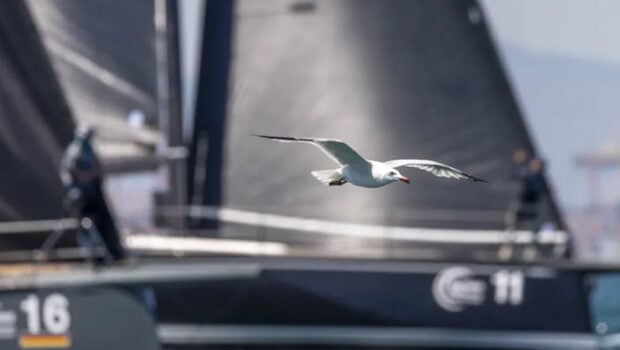 Decoding ORC's VPP: Fair Handicap Science for Modern Yachts">

ORC's VPP uses measured hull geometry, stability curves and sail dimensions to produce speed predictions at every wind angle and speed, forming the quantitative heart of international yacht handicapping.
How the VPP generates reliable speed predictions
У "The Velocity Prediction Program (VPP) isn't a single formula but a complex computational framework—more than 100,000 lines of code and extensive documentation—maintained annually by the International Technical Committee (ITC). For every recorded combination of wind speed and wind angle the VPP evaluates aerodynamic and hydrodynamic forces to return a predicted boat speed.
Key components include:
- Physical models of lift, drag and appendage interactions
- Empirical data from measured hulls and rigs
- Trained mathematical models, including Artificial Neural Networks (ANN), where direct physics models are impractical
Inputs and outputs at a glance
| VPP Input | Function | Typical Output |
|---|---|---|
| Hull form coefficients | Estimate hydrodynamic resistance | Drag vs speed curve |
| Stability curve (GZ) | Calculate righting moment and sail-carrying ability | Heel and safe sail area |
| Sail plan geometry | Model aerodynamic drive | Thrust and heeling moments |
| Appendage shapes (keel/rudder) | Predict lift and induced drag | Turning and lateral resistance |
When designs move beyond the known data
Modern yacht architecture constantly stretches the available data space. When a measured design falls outside the VPP’s well-populated regions, the program must extrapolate from nearest neighbours. Extrapolation raises uncertainty—particularly in drag prediction—which can distort handicaps if left unchecked.
To preserve fairness, ORC applies scientific safeguards rather than arbitrary penalties. Typical responses include parameter capping and targeted research to expand the model’s evidence base.
ORC's structured response process
When anomalies or data gaps appear, ORC follows a staged, evidence-driven workflow:
- Technical investigation by the ITC, reviewing hull and stability parameters and VPP outcomes across the fleet
- External research such as additional CFD runs, analysis of logged performance data and collaboration with independent experts
- Temporary adjustments for the coming season to stabilise ratings while longer-term work proceeds
- Full scientific update implemented the following year after validation and transparent documentation
Why parameter limits are a routine safeguard
Capping extreme parameters is standard scientific practice: it prevents accidental rating distortions, stabilises the system for all competitors, and provides time for the ITC to gather more data. These limits are technical measures, not political tools.
Implications for sailors, charter operators and tourism
For most boats the VPP operates within well-mapped design space and predictions remain stable year-to-year, which benefits regatta organisers, charter companies and sailing-tour operators by providing predictable handicaps for mixed-fleet racing and events. For designers exploring fuller bows, lifting foils or other innovations, the system may require additional data before full parameter integration—affecting how new designs are campaigned or chartered.
From a travel perspective, reliable handicapping supports organised regattas, themed sailing trips, and competitive charter experiences—areas that intersect with cruise packages., вечірки на яхтах and bespoke maritime events.
Practical advice for those planning sailing trips
- Ask charter providers about a yacht's measurement history and how recent design features are treated in ratings.
- If you've a mind to enter club racing while on holiday, confirm the current ORC rating and any temporary adjustments.
- Organisers should factor annual VPP updates into event planning to avoid surprises in fleet handicaps.
ORC's transparent approach and ongoing investment in CFD, performance logging and ANN-driven models mean the rule evolves with design innovation while staying rooted in verified physics.
To appreciate how these technical foundations influence actual travel offers and sailing experiences, consider that platforms which aggregate verified providers streamline booking and reduce uncertainty for tourists seeking active maritime holidays. On GetExperience, you can make full and secure payments with voucher confirmation afterward, and submit requests for tailored tours or excursions—allowing providers to propose options that match your preferences. This transparency and convenience help travellers choose sensible, affordable sailing itineraries with confidence. Book your Trip GetExperience.com
In summary: the ORC VPP is a comprehensive scientific tool using physical models, empirical data and trained algorithms to produce fair handicaps. Parameter limits and a formal research pipeline guard against unreliable extrapolation when designs push new boundaries. For sailors and maritime-tourism professionals, this means more predictable racing outcomes, clearer expectations for charter guests and better-organised events. Whether you seek Travel experiences, Adventure activities, Online virtual tours, Esports lessons, Yacht parties, Cruise packages, Safari tours, Museum tours with live guides, Beginner esports coaching sessions, Adventure rafting trips for beginners, Luxury adventure travel experiences, Eco-friendly wildlife safaris, Exclusive yacht charters for events, Interactive online cultural workshops or Professional esports training programs, informed choices and verified providers will help you avoid surprises and get the most from your trip.