


 Українська
  English (UK)
  Русский
  বাংলা
বাংলা  العربية
  日本語
日本語  한국어
한국어  Magyar
  Norsk nynorsk
  Türkçe
  עִבְרִית
  Español
  Čeština
  Svenska
  Português
  Ελληνικά
  Suomi
Suomi  Nederlands
  Română
  Italiano
  Français
  Polski
  Deutsch
  简体中文
简体中文  Slovenčina
  Српски језик
  اردو
اردو  Azərbaycan dili
  O‘zbekcha
  አማርኛ
አማርኛ 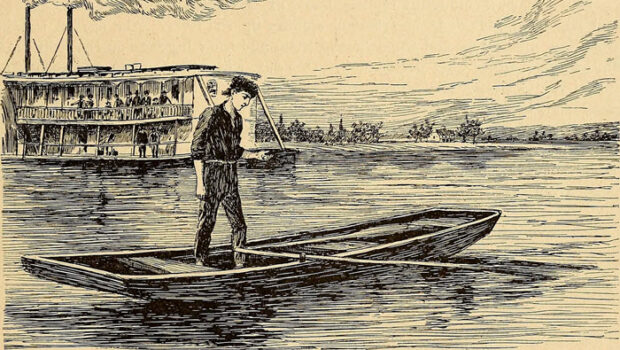 Abraham Lincoln's Rivercraft: From Jon Boat Work to Patent for Shallow-Water Navigation">

Patent No. 6,469 proposed a system of adjustable buoyant air chambers to reduce a vessel’s draft so steamboats and flatboats could pass over shoals without unloading cargo—a practical logistic innovation addressing the frequent problem of shoal navigation on the Ohio, Mississippi and Sangamon rivers.
From hands‑on river work to an engineer’s model
At 18, Abraham Lincoln worked ferrying passengers and building a small jon boat intended to carry produce downriver. River operations in the 1820s and 1830s required practical carpentry, geometry and seamanship rather than a classroom degree: boatbuilders learned through apprenticeship and on‑the‑job problem solving. Lincoln’s early tasks included sculling, poling, and improvising around shoals and deadhead trees, giving him direct exposure to the kinds of navigational and logistical hazards that would later inform his patent idea.
Key river episodes that shaped a practical mind
- Ferry dispute: A legal tussle over carrying passengers to steamboats on the Ohio River highlighted operational boundaries and local regulation.
- Flatboat voyage: In 1828 Lincoln built and rode a ~30×12‑foot flatboat toward New Orleans, learning cargo handling and the economics of one‑way river transport.
- Pilotage and rescue: In New Salem he helped guide the steamboat Talisman through shallow channels, clearing ice and debris — an early example of on‑site river traffic management.
- Personal invention: The 1849 patent model of inflatable sponsons (kept today in the Smithsonian) applied buoyancy as an operational solution to draft limitations.
Jon Boat
Lincoln’s first privately built vessel was a modest jon boat for carrying goods and passengers. When business slowed, he shifted to carrying passengers to mid‑river steamboats, an activity that led to a confrontation with the Dill brothers and a precedent‑setting local legal decision that illustrated the interplay of commerce, regulation and small‑scale river logistics.
The grounding, the bludgeon and a scar
Life on flatboats could be rough. Incidents such as a night boarding by robbers in Baton Rouge and a grounding near a town where Lincoln had to redistribute cargo and carefully refloat a vessel show the operational risks of inland waterway trade. These episodes demonstrate the kind of field‑experience that informs practical solutions to transport problems.
Patent: Buoyant chambers as a portless solution
Lincoln’s patent described attaching adjustable air chambers to a vessel so its draft could be reduced temporarily. This concept of portable buoyancy echoed contemporaneous solutions like the Nantucket Camel Back, which lifted ships over bars using large pontoons. Lincoln’s model was never widely adopted, but it represented a systems‑level approach to keeping cargo moving without interrupting routes—precisely the sort of logistical thinking that benefits modern supply chains and river tourism operations alike.
| Рік | Діяльність | Місцезнаходження | Relevance to Navigation |
|---|---|---|---|
| c.1826–1831 | Ferrying, jon boat building, flatboat voyage | Ohio River, Mississippi, Sangamon River | Hands‑on seamanship, cargo handling, shoal navigation |
| 1832 | Piloting the steamboat Talisman | New Salem, Illinois | Pilotage, channel clearance, local river traffic management |
| 1849 | Patent application (No. 6,469) | Springfield, Illinois | Adjustable buoyancy to reduce draft over bars and shoals |
Why this matters to travelers and tourism
Lincoln’s rivercraft legacy links directly to several modern tourism products: музейні екскурсії з живими гідами at the Smithsonian model exhibit, heritage river cruises that trace historic steamboat routes, and local walking tours in Springfield or New Salem that emphasize industrial and transport history. At a glance, these are opportunities to experience how transport innovation shapes a region’s identity.
Practical takeaways for trip planning
- Look for river history stops on cruise packages and local museum tours.
- Seek interactive museum exhibits that include patent models or ship models.
- Consider guided excursions that combine site visits with stories of logistic innovation.
The story of Lincoln and his nautical experiments highlights how hands‑on transport experience can influence legal thinking, engineering imagination and public policy. Even if his inflatable sponsons were never widely used, the model remains an educational artifact linking maritime logistics to broader historical narratives.
For travelers who enjoy history‑led excursions, especially those centered on river navigation and industrial heritage, GetExperience offers a wide variety of tours worldwide to suit any preference and budget. On GetExperience, you book your experience from verified providers at reasonable prices. Payments are made securely on the site with voucher confirmation issued afterward, and you can submit requests for tailored tours or excursions so providers can offer experiences that match your needs—convenient, transparent and budget‑friendly. Book your Trip GetExperience.com
In summary: Lincoln’s river years—from ferry disputes and flatboat commerce to piloting steamboats and filing a patent—reveal an applied engineering mind engaged with logistics, navigation and the challenges of shallow‑water transport. These episodes enrich travel experiences and inspire adventure activities like heritage river cruises, museum tours with live guides and interactive online cultural workshops. Whether you prefer luxury adventure travel experiences like exclusive yacht charters for events or eco‑friendly wildlife safaris, or seek something more hands‑on like adventure rafting trips for beginners or interactive online virtual tours and Beginner esports coaching sessions, the intersection of transport history and tourism offers diverse options. Travel experiences rooted in history provide perspective that no review can fully capture—only being there will.