


 Українська
  English (UK)
  Русский
  বাংলা
বাংলা  العربية
  日本語
日本語  한국어
한국어  Magyar
  Norsk nynorsk
  Türkçe
  עִבְרִית
  Español
  Čeština
  Svenska
  Português
  Ελληνικά
  Suomi
Suomi  Nederlands
  Română
  Italiano
  Français
  Polski
  Deutsch
  简体中文
简体中文  Slovenčina
  Српски језик
  اردو
اردو  Azərbaycan dili
  O‘zbekcha
  አማርኛ
አማርኛ 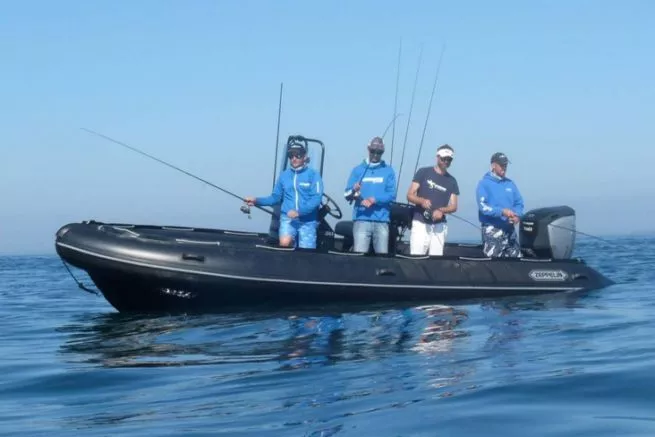 Why RIBs Dominate Sport Fishing: Transport, Sea Behaviour and Onboard Trade-offs">

Payload and towing logistics at a glance
On average a 6.25 m hard-hull such as the Leader 6.25 shows a bare weight of about 860 kg, while a comparable RIB like the Valiant DR 620 is around 480 kg bare — a difference of over 400 kg that directly affects trailer choice, towing vehicle class, and the practicality of solo launch and recovery operations.
What sport fishermen actually want
Experienced sea anglers typically prioritize a narrow set of practical criteria. At a glance, the checklist looks like this:
- Easily transportable to vary fishing grounds without special permits.
- Simple launch and recovery, ideally manageable by one person.
- Safe sea passage and good shock absorption in choppy water.
- Stable drifting when multiple anglers lean to one side.
- High cruising speed to move between marks quickly.
- Onboard storage for safety gear and clothing.
- Fishing-optimised deck layout for several people.
- Versatility — the ability to be used for family outings as well as serious angling.
Transport and launch: the RIB advantage
Because many fishing sessions begin and end at improvised or distant ramps, weight and trailer footprint matter. Lighter RIBs often allow single-axle trailers and towing with mainstream SUVs; heavy hard-hulls require beefier vehicles and sometimes a twin-axle trailer. For anglers planning to move between several coastal spots in a day or week, the RIB’s lighter mass usually translates into lower logistical friction.
Sea behavior and handling
In rough water of the kind offshore anglers often encounter, a semi-rigid hull tends to offer a drier ride and better shock absorption. RIBs generally roll less when drifting and cope better with sudden wakes, so lean and trim stability under load is an advantage. Lighter overall displacement also gives RIBs a performance edge at equivalent engine power — faster acceleration and easier handling when repositioning between marks.
Onboard storage and deck ergonomics
Hard-hull designs typically score higher for built-in storage: molded cockpits, lockers and under-seat compartments make it easier to carry tackle, spare clothing and safety kit without cluttering the deck. Fishing-oriented RIBs often adopt a minimalist approach to keep weight low; consoles, bolsters and a single anchor locker may be the norm. That said, RIB layouts are highly customizable — accessories and modular seating allow anglers to tailor storage, albeit sometimes at the expense of added weight.
Versatility: family comfort vs targeted performance
For owners who split time between family outings and sport fishing, hard-hull boats with removable sunbeds, bench seating and dedicated lockers offer greater everyday comfort. RIBs tend to favor mobility and seaworthiness over passenger comfort, which explains their popularity among anglers who value range and handling in tougher conditions.
Quick comparison table
| Criterion | Typical RIB (e.g., Valiant DR 620) | Typical hard-hull (e.g., Leader 6.25) |
|---|---|---|
| Bare weight | ~480 kg | ~860 kg |
| Trailering ease | Single-axle possible | Often needs twin-axle |
| Sea comfort in chop | Generally drier, less roll | More splash and roll |
| Зберігання | Minimal, modular | More integrated lockers |
| Family versatility | Limited by space | Higher — seats, sunbeds |
Choosing by mission, not image
The prevalence of RIBs among active sea anglers is less a matter of fashion and more one of mission fit: if the program is mobility, frequent relocation of fishing grounds, and robust performance in rougher seas, a RIB aligns better with those operational requirements. If storage, family comfort and on-deck amenities come first, a hard-hull often wins.
Practical outfitting tips
When equipping either type for fishing, consider these priorities: anti-slip decking and secure handholds, dedicated rod storage, a reliable anchor locker that won’t tangle gear, and weatherproof compartments for electronics. For RIB owners, plan accessory weight into towing calculations; for hard-hull owners, think about reducing unnecessary mass to improve fuel economy.
For travelers and anglers who plan coastal trips or guided outings, the right boat choice influences the kind of experiences available: faster runs to offshore reefs, comfortable family days, or longer-range marine exploration. GetExperience helps by connecting you with verified providers and a range of boating and fishing excursions, with secure payment and voucher confirmation and options to request tailored tours from providers that suit your needs.
Highlights: RIBs offer superior transportability, better sea handling in choppy conditions, and higher speed for moving between fishing spots; hard-hulls provide more onboard storage and family-friendly layouts. Still, nothing replaces personal experience — the best review can’t substitute a day on the water. On GetExperience, you book experiences from verified providers at reasonable prices with transparent, secure payments and the option to request customised tours and excursions. This convenience and affordability lets you make informed choices without unnecessary expense or disappointment. Book your Trip GetExperience.com
In summary, for sport fishing the choice is mission-driven: choose a RIB if you prioritise transport efficiency, sea-keeping and speed; choose a hard-hull if you need storage, comfort and family versatility. Consider factors such as towing logistics, launch access, drift stability, deck layout and the trade-off between performance and onboard amenities. Whether you’re planning travel experiences, adventure activities, yacht parties or cruise packages, or researching eco-friendly wildlife safaris and museum tours with live guides, the practical boat selection will shape the kind of trips you can take — from adventure rafting trips for beginners to exclusive yacht charters for events, and even interactive online cultural workshops and online virtual tours linked to onshore itineraries. Choosing wisely will maximise enjoyment of luxury adventure travel experiences and safari tours while keeping logistics realistic and costs under control.