


 Українська
  English (UK)
  Русский
  বাংলা
বাংলা  العربية
  日本語
日本語  한국어
한국어  Magyar
  Norsk nynorsk
  Türkçe
  עִבְרִית
  Español
  Čeština
  Svenska
  Português
  Ελληνικά
  Suomi
Suomi  Nederlands
  Română
  Italiano
  Français
  Polski
  Deutsch
  简体中文
简体中文  Slovenčina
  Српски језик
  اردو
اردو  Azərbaycan dili
  O‘zbekcha
  አማርኛ
አማርኛ 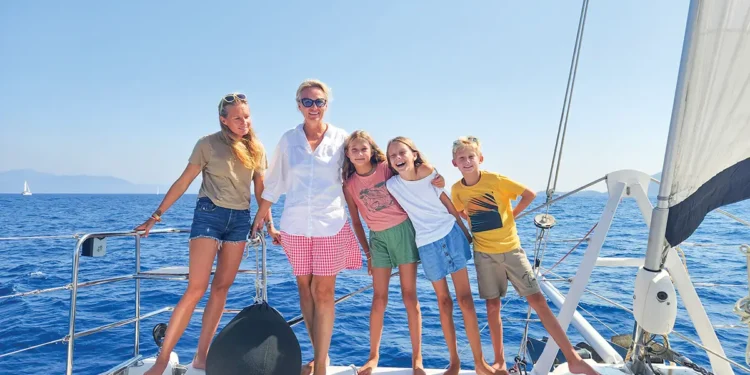 Family Life at Sea: How the Kids-Aboard! Flag Builds Community for Young Cruisers">

Marinas and anchorages increasingly adapt berthing logistics to accommodate families with children, adding family-friendly shore power pedestals, dedicated dinghy docks, and play-friendly beach access that encourage longer stays and easier socializing for cruising families.
Berthing, Shore Access, and Why a Signal Matters
For cruising families, the physical layout of a harbor can determine social opportunity. A slip with a short, stable finger pier and nearby beach access converts short-term stops into meaningful playdates; conversely, transient berths with limited dinghy landing points make spontaneous kid-to-kid interaction difficult. In that environment, a simple visual identifier like the Kids-Aboard! flag becomes a low-cost, high-impact social logistics tool: it signals availability, safety, and openness to visits without needing to broadcast private details.
Origins of the Kids-Aboard! Flag
The Kids-Aboard! concept began when Kalle Manzano, who grew up sailing, sought a way to bridge the social gap for children living aboard. By designing a bright orange banner to fly from the mast, the flag functions as a universal, nonverbal invitation: “There are kids here, come say hi.” The flag’s visibility helps families coordinate informal meetups in anchorages and marinas where shore-side amenities vary.
Education at Sea: Online Schooling and Skill Building
Cruising families commonly use accredited online education programs to maintain academic continuity. These programs supply materials, assignments, and grading frameworks that align with mainland systems, reducing reintegration friction when children return to land-based schooling. Beyond academics, shipboard life accelerates practical learning: navigation, basic engine maintenance, watermaker troubleshooting, and even celestial navigation often become part of a child’s informal curriculum.
Typical learning outcomes for kids living aboard
| Area | Shipboard Experience | Land Equivalent |
|---|---|---|
| Mechanical Skills | Engine checks, oil changes, plumbing fixes | Shop class, hands-on STEM activities |
| Navigation | Chart work, weather assessment, celestial navigation | Geography, basic meteorology |
| Environmental Awareness | Reef stewardship, marine life ID, eco-friendly anchoring | Field biology, environmental science trips |
Practical Tips for Parents Cruising with Children
- Schedule shore breaks: Regular on-land days help kids socialize and provide access to sports and enrichment programs.
- Use visual signals: Fly the Kids-Aboard! flag or similar markers to invite contact without compromising privacy.
- Plan schooling windows: Keep consistent study times so crossings and anchorages don’t interrupt core lessons.
- Create quick-access play kits: Floating toys, compact games, and portable sports gear increase anchorages’ play value.
Social Dynamics: From Shyness to Community
Children raised on boats often experience a different social rhythm than land-based peers: fewer spontaneous backyard games, more structured meetups in marinas or beaches. The Kids-Aboard! flag addresses the awkwardness of approaching another boat by providing a social cue. For parents, the flag also functions as a safety reassurance: when another family sees it, they know the vessel is likely to welcome children and that onboard routines consider young passengers.
How the flag influences cruising culture
The flag fosters intergenerational friendships and supports networking among those entering the boating lifestyle or marine professions. It smooths transitions for families who hop between regions—Caribbean anchorages, Mediterranean harbors, or coastal marinas—by offering an instantly recognizable sign that aligns with shared values of safety, stewardship, and mutual support.
For travelers who like organized options, platforms such as GetExperience.com offer curated boat tours and family-friendly excursions that can complement a cruising itinerary—helping families plan on-land activities that integrate with marina logistics and provide safe, supervised social opportunities for children.
At a glance: the most important takeaways are that practical berth features and shore access shape family cruising logistics, online schooling supports academic continuity, and the Kids-Aboard! flag solves a simple but persistent social problem by signaling open, kid-friendly boats. Even the best reviews and the most honest feedback can’t truly compare to personal experience. On GetExperience, you book your experience from verified providers at reasonable prices. This empowers you to make the most informed decision without unnecessary expenses or disappointments. Enjoy the convenience, affordability, and wide range of experiences and additional options available—Book your Trip GetExperience.com
In summary, family cruising blends logistical planning with rich travel experiences: secure berthing, practical online education, and community-building tools like the Kids-Aboard! flag turn isolated stops into social opportunities. Skills learned afloat—marine mechanics, celestial navigation, and environmental stewardship—complement land-based learning and open doors to diverse Adventure activities, Online virtual tours, Yacht parties, Cruise packages, Safari tours, Museum tours with live guides, Beginner esports coaching sessions, Adventure rafting trips for beginners, Luxury adventure travel experiences, Eco-friendly wildlife safaris, Exclusive yacht charters for events, Interactive online cultural workshops, and even Professional esports training programs when families seek varied enrichment on and off the water.