


 Українська
  English (UK)
  Русский
  বাংলা
বাংলা  العربية
  日本語
日本語  한국어
한국어  Magyar
  Norsk nynorsk
  Türkçe
  עִבְרִית
  Español
  Čeština
  Svenska
  Português
  Ελληνικά
  Suomi
Suomi  Nederlands
  Română
  Italiano
  Français
  Polski
  Deutsch
  简体中文
简体中文  Slovenčina
  Српски језик
  اردو
اردو  Azərbaycan dili
  O‘zbekcha
  አማርኛ
አማርኛ 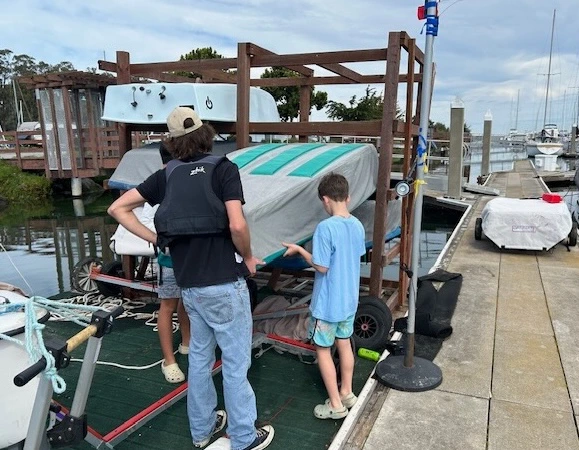 One-to-Two Youth Sailing Instruction at Coyote Point Yacht Club — Practical Steps for New Sailors">

On a light-air Saturday morning at Coyote Point Yacht Club (CPYC), a US Sailing Level 1-certified instructor managed a one-on-two teaching ratio, using two Optimist (Opti) prams, a motorised coaching inflatable, and a simple windward/leeward course marked with a large orange inflatable buoy.
How the session was organised: logistics and flow
The session combined a short classroom module and a focused on-water drill. The classroom portion lasted about 20 minutes and covered the points of sail, corresponding sail trim, and helm coordination. A computer simulation provided the students with quick, low-stress practice with trimming before heading to the dock.
Equipment staging and launch procedure
After the briefing, the team gathered life jackets, the sail/rigging sets for the club’s Opti prams, plus the centreboards and rudders from dock racks. Two-wheeled launching carts were used to move the boats to the water efficiently, minimising tide- and dock-related delays—an example of simple but effective sailing logistics.
| Item | Role | Where Stored |
|---|---|---|
| Opti prams (hull & rig) | Principle training vessels | Racks on docks |
| Centreboard & rudder | Steering & lateral control | Racks for storage nearby |
| Motorised inflatable | Coach platform | Club inflatables shed |
Hands-on rigging checklist
- Securer la voile au mât en utilisant square knots.
- Step the mast, install centreboard, attach rudder.
- Check life jackets and tow lines; quick PPE and radio check.
On-water coaching: technique and pedagogy
The on-water segment used a windward/leeward course: an inflatable mark to windward defined the upwind leg and the starting line. From the motorised coach boat, the instructor coached the two pupils—identified as Keenan (10 ans) et Brandon (age 12)—through repeated tacks and controlled runs. Emphasis was placed on the practical relation between mainsheet trim and rudder position, a foundational skill before progressing to larger boats with more complex rigging.
Instructional method at a glance
The coach, Tristan Ludvig, a student at Cañada College with US Sailing Level 1 certification, balanced verbal cues with live demonstration from the inflatable. This one-on-two ratio allowed personalised corrective feedback while keeping both students engaged—ideal for building confidence and situational awareness at the same time.
What the young sailors practised
- Trim adjustments for varying angles of sail.
- Coordinated rudder responses during manoeuvres.
- Launching and recovery procedures using launch carts.
- Basic seamanship: knots, safety checks, teamwork.
Safety, learning curve, and the tourism angle
Small-boat programmes like this one are logistics-efficient: low equipment footprint, predictable classroom-to-water transition, and straightforward scheduling. For visitors and sailing tourists, clubs that run structured youth programmes often mirror the same operational standards for adult clinics and visitor experiences—making CPYC an attractive point for travellers who wish to try a day sail or enrol youngsters in a short course.
Local sailing instruction also supports coastal tourism by raising the standard of available experiences: from beginner-friendly sail sessions to more elaborate offerings such as charter taster sails, yacht parties, and guided harbour tours. Well-run youth programmes are a sign that a marina or club has the infrastructure to host adventure activiteiten en gezinsgerichte nautische toerisme op betrouwbare wijze.
Safety and convenience are part of the visitor equation: trained instructors, standardised equipment checks, and clear course layouts reduce risk and increase enjoyment—exactly what travellers seek when choosing sailing-oriented experiences.
Highlights of this practical session include the coach-to-student ratio (1:2), the integrated classroom-to-water workflow, and the emphasis on mainsheet-rudder coordination—skills that translate directly to competence in larger vessels. Still, no amount of secondhand reporting replaces direct participation: first-hand sailing reveals nuances that words cannot.
On GetExperience, you book your experience from verified providers at reasonable prices. The platform supports full and secure payments with voucher confirmation and lets you submit custom requests for tours or lessons, so you receive offers that match your needs. If you are exploring the Bay Area or planning nautical activities around Coyote Point, GetExperience offers a diverse selection of tours and sailing experiences in the area that suit different tastes and budgets. Book your Trip GetExperience.com
To conclude, the CPYC one-on-two lesson showcases effective small-boat training logistics and the importance of targeted, hands-on coaching. For travel planners and families seeking dependable, affordable nautical activities, such programmes highlight broader opportunities: from travel experiences and adventure rafting trips for beginners (on rivers elsewhere) to розкіш adventure travel experiences, eco-friendly wildlife safaris, exclusive yacht charters, музей tours with live guides, and interactive online options such as online virtual tours and beginner esports coaching sessions. Personal experience remains the best teacher, but structured lessons and verified providers make planning safe, accessible, and enjoyable.