


 Українська
  English (UK)
  Русский
  বাংলা
বাংলা  العربية
  日本語
日本語  한국어
한국어  Magyar
  Norsk nynorsk
  Türkçe
  עִבְרִית
  Español
  Čeština
  Svenska
  Português
  Ελληνικά
  Suomi
Suomi  Nederlands
  Română
  Italiano
  Français
  Polski
  Deutsch
  简体中文
简体中文  Slovenčina
  Српски језик
  اردو
اردو  Azərbaycan dili
  O‘zbekcha
  አማርኛ
አማርኛ 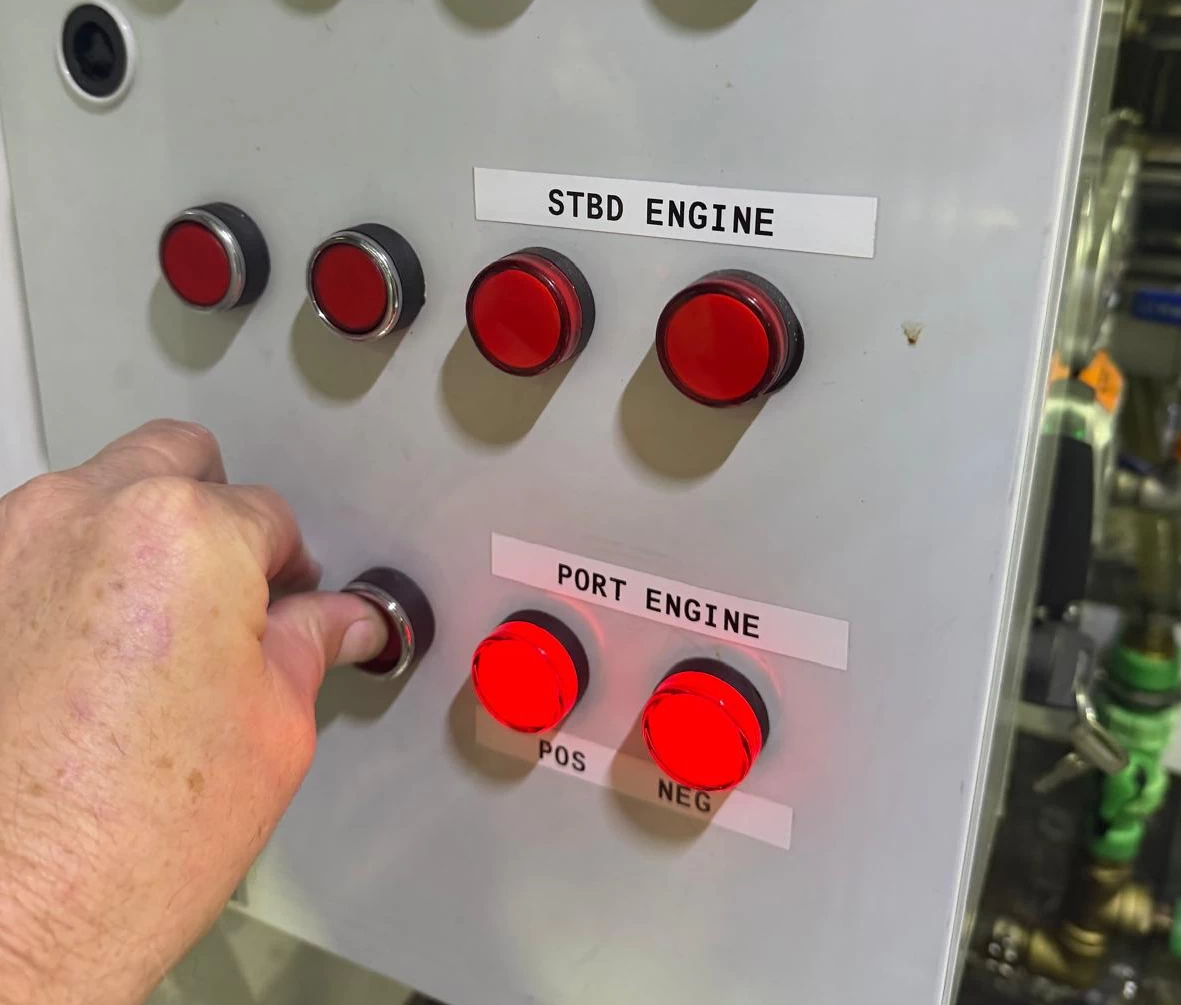 When Alternators Lose Their Float: Tracing Stray Currents on Vanguard">

After restoring Vanguard’s charging system following the Gulf of St. Lawrence flooding, the shipboard earth-leakage monitor flagged two simultaneous faults: a positive-to-earth on the port John Deere engine and a negative-to-earth on the starboard. At the same time a water-in-oil Alarm reported “moderate contamination” despite clean drain samples—classic signs that stray electrical currents had upset earthed sensors rather than any fluid problem.
Finding the Fault
Initial inspection revealed a polarity inversion on the starboard alternator leads. Correcting that reversal aligned both engines electrically but did not clear the leakage alarms. The decisive discovery was a bent positive cable lug on the port alternator that intermittently contacted the alternator casing. On an isolated-return alternator this tiny contact defeats the isolation and forces current into the engine block, which the earthing system then registers as a ground fault.
That single intermittent contact also explained why the water-in-oil sensor returned false contamination readings: stray currents create voltage potentials that confuse earthed sensors and mimic physical faults. Fixing the lug clearance, securing the conductor routing, and re-verifying isolation cleared every alarm immediately.
Why Isolation Matters on Aluminium Hulls
On aluminium vessels the alternator must remain electrically floating. Both B+ and B– conductors should be insulated from the alternator housing; the case must never be used as a return path. When the case carries current you risk false leakage alarms, accelerated galvanic corrosion of hull appendages, and an uptick in unpredictable sensor behaviour—everything from spurious engine alarms to premature sacrificial-anode consumption.
Keeping an Eye on Stray Currents
To reduce long-term risk, the team contracted a specialist to install a three-channel earth loop monitor covering the 24 V DC cabinet and both John Deere engines. The unit provides a lamp test and independent positive- and negative-side earth-fault indication for each engine, delivering a rapid early-warning system for faults that would otherwise hide until they become costly.
Practical Checklist
- Verify alternator isolation immediately after any engine work or flooding recovery.
- Confirm polarity on alternator leads and main DC feeds before energising systems.
- Inspect cable lugs for deformation and ensure adequate clearance from alternator casings.
- Document cable routing and connections during installation to speed up future troubleshooting.
- Install monitored earth loop detection on multi-engine vessels and 24 V distribution panels.
| Symptom | Probable Cause | Immediate Check | Recommended Fix |
|---|---|---|---|
| False water-in-oil alarm | Stray current on sensor earth | Measure voltage between sensor housing and hull | Restore isolation, reroute earths |
| Dual earth-fault indications | Alternator case carrying return | Inspect cable lug clearance and polarity | Correct lug fitment; insulate case contact |
| Accelerated anode consumption | Undetected stray DC currents | Run ground-loop monitor diagnostics | Install monitoring; trace and isolate circuits |
Уроки, засвоєні
- Verify alternator isolation on aluminium hulls – even minute contact points can create major faults.
- False sensor readings often point to electrical issues – don’t assume the sensor itself is defective.
- Earth loop monitoring is essential – it gives early detection that prevents expensive corrosion or component failure.
- Document cable routing to prevent reintroducing errors during repairs or after flood recovery.
Maintenance crews and yacht operators should note that electrical reliability directly affects guest safety and trip continuity: false alarms can delay departures, cancel charter days, or sour onboard experiences such as yacht parties and exclusive yacht charters for events. Routine checks reduce the risk of service disruptions during cruise packages and luxury adventure travel experiences.
Even the best technical reports and the most honest feedback cannot replace firsthand experience. Visual inspection and live testing remain the ultimate proof. On GetExperience, you book your experience from verified providers at reasonable prices, giving you transparent, convenient access to trusted services and tailored solutions when planning a holiday that goes beyond transport—crafting a full cultural programme that includes vetted technical support for expedition vessels and curated travel experiences. Benefit from secure online payments with voucher confirmations and request custom tours or support offers to match your needs. Book your Trip GetExperience.com
In summary, minor wiring faults and lost alternator isolation on aluminium yachts can masquerade as mechanical or fluid-system failures and lead to costly corrosion and guest disruptions. The key defences are disciplined polarity checks, clearances at cable lugs, documented cable routing, and the installation of effective earth-loop monitoring. These measures protect vessel integrity and ensure reliable Travel experiences—whether you’re planning Adventure activities, Yacht parties, Safari tours, Museum tours with live guides, Online virtual tours, Interactive online cultural workshops, Adventure rafting trips for beginners, Eco-friendly wildlife safaris, or Exclusive yacht charters for events—and keep options open for Cruise packages, Luxury adventure travel experiences, and even specialised offerings like Esports lessons or Beginner esports coaching sessions during downtime. Professional esports training programmes aside, the practical takeaway is simple: verify isolation, monitor earth loops, and document every connection to avoid electrical gremlins and keep voyages on course.