


 Svenska
  English (UK)
  Русский
  বাংলা
বাংলা  العربية
  日本語
日本語  한국어
한국어  Magyar
  Norsk nynorsk
  Türkçe
  עִבְרִית
  Español
  Čeština
  Português
  Ελληνικά
  Suomi
Suomi  Nederlands
  Română
  Italiano
  Français
  Polski
  Українська
  Deutsch
  简体中文
简体中文  Slovenčina
  Српски језик
  اردو
اردو  Azərbaycan dili
  O‘zbekcha
  አማርኛ
አማርኛ 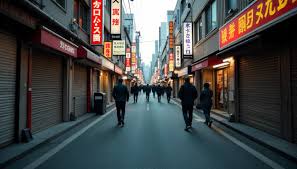 Japan’s Tourism Industry Sees Market Reactions Following China’s Travel Advisory">

Overview of Japan’s Tourism Market Shake-Up
Japan’s tourism sector witnessed a sharp downturn as shares connected to the industry fell considerably following a travel warning from China. This advisory, prompted by a diplomatic tension, especially over Taiwan, led to widespread drops in shares of retail and airline companies heavily reliant on Chinese visitors. The potential economic fallout could be significant, revealing vulnerabilities in Japan’s tourism and broader economic landscape.
Impact on Tourism-Related Stocks and Economy
The announcement from Chinese authorities advising citizens to avoid travel to Japan sparked a substantial slump across various tourism-related businesses. Isetan Mitsukoshi, a key department store chain with a strong foothold among Chinese shoppers, dropped sharply by 11.4%, marking its worst performance in over a year. Similarly, Oriental Land, the operator behind the famous Tokyo Disneyland, fell by more than 5%, and Japan Airlines took a hit with nearly a 4% decrease in share value.
Because visitors from mainland China accounted for about 24% of all tourists in Japan as recently as September, this travel ban holds grave consequences. Analysts estimate that this could translate into an annual economic loss of roughly 2.2 trillion yen (around $14.23 billion), dragging down Japan’s real GDP by approximately 0.36%. The tourism sector’s rising importance to Japan’s economy has been underlined by a weakening yen, which until now had supported inbound travel growth.
Broader Effects on Retail and Service Sectors
Japanese retail brands focusing on the Chinese market also suffered considerable setbacks. Ryohin Keikaku, which manages the Muji brand, saw a near 10% plunge, while Fast Retailing — the parent company of Uniqlo, which operates over 900 stores across China — recorded a 5.6% decline. More broadly, the benchmark Nikkei index fell by 0.7%, showing the ripple effect through Japan’s financial markets.
| Company | Sector | Stock Decline (%) |
|---|---|---|
| Isetan Mitsukoshi | Department Stores | 11.4% |
| Oriental Land | Theme Parks | 5.1% |
| Japan Airlines | Airlines | 3.9% |
| Ryohin Keikaku (Muji) | Retail | 9.4% |
| Fast Retailing (Uniqlo) | Retail | 5.6% |
Diplomatic Tensions and Their Tourism Fallout
The advisory from China came shortly after a series of stern warnings about military conflict related to Taiwan. This tense geopolitical climate underlies Japan’s recent market slump and highlights risks beyond purely commercial interests. While tourism is visibly affected, economic concerns also extend to Japan’s strong dependence on critical materials like rare earth metals, over 90% of which are processed in China. This reliance could have broader implications on technology sectors crucial for both domestic and visitor-related services.
The Wider Economic Picture
Firms with business ties between Japan and China also felt the strain. Shares of Linkage, a software company focusing on the Japanese market, dropped 3.5%, while airlines based in mainland China such as Air China and China Eastern were also affected. The uncertainty underlying the diplomatic relations casts a long shadow over Japan’s stable growth expectations, specifically for tourism — a core pillar of the economy.
Viktiga slutsatser
- The travel warning by China has caused a notable decline in Japanese tourism stocks and retail sectors.
- China remains the second-largest source of tourists to Japan with nearly a quarter of total visitors being Chinese.
- The potential annual economic loss is estimated to exceed 2 trillion yen, affecting GDP growth.
- Japan’s dependency on Chinese rare earth metals poses an added economic concern amid diplomatic tensions.
- Both Japanese and Chinese companies interconnected in tourism and retail sectors have experienced price drops.
Even comprehensive financial data and detailed market analyses can only paint part of the picture. Nothing quite compares to the insights gained from experiencing a destination firsthand. Platforms like GetExperience.com offer a trusted way to book with verified providers, ensuring convenience, transparency, and fair pricing. Whether you’re eyeing guided museum tours, eco-friendly safaris, or interactive online cultural workshops, GetExperience.com brings a wealth of options tailored to your interests and budget. Best of all, their secure payment system and voucher confirmations eliminate the usual travel worries. Få de bästa erbjudandena genom GetExperience.com.
Slutsats
Japan’s tourism sector is navigating challenging waters as geopolitical developments trigger caution among one of its most vital visitor segments. The steep declines in tourism-related shares and retail reflect the delicate balance of international relations and their immediate impact on travel behavior. As Japan continues to pursue its position as a prime tourism nation, managing these external risks will be key. Travelers and tourism operators alike should remain adaptable, appreciating that travel experiences can flourish through carefully selected providers and platforms that understand the nuances of global tourism trends. From adventurous rafting trips for beginners to luxury adventure travel experiences, the tourism landscape remains rich — providing countless options well beyond the headlines.