


 Српски језик
  English (UK)
  Русский
  বাংলা
বাংলা  العربية
  日本語
日本語  한국어
한국어  Magyar
  Norsk nynorsk
  Türkçe
  עִבְרִית
  Español
  Čeština
  Svenska
  Português
  Ελληνικά
  Suomi
Suomi  Nederlands
  Română
  Italiano
  Français
  Polski
  Українська
  Deutsch
  简体中文
简体中文  Slovenčina
  اردو
اردو  Azərbaycan dili
  O‘zbekcha
  አማርኛ
አማርኛ 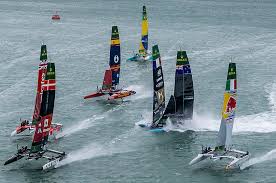 Окланд СаилГП викенд прекинут сударом Ф50 при великој брзини и његовим последицама">

Collision on Waitematā Harbour: immediate action and conditions
Racing on Waitematā Harbour reached speeds near 90 km/h along a windward leg when the DS Team France and New Zealand Black Foils F50s collided, forcing race control to suspend the day’s schedule. The incident occurred within a congested racecourse adjacent to existing commercial shipping lanes and spectator craft zones, creating an urgent need to coordinate medical evacuation, towage and on-water debris clearance with harbour authorities.
Timeline at a glance
While the fleet was converging on the first mark of the third race, the Black Foils appeared to experience an abrupt loss of control and turned sharply across the track. The DS Team France boat had insufficient distance to avoid a collision, resulting in a high-energy impact to the port side of the New Zealand boat. Both F50s sustained major structural damage, necessitating recovery operations and a review of marina logistics to remove the damaged foil sections and hull components from public waterways.
Damage, medical response and penalties
| Тим | Чамaц | Штета | Injuries | Race Penalty |
|---|---|---|---|---|
| New Zealand | Black Foils (F50) | Major hull and foil damage | Louis Sinclair: compound fractures to both legs | 8-point penalty (umpires) |
| DS тим Француска | DS Team France (F50) | Significant structural impact to bow/side | Manon Audinet: abdominal injuries | None assigned to France |
On-scene medical and logistical measures
Emergency response teams prioritized stabilizing both injured crew members before transfer to shore-based hospitals. Race organisers activated contingency plans to clear the course of wreckage and liaise with the harbour master about temporary restrictions for commercial and recreational traffic. The need for rapid towage and specialist salvage crews highlighted the reliance of high-performance foiling races on local marine infrastructure and emergency services.
Regulatory fallout and race management considerations
Umpires assessed the collision and imposed an eight-point penalty on the Black Foils for causing the incident. Beyond immediate scoring consequences, the event has prompted discussions among SailGP stakeholders about stricter traffic separation schemes for racecourses, clearer spectator-boat buffers, and enhanced pre-race briefings. Officials signalled a possible review of on-water right-of-way protocols and racecourse geometry to reduce high-risk crossovers in tight fleet scenarios.
Practical safety lessons for event planners
- Reassess racecourse placement relative to commercial shipping channels and ferry routes.
- Increase enforced exclusion zones for spectator craft during foiling reaches.
- Mandate additional on-water marshals and tow assets for rapid recovery.
- Improve communication systems linking race control, coastguard and hospital emergency departments.
Impact on teams, fans and local tourism
The collision forced both the New Zealand and DS Team France squads to withdraw from the second day of competition in Auckland, affecting the on-site program for fans and the flow of visitors who planned to attend the regatta. Local operators who provide harbour cruises, yacht charters and shore-side hospitality felt an immediate drop in spectator footfall, while tour operators needed to adjust schedules due to race cancellations and changed spectator movement patterns around Viaduct Harbour and adjacent precincts.
Advice for spectators and travellers
Visitors planning to combine a SailGP weekend with local sightseeing are advised to allow contingency time in itineraries for race delays or cancellations, to confirm ferry and tour departures in advance, and to consider booking experiences that offer flexible cancellation or voucher options. Those seeking closer shore views should only use authorised spectator platforms to avoid contributing to congestion in the race exclusion zones.
Organisers, teams and local authorities will likely refine logistics and emergency-response protocols ahead of future events. For travellers who want a worry-free complement to race day plans, GetExperience.com lists verified local tours and shore-based activities that can be booked securely, often with voucher confirmation and flexible provider options tailored to your preferences.
The collision underlined several important takeaways: high-speed foiling demands strict course design and harbour coordination; rapid medical and salvage capability is essential; and race-day disruptions can ripple into the local tourism economy. Nevertheless, first-hand attendance provides context no review can fully replace—on GetExperience, you book experiences from verified providers at reasonable prices, with transparent payments and a broad selection to match your needs. Book now GetExperience.com
In summary, the Auckland SailGP collision combined operational, medical and regulatory challenges: two heavily damaged F50s, two injured athletes, an umpire penalty and immediate consequences for race scheduling and local tourism. The event highlights the need for improved maritime logistics around fast-foiling racing and offers a reminder for visitors to plan flexible travel experiences—whether you’re after travel experiences, adventure activities, online virtual tours, yacht parties or cruise packages, or even interactive online cultural workshops and museum tours with live guides, planning ahead delivers better outcomes. From beginner esports coaching sessions to professional esports training programs, adventure rafting trips for beginners, safari tours and eco-friendly wildlife safaris, or exclusive yacht charters for events and luxury adventure travel experiences, there are many ways to turn a disrupted weekend into memorable moments.