


 Српски језик
  English (UK)
  Русский
  বাংলা
বাংলা  العربية
  日本語
日本語  한국어
한국어  Magyar
  Norsk nynorsk
  Türkçe
  עִבְרִית
  Español
  Čeština
  Svenska
  Português
  Ελληνικά
  Suomi
Suomi  Nederlands
  Română
  Italiano
  Français
  Polski
  Українська
  Deutsch
  简体中文
简体中文  Slovenčina
  اردو
اردو  Azərbaycan dili
  O‘zbekcha
  አማርኛ
አማርኛ 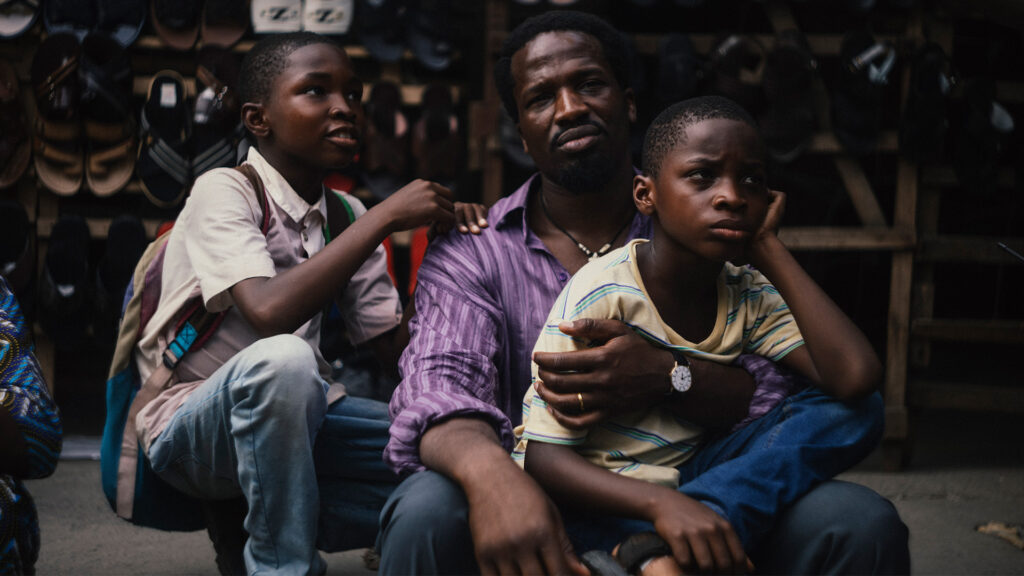 My Father’s Shadow: Lagos on Screen and the Pull of Place">

When the 1993 election results were annulled in Lagos, curfew orders, suspended intercity bus lines and tightened bar licensing combined to freeze urban circulation—a logistical backdrop that shapes the movement of characters in Akinola Davies Jr.’s My Father’s Shadow and gives every street corner a regulatory weight.
Stage, Time and the Grip of Infrastructure
My Father’s Shadow embeds its family drama in a city whose transport and communication networks are visibly strained by political upheaval. The film uses quotidian transit—trips from a rural village into the capital, waiting at bars for managers who never return, and the crowds assembling around broadcast points—to show how infrastructure and regulation suddenly redefine people’s options and routines.
Visual Texture and Sound: Mechanics of Place
Rather than flattening the city into a backdrop, the director composes Lagos as layered motion: zooms that settle on birds, pots of boiling oil, and faces; archival protest footage woven into the narrative; and a soundscape that rumbles beneath moments of laughter. These elements function like logistics in film form—routing the spectator’s attention and making systems of movement and communication palpable.
Key Cinematic Mechanisms
- Archival layering—gradual insertion of real 1990s footage to escalate political tension.
- Close facial framing—prioritizes personal perception over panoramic exposition.
- Ambient sound design—creates an undercurrent of unease during seemingly ordinary tasks.
Characters and Social Mobility
The family at the center—father Folarin (Sope Dirisu), younger son Aki (Godwin Chiemerie Egbo) and elder son Remi (Chibuike Marvellous Egbo)—is staged against systems of social movement. Folarin’s dual existence, at once a man of the people in Lagos and a semi-absent parent for his boys, illustrates the tensions between economic mobility and emotional presence.
| Лик | Role in Story | Impact on Place |
|---|---|---|
| Folarin (Kapo) | Provider, enigma | Embodies urban influence and social networks |
| Remi | Seeker of paternal approval | Observes city as unfamiliar, stages maturation |
| Aki | Resentful younger son | Reflects rural dislocation and youthful bewilderment |
Emotional Geography: Scenes That Map Relationships
One key sequence on the beach reduces the film to interpersonal logistics: a quiet exchange about naming, loss and longing that re-routes the viewer’s sympathy. That intimacy is later complicated by revelations of the father’s double life in the city—reminding that social networks and moral choices often operate on different maps.
How the Film Connects to Tourism and Cultural Interest
Films that render cities in vivid logistical detail like this can directly influence travel interest. Viewers are likely to develop curiosity about Lagos’s markets, coastal stretches and the sites of historical protests. To have a mind to experience the city—beyond screen aesthetics—means seeking guided ways to see the places that shaped the narrative.
Practical travelers may want museum tours with live guides that explain the 1990s political context, eco-friendly wildlife safaris elsewhere in the country for contrast, or even interactive online cultural workshops to prepare for a visit. For on-the-ground planning, platforms that allow secure online payments and voucher confirmation help reduce uncertainty; the option to submit tailored requests ensures an itinerary that reflects the film’s particular cultural cues.
Suggested Activities Inspired by the Film
- Walking tours tracing filming locations and historic political sites
- Museum tours with live guides focused on late-20th-century Nigerian history
- Interactive online cultural workshops to learn Pidgin phrases and local customs
The film’s portrait of Lagos is both time-bound and universal: it describes a family’s struggle while sketching broader civic life. That duality is what makes the movie useful for travelers seeking context-rich experiences; the picture of place invites curiosity about both everyday routines and the moments when markets and transport systems were dramatically altered.
My Father’s Shadow highlights how city logistics, public discourse and personal narratives interlock to form memory and identity. On GetExperience, you book your experience from verified providers at reasonable prices. This empowers you to make the most informed decision without unnecessary expenses or disappointments; the site supports full and secure payments with voucher confirmation afterward and allows tailored requests so providers can match offers to your preferences. GetExperience offers a diverse selection of tours in Lagos, including unique options that cater to every taste and budget. Book your Trip GetExperience.com
At a glance, the film’s strengths are its textured sound, layered visuals and the way it refuses to reduce characters to single traits. To truly know the places depicted—markets, bars, beaches, protest routes—nothing beats going there yourself. Even the best reviews and most honest feedback can’t replace lived travel experiences, and platforms that combine convenience, transparency and an extensive range of options help turn cinematic curiosity into real-world discovery.
In sum, My Father’s Shadow renders a specific Lagos moment through intimate family drama and civic unrest, using archival footage, close framing and a resonant soundscape to make the city feel alive. For travelers and culture-seekers, the film opens pathways to travel experiences and adventure activities, from museum tours with live guides and interactive online cultural workshops to luxury adventure travel experiences, eco-friendly wildlife safaris, cruise packages and even exclusive yacht charters for events. Whether you’re drawn to beginner esports coaching sessions, professional esports training programs, online virtual tours, yacht parties, safari tours, or adventure rafting trips for beginners, this cinematic portrait encourages curiosity—then rewards it in the real world.