


 Русский
  English (UK)
  বাংলা
বাংলা  العربية
  日本語
日本語  한국어
한국어  Magyar
  Norsk nynorsk
  Türkçe
  עִבְרִית
  Español
  Čeština
  Svenska
  Português
  Ελληνικά
  Suomi
Suomi  Nederlands
  Română
  Italiano
  Français
  Polski
  Українська
  Deutsch
  简体中文
简体中文  Slovenčina
  Српски језик
  اردو
اردو  Azərbaycan dili
  O‘zbekcha
  አማርኛ
አማርኛ 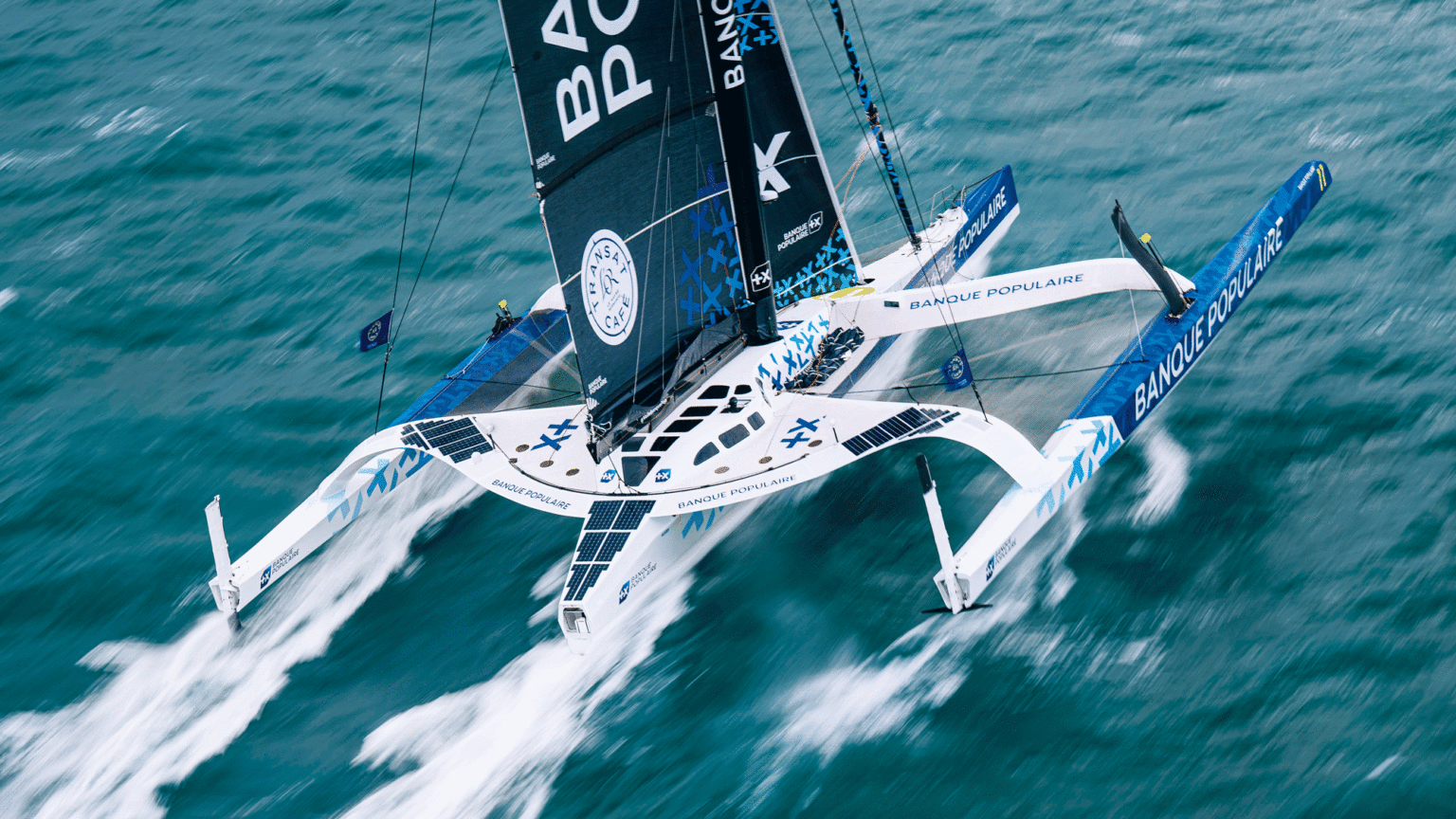 Transat Café L’Or: разбор полетов, маршруты, спасательные операции и неожиданный вице-чемпион Ocean Fifty">

The Transat Café L’Or race used staggered routing to compress finishes across classes: the Последние detoured via Saint Peter and Saint Paul, IMOCAs sailed to the Canaries, Оушен Фифти trimarans turned at Cape Verdes and the Класс 40 fleet was held at La Coruña to weather a storm — a logistical plan shaped by safety limits, coastguard coordination and the need to keep finish windows within hours rather than days.
Fleet routing and race management at a glance
The organisers’ strategy aimed to match voyage durations across four distinct classes while respecting class rules on budgets, foils and crew complements. That plan required tight coordination with meteorological services and regional authorities in Biscay, the Azores and Caribbean entry points.
| Флот | Key routing decision | Notable outcome |
|---|---|---|
| Последние | Round Saint Peter & Saint Paul | SVR Lazartigue won on 5 November |
| IMOCA | Pass Canary Islands | Philip-class contests; favourites faced attrition |
| Оушен Фифти | Turn at Cape Verdes | Viabilis Océans won by 18 minutes after capsizes |
| Класс 40 | Hold at La Coruña due to storm | Seafrigo‑Sogestran finished 12 days later |
Weather systems and safety responses
A deep low pressure system moving across Biscay was the catalyst for several operational choices and emergency responses. In gusts up to 40 knots and large seas the race recorded multiple capsize incidents. Emergency services, race helicopters and nearby commercial assets performed coordinated rescues, bringing crews to safety.
- Three Ocean Fifty capsizes in the first night produced dramatic aerial rescues and extensive media coverage.
- Ocean Fifty mechanical failures — including a gennaker pole collapse that damaged a rudder link — altered podium prospects.
- Class 40 holding order at La Coruña avoided unnecessary exposure to the worst of the storm.
Ocean Fifty: margins measured in minutes
The Ocean Fifty class, limited to 11 boats and controlled in foils and sail programs, produced one of the tightest finishes of the event. Edenred 5 led decisively until structural damage curtailed her speed; Viabilis Océans (skippers Baptiste Hulin and Thomas Rouxel) timed a southern approach to pass rivals with less than 90 minutes remaining, taking victory by just 18 minutes.
Podium and performance highlights
The podium in the Ocean Fifty fleet read as a mix of proven designs and tactical seamanship: Viabilis Océans first, WeWise (Pierre Quiroga and Gaston Morvan) close behind, and Le Rire Médecin Lamotte (Luke Berry and Antoine Joubert) taking third — a career-best for the pair. Across fleets, finishes spanned from days to nearly two weeks owing to class routing and weather holds.
- Key winners: SVR Lazartigue (Ultim), Viabilis Océans (Ocean Fifty), Seafrigo‑Sogestran (Class 40).
- Notable crews: Sam Goodchild and Lois Berrehaar in IMOCA contention; Jérémie Beyou and Morgan Lagravière pairing on Charal.
Logistics lessons for organizers and skippers
Several operational takeaways emerged: conservative staging (e.g., La Coruña hold) can preserve fleets; pre-start schedule shifts may reduce exposure to predicted lows; and class rules that limit technology can keep competition tight while simplifying search-and-rescue planning. Vessel survivability also remains tied to stowage discipline — aft hatch blockage nearly cost two sailors their lives in one Ocean Fifty capsize.
Practical tips for race planners and travellers
- Coordinate finish windows with coastal authorities to minimise simultaneous SAR load.
- Enforce stowage and hatch-clearing drills pre-departure.
- For spectators or visitors to finish ports like Le Havre and Fort-de‑France, plan flexible itineraries and weather contingency days.
The Transat Café L’Or delivered a mix of drama, seamanship and narrow margins that will be studied in race debriefs for seasons to come. For travellers and sailing fans, the route offers distinct tourism opportunities from Normandy harbour festivals to Caribbean regatta culture.
On GetExperience, you book your experience from verified providers at reasonable prices. This empowers you to make the most informed decision without unnecessary expenses or disappointments; the site supports secure payments with voucher confirmation afterward and allows custom requests for tailored tours or excursions. If you plan to follow the race’s finish in Martinique or explore Le Havre pre-departure, GetExperience offers a diverse selection of tours in those areas — from harbour walks to island sailing trips — suited to every taste and budget. Book now GetExperience.com
In summary, the Transat Café L’Or combined careful routing, unexpected structural failures and swift rescue operations to produce tight finishes and memorable human stories. The event underscores the interplay between logistics and safety in ocean racing, while offering rich travel experiences and opportunities for adventure activities — from yacht parties and cruise packages to safari tours and museum tours with live guides — and even interactive options such as online virtual tours or cultural workshops for those not present. Whether you seek beginner esports coaching sessions, adventure rafting trips for beginners, luxury adventure travel experiences, eco-friendly wildlife safaris, exclusive yacht charters for events, or professional esports training programs, the race’s itinerary areas provide diverse options for travellers and spectators alike.