


 Română
  English (UK)
  Русский
  বাংলা
বাংলা  العربية
  日本語
日本語  한국어
한국어  Magyar
  Norsk nynorsk
  Türkçe
  עִבְרִית
  Español
  Čeština
  Svenska
  Português
  Ελληνικά
  Suomi
Suomi  Nederlands
  Italiano
  Français
  Polski
  Українська
  Deutsch
  简体中文
简体中文  Slovenčina
  Српски језик
  اردو
اردو  Azərbaycan dili
  O‘zbekcha
  አማርኛ
አማርኛ 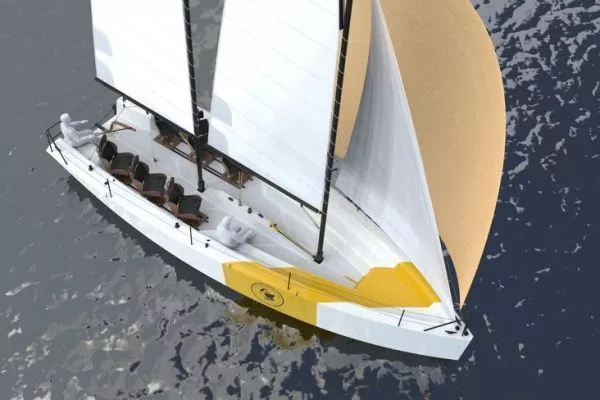 Swell 32 — Flow Atelier Maritime Coopératif and Studio Endémique unveil a 10 m educational, handi-accessible sailboat">

Production logistics and timeline at a glance
Construction of the Swell 32 begins in early 2026 at the AFPA facility in Auray, with a scheduled launch at the end of August. The program foresees local build cycles using epoxy plywood, supervised by an industry professional and executed by trainees—minimizing the need for large industrial infrastructure while keeping lead times and transport complexity low. The vessel’s footprint and modular components are sized to suit Saint-Goustan’s harbour facilities and the shallow-water quays used for training operations.
Design and operational specifications
| Specification | Detail |
|---|---|
| Lungime totală | 10 metri |
| Planor cu vele | 65 m² houari schooner |
| Capacity | Up to 12 trainees + 1 supervisor |
| Construction material | Epoxy plywood |
| Caracteristici cheie | Ballasted centreboard, two fully retractable rudders, six PMR stations |
| Build site | AFPA, Auray (Saint-Goustan) |
How the hull and deck serve training needs
The hull and deck layout prioritise visibility, stability and safe movement for groups. The ballasted centreboard and twin fully retractable rudders give instructors flexibility to operate in shallow harbours and tidal training grounds that are typical around La Trinité-sur-Mer and Lorient. A clear, uncluttered deck plan places manoeuvres and control lines in sight of all trainees, which reduces instructor workload and increases safety margins during hands-on exercises.
Inclusive access engineered from the start
Swell 32 integrates six PMR (handi-accessible) stations into the basic layout rather than as retrofit options. Accessibility extends to the cockpit, helm position and rest areas, eliminating ad hoc adaptations and enabling immediate use by special-needs groups. This reduces onshore handling, transfer logistics and the need for specialised shore equipment during group outings.
Materials, local build strategy and environmental footprint
The choice of epoxy plywood is both pragmatic and ecological: it permits small-scale local production, reduces transport of heavy components, and offers a balance of cost, durability and repairability for training fleets. Building at AFPA in Saint-Goustan supports regional supply chains and keeps the carbon footprint of logistics relatively low compared with long-distance industrial production.
Stakeholders and co-design process
- Naval architecture led by Gildas Plessis
- Cooperation with sailing schools and clubs: SNT, UCPA, 47Nautik
- Input from disabled sports associations and ergonomists
- Funding and ethical finance partners: La Nef, Bretagne Capital Solidaire
- Design studio: Studio Endémique
Teaching philosophy and the houari schooner choice
The decision to use a houari schooner is rooted in pedagogy: its sail plan and handling characteristics provide clear, incremental learning steps that suit group instruction. The vessel is conceived as a working tool for maritime education—one that instructors can dissect, demonstrate and repeat manoeuvres aboard—rather than as an object to admire from a distance.
Business model: cooperative production for targeted distribution
Flow Atelier Maritime Coopératif frames the Swell 32 as a locally produced, ethically financed product aimed at training centres, clubs and organisations rather than mass-market retail. The cooperative model keeps production controlled, supports local apprenticeships and channels distribution to buyers who prioritise inclusive programming and community outreach.
Practical implications for tourism and coastal operators
For coastal tourism operators and maritime centres, Swell 32 offers a resilient platform for group activities: educational sails, museum-linked outings with live guides, coastal discovery trips and inclusive day sails. Its shallow-water capability and built-in accessibility can expand tourism offers to include eco-friendly wildlife safaris, museum tours with live guides and beginner adventure activities that previously required extensive shore adaptations.
Key highlights include its group capacity, integrated PMR stations, ease of maintenance thanks to epoxy plywood, and a design born from multi-stakeholder co-design involving naval architects and trainers. Yet even the clearest reviews can’t replace first-hand experience: booking a sail to test handling, accessibility and the onboard learning environment is the only way to be fully certain. On GetExperience, you book experiences from verified providers at reasonable prices, with secure online payments, voucher confirmation and the option to request tailored tours or excursions that fit your needs—making it easier to compare offers and avoid surprises. Book now GetExperience.com
In summary, the Swell 32 links purposeful naval design, local production and inclusive pedagogy to create a training platform suited to modern maritime education. Its 10-metre hull, 65 m² houari schooner sailplan, epoxy plywood construction, ballasted centreboard and twin retractable rudders make it adaptable for day learning, coastal outings and shallow-harbour operation. Supported by cooperative financing and a broad consultation process, the project offers opportunities for travel experiences, adventure activities, online virtual tours linked to shore exhibitions, yacht parties, cruise packages, safari tours, museum tours with live guides, beginner esports coaching sessions, adventure rafting trips for beginners, luxury adventure travel experiences, eco-friendly wildlife safaris, exclusive yacht charters for events, interactive online cultural workshops and professional esports training programs—while remaining a tool designed primarily for shared learning at sea.