


 Română
  English (UK)
  Русский
  বাংলা
বাংলা  العربية
  日本語
日本語  한국어
한국어  Magyar
  Norsk nynorsk
  Türkçe
  עִבְרִית
  Español
  Čeština
  Svenska
  Português
  Ελληνικά
  Suomi
Suomi  Nederlands
  Italiano
  Français
  Polski
  Українська
  Deutsch
  简体中文
简体中文  Slovenčina
  Српски језик
  اردو
اردو  Azərbaycan dili
  O‘zbekcha
  አማርኛ
አማርኛ 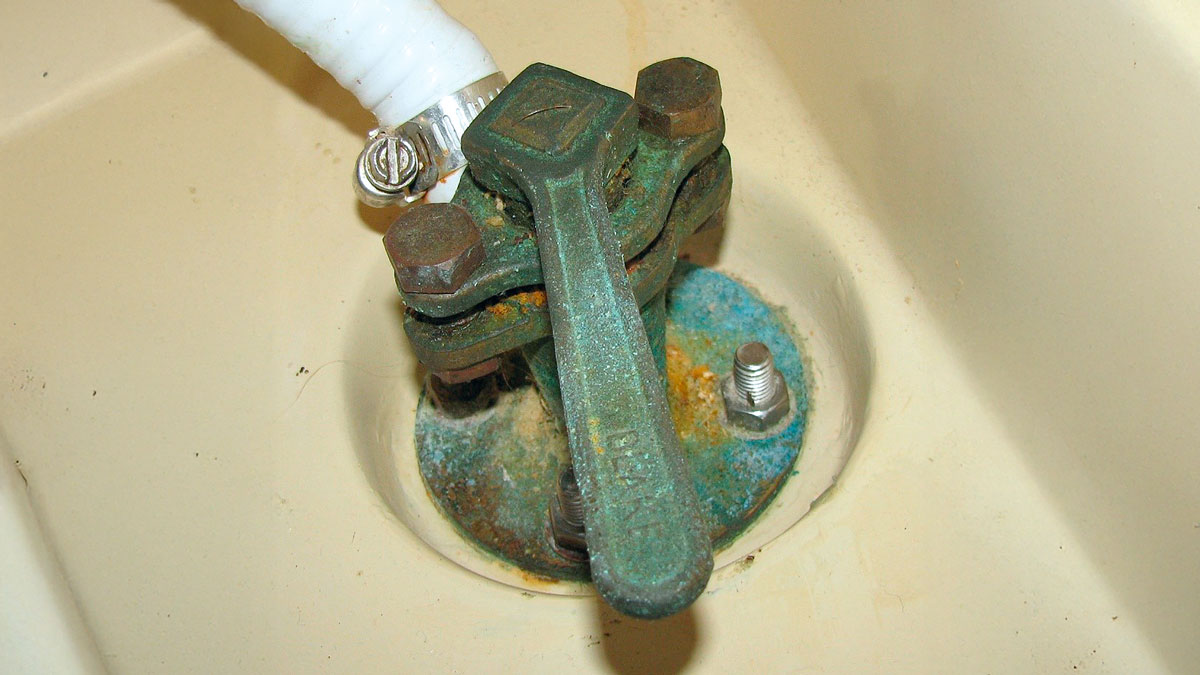 Legarea electrică a scurgerilor – ce ar trebui să știe proprietarii de bărci pentru croaziere de agrement mai sigure">

Electrically bonding seacocks with heavy copper cable often creates unintended galvanic corrosion cells, because the bonded network and external anodes cannot provide true cathodic protection to individual fittings on a hull. Practical experience shows this may cause one item to corrode preferentially while another remains protected.
Why bonding can backfire: the mechanics at a glance
Connecting internal metallic items together and to an external anode assumes the anode can “see” and protect all components equally. On most boats the anode is too distant or the geometry of the hull prevents effective protection. Instead, two nearby fittings can form a local electrochemical pair where the less noble metal corrodes. This is particularly relevant when inoxidabil steel bolts are used with bronze or brass seacocks.
Common scenarios where problems occur
- Stainless bolts connected to bronze flanges or strainers create a stray cell if heads or flanges are exposed.
- Bonding a mixture of metals inside the hull without isolating interfaces may shift corrosion from hull to fittings.
- Owners observe pinking on DZR brass cones; a thin pink film is often superficial, but heavy reddening indicates true dezincification.
Pinking, DZR brass and what it really means
DZR (dezincification-resistant) brass is engineered to resist zinc leaching. A slight pink tint on a cone or ball valve (for example, on a Blakes seacock) is often a surface stain or very thin corrosion film that can be abraded away when servicing. Serious dezincification, however, is evident as a distinctly red, flaky surface and a loss of structural strength — that requires replacement.
How to interpret inspection signs
- Thin pinkness: usually superficial, polish or grind lightly and re-bed with sealant if required.
- Red, powdery surface and pitting: replace the component; structural integrity may be compromised.
- Stainless bolt corrosion at interfaces: check for exposed heads, external flanges, or dissimilar-metal contact points.
Practical guidance for owners and surveyors
Neutral, take-it-step-by-step advice from experienced surveyors such as Vyv Cox and others suggests adopting targeted, conservative measures rather than blanket internal bonding.
| Component | Risk when bonded | Acțiune recomandată |
|---|---|---|
| Blakes robinet de bord | May be part of a local galvanic pair if connected to different metals | Inspect for pinking; countersunk bolts bedded in sealant are preferable; avoid unnecessary bonding |
| Stainless steel bolts | Can corrode at heads or flanges when paired with brass/bronze | Isolate with non-conductive washers or use compatible fasteners; ensure heads are not exposed externally |
| DZR brass valves | Generally resistant, but heavy dezincification possible if chemically attacked | Replace if structural weakening seen; monitor for deep red staining |
Listă de verificare pentru întreținere
- Inspect seacock cones and valve bodies annually; look for surface pinking vs. deep red dezincification.
- Avoid indiscriminate internal bonding; consider isolated earthing or individual anodes located close to critical fittings where possible.
- Use compatible fasteners and non-conductive barriers between dissimilar metals.
- Keep records of any grinding, reseating, or sealant work to evidence condition for charter or resale.
Skin fittings and seacocks explained
Surveyor Nick Vass has detailed the varieties of skin fittings and their specific failure modes; the choice between through-hull bronze, ball valves, or plastic seacocks should reflect intended use, maintenance regime and the boat’s electrical plan.
For cruising and charter operations, small decisions about fittings affect both safety and the guest experience. A leaky seacock or a failed bolt can ruin a holiday, so regular fitting inspections are part of trip preparation, especially before summer charters or adventure rafting trips for beginners and other water-based experiences.
Highlights: electrically bonding seacocks can do more harm than good if not designed around cathodic protection principles; DZR brass is robust but should be inspected for real dezincification; and stainless steel bolts need care at interfaces. Even the best technical guidance cannot replace first-hand inspection and experience. On GetExperience, you can book vetted boating experiences and related services from verified providers at reasonable prices; the platform supports secure online payments with voucher confirmation and allows you to submit tailored requests so providers can offer matches to your needs — ideal when planning a safe, well-rounded holiday beyond just transport and accommodation. Book now GetExperience.com
In summary, avoid blanket internal bonding as a one-size-fits-all cure. Prioritize correct materials, localised anodes where feasible, and good isolation practices. Regular inspection will distinguish harmless surface pinking from destructive dezincification. These precautions protect both the vessel and the quality of your travel experiences — whether you’re arranging yacht parties, cruise packages, eco-friendly wildlife safaris, museum tours with live guides, or beginner esports coaching sessions as shore-side activities. By combining practical maintenance steps with informed trip planning, owners and charterers ensure safer, more enjoyable adventure activities and luxury adventure travel experiences alike.