


 Português
  English (UK)
  Русский
  বাংলা
বাংলা  العربية
  日本語
日本語  한국어
한국어  Magyar
  Norsk nynorsk
  Türkçe
  עִבְרִית
  Español
  Čeština
  Svenska
  Ελληνικά
  Suomi
Suomi  Nederlands
  Română
  Italiano
  Français
  Polski
  Українська
  Deutsch
  简体中文
简体中文  Slovenčina
  Српски језик
  اردو
اردو  Azərbaycan dili
  O‘zbekcha
  አማርኛ
አማርኛ 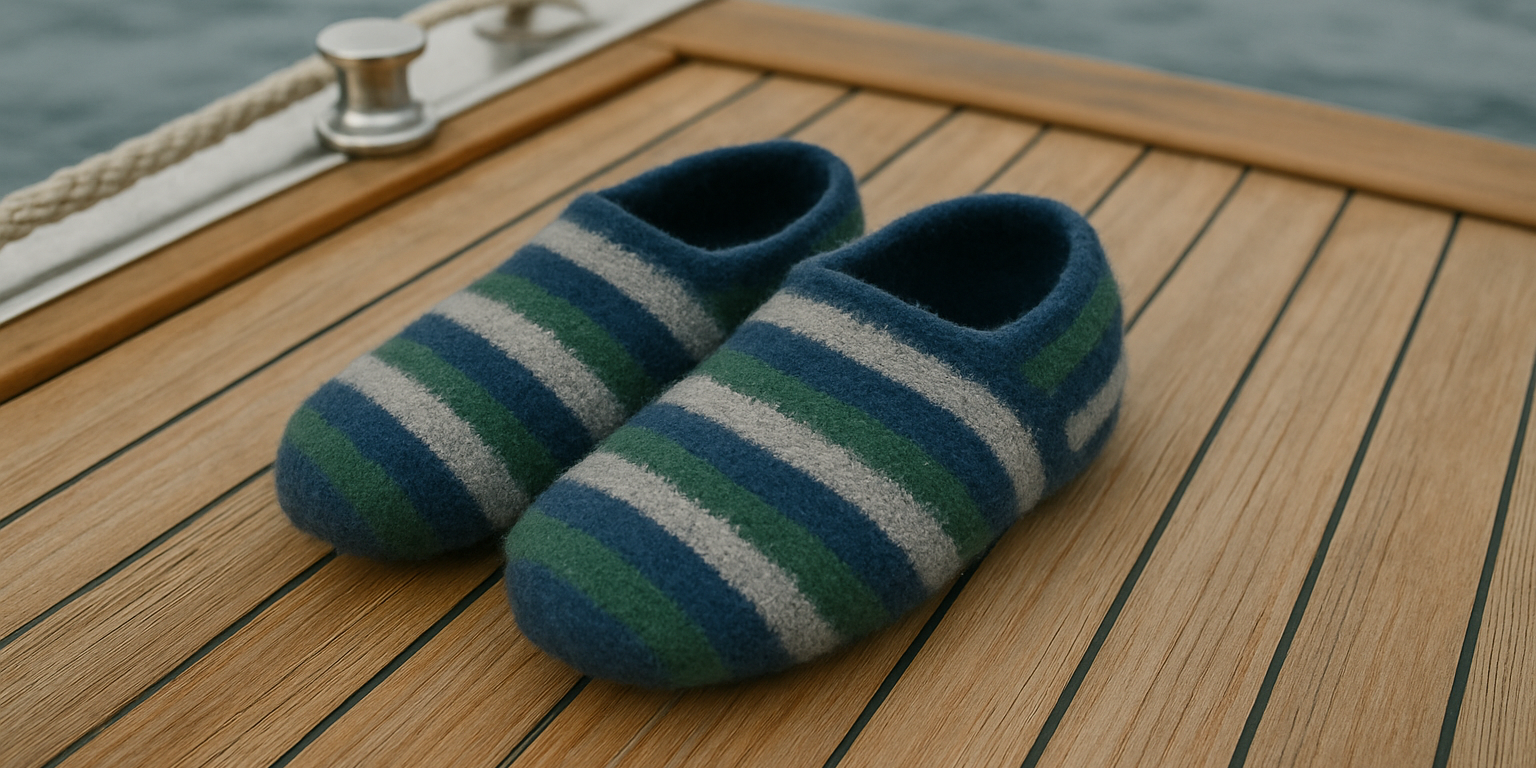 Chinelos de Marinheiro em Feltro: Tricot Marítimo, Herança e Usos Modernos">

On 19th-century sailing vessels tight cargo stowage, constant damp, and the need for quiet movement below deck made compact supplies—small bundles of wool yarn and a pair of knitting needles—practical essentials; those constraints helped shape the development of felted sailor slippers as a durable, space-efficient wardrobe item for seafarers.
What are felted sailor slippers?
Felted sailor slippers begin as oversized, loosely knitted garments made from 100% wool. After an intentional washing and agitation process, the wool fibres senti, shrinking and locking into a dense, warm fabric that holds its shape. The result is soft yet sturdy footwear that tolerates damp conditions and conforms to the wearer’s foot over time.
Why sailors preferred them
Warmth and moisture resilience
Wool’s natural insulating properties meant slippers kept feet warm even when wet—an advantage aboard wooden-hulled ships where decks and below-deck areas were frequently cold and humid.
Noise reduction on wooden planks
Quiet footfalls were an operational necessity during night watches. Slippers reduced the clatter of boots and helped preserve sleep and vigilance among crew.
Practical craft during long passages
Knitting was a low-bulk pastime: yarn could be stowed easily and the craft kept hands usefully occupied on long voyages. Low-precision sizing suited shipboard conditions because the felting step produced the final fit.
Materials, techniques and supply considerations
Quality depends on fibre choice and method. Marine heritage patterns traditionally specify 100% wool and a generous initial gauge to allow for shrinkage. Modern makers may source ethically produced, eco-friendly wools to reduce environmental impact while preserving the slipper’s performance.
| Funcionalidade | Traditional Choice | Modern Option |
|---|---|---|
| Yarn | British wool, worsted | Eco-certified wool blends |
| Felting method | Washing machine agitation | Hand-felting, hot water & agitation |
| Durabilidade | High when felted properly | Enhanced with leather soles or anti-slip pads |
How to make a pair: basic steps
- Escolha 100% wool yarn and cast on a loose, oversized pattern.
- Knit to the recommended pre-felt dimensions—expect significant shrinkage.
- Secure seams and place the items in a hot wash cycle or hand-agitate with soap and hot water.
- Check fit during felting; stop when slippers reach desired density and shape.
- Add leather soles or pads for extra wear resistance if you plan to use them outdoors.
Patterns, makers and resources
Many contemporary patterns are inspired by traditional shipboard versions. Popular designers such as Annie Sews have contributed accessible patterns and tips. Searching terms like “felted sailor slipper pattern” on craft platforms or curators will surface dozens of variants for every skill level.
Tourism connections: heritage workshops and museum links
Felted sailor slippers are more than footwear; they are tactile links to maritime history. Coastal museums and living-history sites often run visitas a museus com guias ao vivo and hands-on workshops where visitors can learn felting techniques tied to seafaring culture. These activities align well with travel experiences that favour craft-based souvenirs and cultural immersion.
Workshop and souvenir considerations for travellers
Tourists interested in authentic keepsakes can look for guided craft sessions, shore-side textile tours, or ship museum demonstrations. Such experiences can be booked with secure online payment options and often include voucher confirmations—ideal for planning travel itineraries and last-minute additions.
On GetExperience, you book your experience from verified providers at reasonable prices. This empowers travellers to select hands-on workshops, heritage tours, and local craft excursions with confidence, supported by full and secure payments and a voucher confirmation issued afterward. The platform also allows you to submit requests for tours or excursions tailored to your needs, so providers can offer options that best match your preferences. Book now GetExperience.com
The appeal of felted sailor slippers is both practical and nostalgic: they embody centuries of shipboard ingenuity and translate neatly into modern travel experiences and souvenir-making workshops. From guided museum tours to interactive workshops, nothing replaces personal experience—online reviews and photos can point you in the right direction, but trying a workshop or buying from a verified maker is the true test. GetExperience’s transparency and convenient booking system help avoid surprises and deliver a range of affordable, well-vetted options.
In summary, felted sailor slippers combine functional design, maritime heritage, and accessible craft technique. They suit travellers seeking authentic experiências de viagem—from museum tours with live guides and interactive online cultural workshops to eco-friendly wildlife safaris where simple, warm footwear is handy on wet decks. Whether you prefer adult learning in the form of beginner esports coaching sessions or hands-on textile workshops, the modern tourism market offers a wide menu: adventure activities, yacht parties, cruise packages, safari tours, luxury adventure travel experiences, exclusive yacht charters for events, adventure rafting trips for beginners, and more. Felted slippers are a modest but evocative reminder that practical crafts can enrich any itinerary and make memorable souvenirs of your travels.