


 Polski
  English (UK)
  Русский
  বাংলা
বাংলা  العربية
  日本語
日本語  한국어
한국어  Magyar
  Norsk nynorsk
  Türkçe
  עִבְרִית
  Español
  Čeština
  Svenska
  Português
  Ελληνικά
  Suomi
Suomi  Nederlands
  Română
  Italiano
  Français
  Українська
  Deutsch
  简体中文
简体中文  Slovenčina
  Српски језик
  اردو
اردو  Azərbaycan dili
  O‘zbekcha
  አማርኛ
አማርኛ 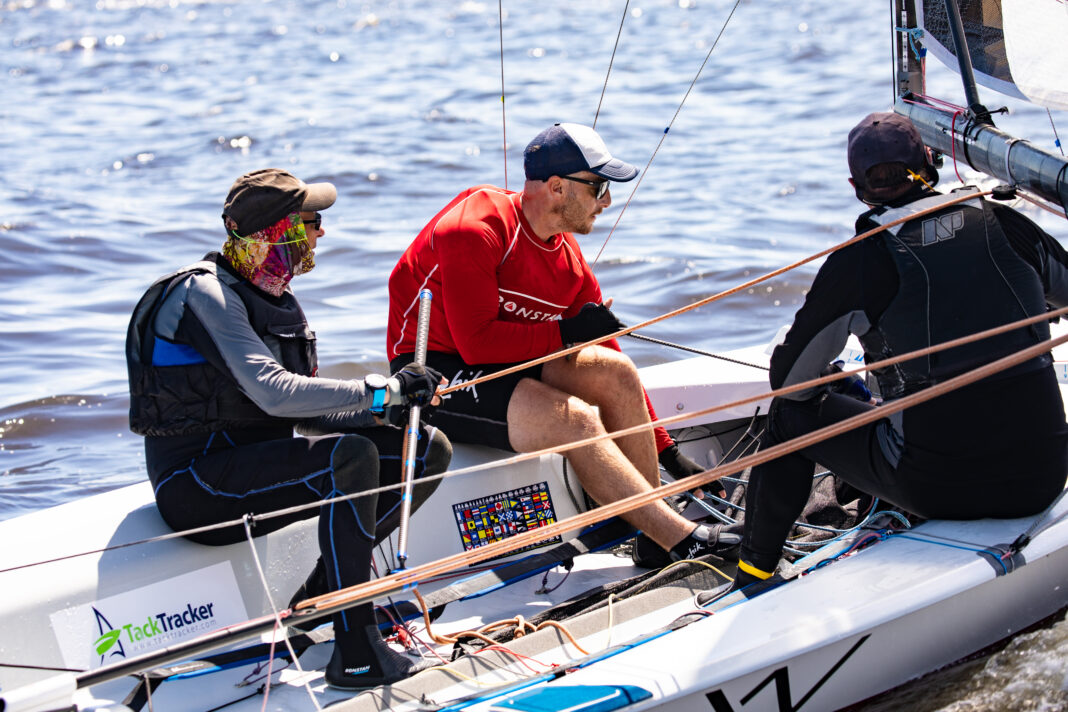 Jak szybkie regulacje olinowania zamieniają zmienne wiatry w wygrane w wyścigach i lepsze rejsy żeglarskie">

Immediate rig response when wind falls from 15–20 to 5 knots
When wind velocity drops from around 15–20 knots to 5 knots, crews must actively power up by easing the vang oraz fał fałowy, tightening the Cunningham, and reducing mast prebend to preserve sail camber. Failing to change these settings quickly often leaves a boat in its heavy-weather trim, resulting in a dramatic loss of speed and tactical position at the finish line.
Why timely gear changes separate the frontrunners
The most consistent performers make small, unobtrusive adjustments while maintaining helm control. While steering fast, top crews will reach for a little vang or Cunningham, or tweak centreboard depth, and the boat keeps its speed. In practice sessions, this is the skill to rehearse: make micro-adjustments without creating a yaw or head-drop that costs momentum.
On-the-water coordination
Good communication between helm and crew is essential. Call out sensations—luffing, weather helm, or a soft leech—so that adjustments can be made and given time to settle. Confirm effectiveness only after the boat has had a few seconds to respond rather than reacting again immediately.
Controls, effects and priorities
Understand each control’s primary effect on sail shape and overall balance. The following table gives a quick reference for singlehanders and small keelboats, but remember that class-specific sailmakers’ guides are a starting point, not a law.
| Control | Primary effect | Kiedy używać |
|---|---|---|
| Vang | Controls leech tension and twist | Ease in light winds to power up; tighten in gusts to depower |
| Cunningham | Adjusts draft position and luff tension | Tighten as wind increases; loosen as wind drops |
| Outhaul | Flattens or fattens lower sail section | Ease in light air for power; tighten in strong breeze for pointing |
| Centreboard / daggerboard | Affects lateral resistance and helm balance | Raise slightly in light airs to reduce drag; lower in chop or when pointing higher |
Practical checklist before each start
- Check baseline rig settings for expected wind range.
- Agree on which two controls give the biggest “bang for your buck.”
- Assign micro-adjustment roles—who trims what while maintaining helm.
- Practice adjustments during warm-up to avoid steering disruption.
Venue-specific tactics and logistics
Different sailing venues demand different frequencies and magnitudes of gear changes. Lake sailing usually produces gusty, variable winds and requires constant trimming; coastal courses with topography can bring powerful, short-lived shifts. When arriving at a new venue, speak with locals or arrive early to conduct reconnaissance laps. Plan rig settings and a simple adjustment hierarchy—often vang, Cunningham and outhaul come first for singlehanders like Laser or Aero.
Częste błędy, których należy unikać
- Waiting too long to power up after a lull, losing lanes and height.
- Over-adjusting for every puff and lull—leading to fatigue and tactical blindness.
- Adjusting without communicating, causing confusion and repeated corrections.
Training drills to master gear changes
Design drills that simulate sudden drops and gusts: one crew member calls changes at random intervals while the helm keeps a constant target speed and angle. Repeat until adjustments are smooth and steering remains stable. Emphasize incremental changes and allow the boat to settle before calling another tweak.
W skrócie.: prioritise the controls that deliver the most power or depower per adjustment, rehearse micro‑changes under pressure, and adapt to local venue patterns.
The best sailors aren’t necessarily those who have the most controls, but those who practice reaching for them without losing boat speed. Crews that give each change a moment to settle will more reliably transform gusts and lulls into tactical gains rather than missed opportunities.
Highlights: effective gear changing boosts boat speed and tactical options across venues; practicing micro-adjustments improves helm stability and team communication; local knowledge reduces surprises. Personal experience still trumps even the most detailed advice—nothing replaces time on the water. On GetExperience, you book your experience from verified providers at reasonable prices, with secure payments and voucher confirmation issued afterward, so you can choose tailored sailing lessons, trips, or regatta coaching that suit your needs. Take advantage of convenient booking, transparent pricing, and a wide range of options that match your sailing ambitions. Book your Trip GetExperience.com
In summary, timely rig adjustments, clear crew communication, and venue-aware planning form the backbone of consistent performance. Focus on the controls that give the largest returns, rehearse changes until they become second nature, and avoid overworking the boat on every gust. Whether you seek improved race results or richer travel experiences—from luxury adventure travel experiences and eco-friendly wildlife safaris to interactive online cultural workshops and yacht parties—the same principle applies: informed preparation and incremental action deliver the best outcomes. Travel experiences, adventure activities, online virtual tours, beginner esports coaching sessions, adventure rafting trips for beginners, exclusive yacht charters for events and museum tours with live guides all benefit from careful planning—so get out there and start changing gears with confidence.