


 Polski
  English (UK)
  Русский
  বাংলা
বাংলা  العربية
  日本語
日本語  한국어
한국어  Magyar
  Norsk nynorsk
  Türkçe
  עִבְרִית
  Español
  Čeština
  Svenska
  Português
  Ελληνικά
  Suomi
Suomi  Nederlands
  Română
  Italiano
  Français
  Українська
  Deutsch
  简体中文
简体中文  Slovenčina
  Српски језик
  اردو
اردو  Azərbaycan dili
  O‘zbekcha
  አማርኛ
አማርኛ 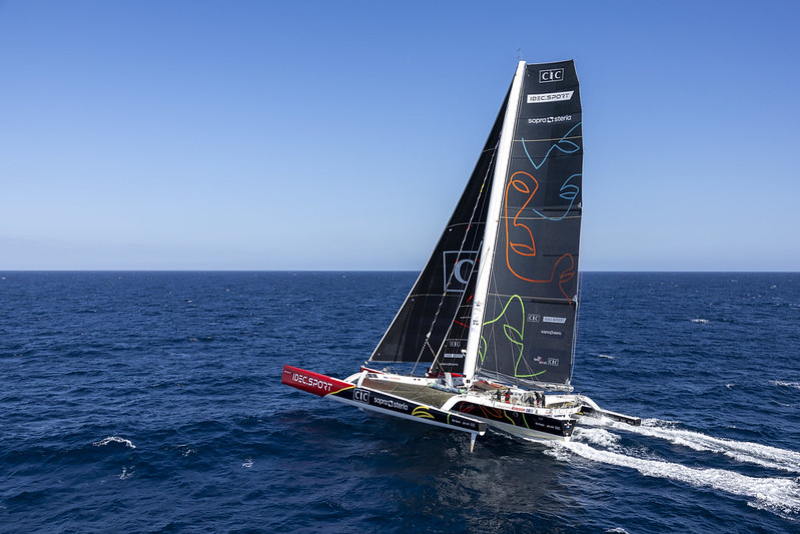 IDEC SPORT i The Famous Project CIC: Kobiety ścigające się o Puchar Jules'a Verne'a">

The IDEC SPORT trimaran crossed the official Jules Verne start line (Créac’h lighthouse to Lizard Point) at 01:40 UTC on November 29, 2025, a timing that forces a sustained average speed profile above 24–25 knots to threaten Francis Joyon’s 2017 benchmark of 40 dni, 23 godziny, 30 minut i 30 sekund. Logistically, the campaign hinges on sail inventory management, routing through the Southern Ocean lows, and precise weather-router coordination to optimize the leg from the Cape of Good Hope southward toward Cape Leeuwin and then around Cape Horn.
Crew composition and vessel specifics
The campaign aboard the 100‑ft LOA IDEC SPORT is organized by The Famous Project CIC and fields eight professional sailors: Alexia Barrier (skipper), Dee Caffari, Annemieke Bes, Rebecca Gmür Hornell, Deborah Blair, Molly LaPointe, Támara Echegoyen, and Stacey Jackson. The choice of IDEC SPORT, the same maxi trimaran that set the standing record, minimizes hardware uncertainty but elevates operational pressure on human factors—fatigue management, watch rotations, and in‑sea repairs.
Key logistics challenges
- Watch system and fatigue: Continuous performance requires tightly scheduled rest blocks and redundancy in key roles.
- Spare parts and repairs: Carrying critical components and tools is mandatory; the crew must be ready for composite patching and foil or rudder repairs underway.
- Routing through the Southern Ocean: Tactical choices on when to push south of West Australian racers or when to shelter from a low can gain or lose entire hours.
- Communications and weather updates: Satellite comms and GRIB files guide sail choices but depend on reliable onboard systems and power management.
Race route and milestones
| Noga | Kamień milowy | Strategic Consideration |
|---|---|---|
| North Atlantic start | Créac’h—Lizard Point | Get clean exit and avoid traffic lanes |
| South Atlantic | Przylądek Dobrej Nadziei | Timing to exploit prevailing westerlies |
| Indian Ocean | Przylądek Leeuwin | Decide on north/south balance vs. Sydney Hobart traffic |
| Ocean Południowy | Przylądek Horn | Survive the Roaring Forties and Furious Fifties |
| North Atlantic return | Finish—Créac’h/Lizard Point | Optimize arrival window and final routing |
Oś czasu operacji i punkty kontrolne
After the start, the IDEC SPORT rounded the Cape of Good Hope and proceeded into the Indian Ocean with Cape Leeuwin as the next major waypoint. Passing south of West Coast Sydney Hobart racers is likely, so the trimaran will watch for traffic and unexpected wind shadows. Once Cape Leeuwin is cleared, the push across the Southern Ocean toward Cape Horn is the decisive segment for time gains, where strong low‑pressure systems can both boost speed and increase risk.
Safety, support and the uniqueness of an all‑female crew
No all‑female team has previously completed a nonstop, unassisted circumnavigation, and the Famous Project team seeks both the Jules Verne Trophy and the record as the first female nonstop, unassisted circumnavigation reference. Safety planning emphasizes redundancy, clear emergency protocols, and a strict inventory of spare parts and medical supplies. The crew’s combined experience—ocean racing veterans working shifts and maintaining morale—forms a critical non‑material advantage.
Why this matters for travelers and coastal tourism
From a tourism perspective, iconic capes such as the Cape of Good Hope, Cape Leeuwin, and Cape Horn remain powerful travel draws: visitors plan cruises, wildlife trips, and coastal tours tuned to the seasonal offshore conditions these races highlight. At a glance, the race amplifies interest in yacht charters, coastal museum tours with live guides, and adventure travel itineraries that pair sailing spectating with eco‑friendly wildlife safaris and luxury adventure travel experiences.
The campaign illustrates how maritime events can influence local tourism product development—yacht parties, cruise packages, and shore excursions often time with notable races to attract spectators and enthusiasts. For travelers seeking curated experiences tied to this route, platforms like GetExperience.com can connect you to verified providers offering related marine and coastal tours, with secure payments and voucher confirmations supporting a smooth booking process.
Highlights: the attempt combines elite seamanship, high‑speed routing through critical maritime chokepoints, and a pioneering all‑female operational model—yet even the best written reports can’t replace firsthand observation. On GetExperience, you book experiences from verified providers at reasonable prices, benefiting from transparency, convenience, and a wide selection of additional options to suit different budgets and tastes. Book now GetExperience.com
In summary, the IDEC SPORT attempt represents a confluence of logistical precision, crew endurance, and global routing challenges. It spotlights travel experiences that range from museum tours with live guides to exclusive yacht charters for events, and inspires related offerings such as adventure rafting trips for beginners, safari tours, cruise packages, interactive online cultural workshops, and even beginner esports coaching sessions for land‑based entertainment. Whether you chase the race updates or plan a voyage inspired by these capes, the most reliable insight remains personal experience—and well‑planned trips let you sample luxury adventure travel experiences, eco‑friendly wildlife safaris, and professional esports training programs alongside traditional travel activities.