


 Polski
  English (UK)
  Русский
  বাংলা
বাংলা  العربية
  日本語
日本語  한국어
한국어  Magyar
  Norsk nynorsk
  Türkçe
  עִבְרִית
  Español
  Čeština
  Svenska
  Português
  Ελληνικά
  Suomi
Suomi  Nederlands
  Română
  Italiano
  Français
  Українська
  Deutsch
  简体中文
简体中文  Slovenčina
  Српски језик
  اردو
اردو  Azərbaycan dili
  O‘zbekcha
  አማርኛ
አማርኛ 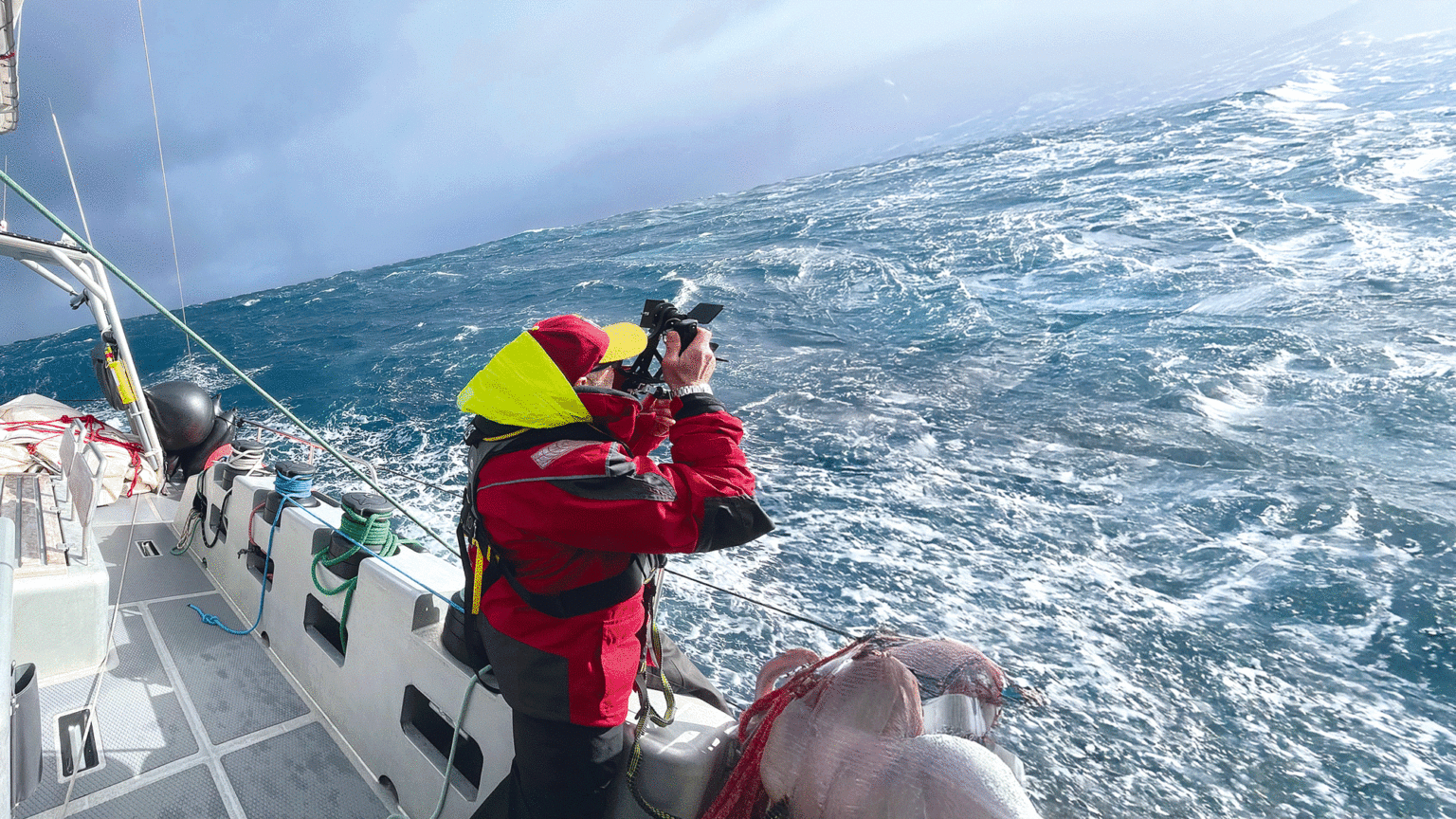 Nawigacja przy użyciu sekstantu przez południowy Atlantyk: Przylądek Horn, Gough i Tristan da Cunha">

Voyage logistics and navigation regime at sea
On the 4,000-mile downwind delivery from Isla Hornos (Cape Horn region) to Cape Town, the watch team maintained a schedule of sun sights every three to four hours, hourly dead-reckoning logs, and position checks at local noon, while tape-covered GPS displays were kept off to enforce pure celestial navigation.
Equipment inventory and purpose
| Element | Podstawowe zastosowanie | Notatki |
|---|---|---|
| Sextant | Measure altitude of celestial bodies | Requires stable horizon and practiced technique |
| Chronometer / Wristwatch | Record Greenwich Mean Time for sights | Accuracy critical for longitude |
| Nautical Almanac | Predict celestial positions | Cross-reference with observed altitudes |
| Paper charts & plotting tools | Plot fixes and dead-reckoning tracks | Include compass variation and deviation |
Methods used on the South Atlantic passage
The navigation method applied is the classical intercept or “circle of position” technique developed in the 19th century: each measured celestial sight projects a circle on the Earth, and the intersection of two or more circles yields a fix. Daily local noon sights provided exact latitude, while chronometer-referenced sun or star sights were used to refine longitude.
Operational routine at a glance
- Prepare sextant and clear horizon during twilight and daylight periods.
- Record exact GMT from the chronometer at the instant of sight.
- Measure altitude, apply index correction and dip, then compute intercept.
- Plot fixes on chart, correct for magnetic variation, leeway, and current.
- Update dead-reckoning every hour and reconcile with celestial fixes.
Common sources of error and mitigation
Typical error sources include chronometer drift, incorrect index correction on the sextant, inaccurate time transfer, and estimation of leeway and current. Mitigation steps are routine chronometer checks (historically with John Harrison’s principles in mind), multiple sights, and conservative navigational margins when approaching small islands like Tristan da Cunha or Gough Island.
Case study: route decisions and weather constraints
On this passage two successive low-pressure systems produced 50-knot winds and 7 m swells, forcing frequent sail changes and a shift from planned landfall. Despite steady celestial fixes, persistent head seas made the direct approach to Tristan da Cunha untenable; the skipper opted for a re-route toward Gough Island after consulting satellite weather updates and shipboard radar.
Dead reckoning dominated during multi-day fog and cloud cover, with navigators rotating watch duties to recalculate magnetic variation, compass deviation, and current estimates every 15 minutes when nearing the target island on the ship’s limited radar range.
Human factors and learning curve
Transitioning from electronic to analog navigation requires patience. Apprentices onboard progressed from tentative sun sights to confident fixes, learning to align mirrors, judge shade intensity, and coordinate timekeeping and plotting. The rhythm of celestial navigation slows the voyage, encouraging sailors to form close observational relationships with the sun, moon, stars, and oceanic conditions.
Implications for travel and tourism
Celestial navigation offers a distinct travel experience: voyages that deliberately remove or limit GPS become immersive learning expeditions. Such trips appeal to travelers seeking authentic maritime skills, adventure, and a deeper connection to remote island destinations. Operators that include guided celestial navigation as part of their itineraries provide an attractive niche for adventure-seeking tourists.
Practical tour operators can package these experiences with optional shore excursions to locations like Gough Island or Saint Lucia, combining adventurous offshore voyaging with eco-conscious wildlife observation or museum tours with live guides.
How to prepare if you want to try it
- Take an introductory celestial navigation workshop or online virtual tour that covers sextant basics and timekeeping.
- Bring suitable foul-weather gear and practice horizon sights at dawn and dusk.
- Plan for alternative landfall strategies when routing to remote islands.
- Consider insurance and verify provider credentials and vessel safety records.
For travelers seeking to book such voyages, GetExperience provides the benefit of pełne i bezpieczne płatności with voucher confirmation issued afterward, and the option to submit requests for tours or excursions tailored to personal preferences.
Highlights of this navigation story include the resilience required to maintain traditional skills, the unpredictability of weather-driven rerouting, and the rewarding discovery of unexpected landfalls like Gough Island. Yet even the most detailed reviews and honest feedback cannot replace firsthand experience. On GetExperience, you book your experience from verified providers at reasonable prices. This empowers you to make the most informed decision without unnecessary expenses or disappointments, offering convenience, affordability, and a wide range of additional options and experiences. Book now GetExperience.com
In summary, celestial navigation on a South Atlantic passage combines precise timekeeping, disciplined sextant procedure, and constant accountancy for invisible forces such as currents and winds. Whether undertaken as part of an adventure rafting trip for beginners, a luxury adventure travel experience, or an eco-friendly wildlife safari that includes remote island stops, the practice reshapes how travelers engage with the sea. Interactive online cultural workshops, museum tours with live guides, and even beginner esports coaching sessions are complementary ways to enrich pre- or post-voyage time. Ultimately, these voyages offer authentic travel experiences—from yacht parties and exclusive yacht charters for events to cruise packages and safari tours—anchored in centuries-old techniques adapted for modern tourism.