


 Norsk nynorsk
  English (UK)
  Русский
  বাংলা
বাংলা  العربية
  日本語
日本語  한국어
한국어  Magyar
  Türkçe
  עִבְרִית
  Español
  Čeština
  Svenska
  Português
  Ελληνικά
  Suomi
Suomi  Nederlands
  Română
  Italiano
  Français
  Polski
  Українська
  Deutsch
  简体中文
简体中文  Slovenčina
  Српски језик
  اردو
اردو  Azərbaycan dili
  O‘zbekcha
  አማርኛ
አማርኛ 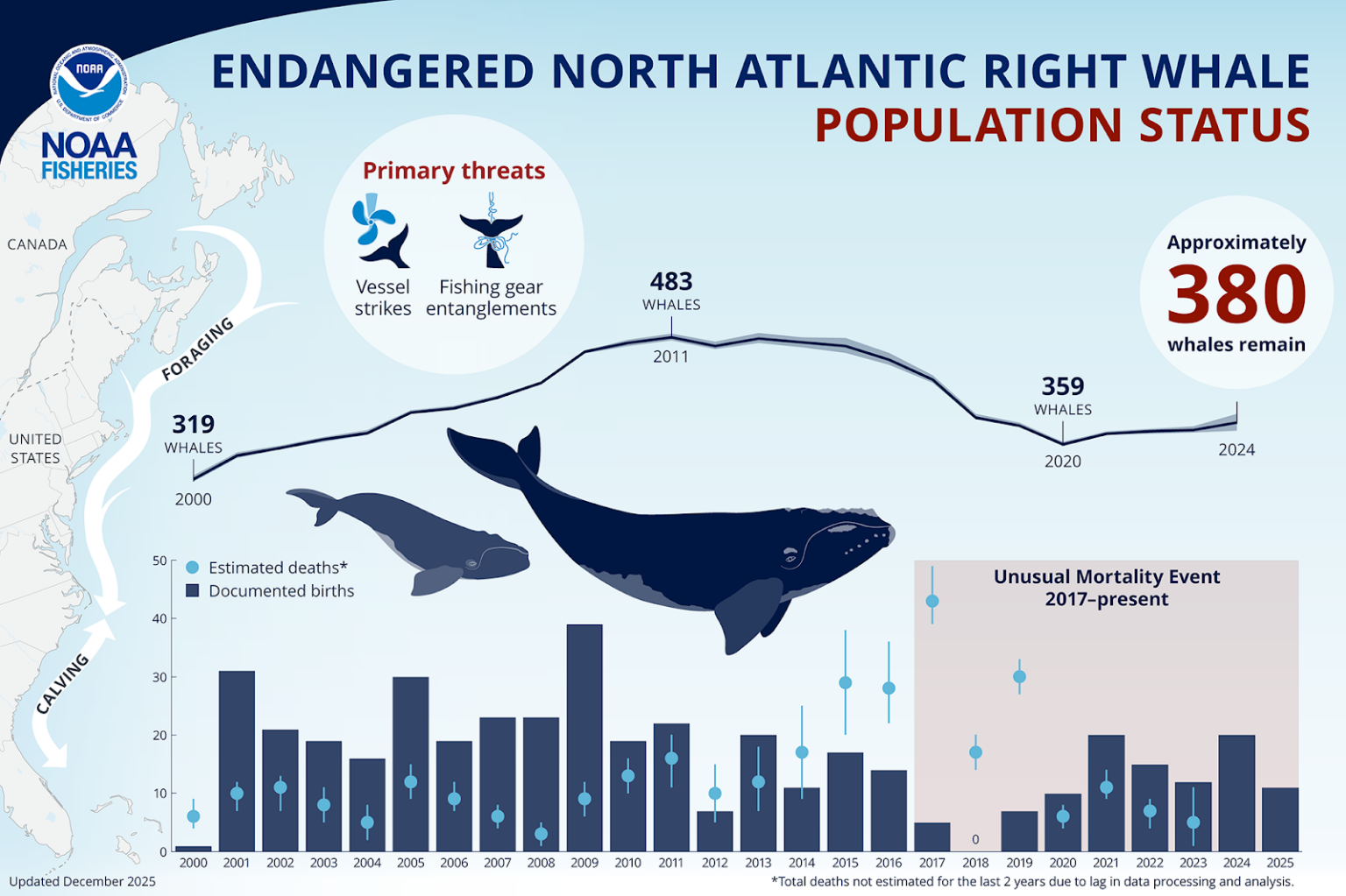 Right whale protections, vessel requirements and what sailors should do in SMA waters">

In Seasonal Management Areas (SMAs) most vessels 65 feet or longer are required to operate at 10 knots or less, with current speed restrictions active in Cape Cod Bay, awọn Mid‑Atlantic and the Ọwọ́ Áríwá-Ìlàòrùn SMAs; it is also illegal to approach within 500 yards of a right whale, and all sightings must be reported promptly to the listed hotlines or to the U.S. Coast Guard on channel 16.
Migration patterns and why restrictions matter
North Atlantic right whales migrate along the eastern seaboard from Florida up to Canada, using southern waters off Florida and North Carolina as calving grounds during the winter months. This season has recorded 22 calves, the highest number documented since 2010. Surveys in the calving grounds have identified nearly 70 additional individuals—roughly a quarter of the surviving population—many of them pregnant females or mothers with calves.
These females and young calves often spend extended periods near the surface, increasing collision risk. For mariners and tourism operators, awareness of seasonal presence and behavior is essential for planning safe transits and eco-friendly excursions.
Speed restrictions and vessel responsibilities
Regulatory highlights to observe while transiting or operating in SMAs:
- Speed limit: 10 knots or less for most vessels 65 feet (19.8 m) and longer within designated SMAs.
- Vessel size: Smaller boats are not exempt from causing serious harm; prudent speed and lookout are still required.
- Safe distance: Maintain at least 500 yards (457 m) from any right whale.
Beyond legal limits, reducing speed and adopting wider passing distances are effective risk‑mitigation measures for all craft, including private yachts and commercial charter vessels.
Reporting channels and practical on-water steps
If you observe a right whale, report the sighting immediately using the appropriate contacts:
- North Carolina to Florida: (877) WHALE-HELP / (877) 942-5343
- Maine to Virginia: (866) 755-6622
- Any location: U.S. Coast Guard, VHF Channel 16
Recommended immediate actions when a whale is sighted:
- Reduce speed to the minimum needed for control.
- Alter course slowly to pass well behind the animal’s direction of travel.
- Avoid crossing the whale’s path or coming between a mother and calf.
- Shut down engines if safe to do so when whales are very close and the vessel is stationary.
| SMA | Typical region | Gbegbɔ̃ɖeŋu didime si gbɔŋu womateŋu yiŋu o | Vessel length threshold | Primary reporting number |
|---|---|---|---|---|
| Cape Cod Bay | Massachusetts waters | 10 knots | 65 ft (19.8 m) | (866) 755-6622 |
| Mid‑Atlantic SMA | Virginia to New Jersey corridor | 10 knots | 65 ft (19.8 m) | (866) 755-6622 |
| Southeast SMA | Florida and Georgia calving waters | 10 knots | 65 ft (19.8 m) | (877) WHALE-HELP |
How these rules affect cruising and tourism
For sailors, charter operators and whale‑watching businesses, SMAs influence itinerary planning, fuel budgeting and daily schedules. Port calls and passage times may need to be adjusted to avoid peak whale presence, and operators must train crews in lookout procedures and reporting protocols. The restrictions also shape sustainable tourism offerings: well-managed whale‑watch trips and eco‑friendly wildlife safaris provide memorable experiences while keeping disturbance to a minimum.
Checklist for skippers, charter hosts and tour guides
- Study SMA maps and current regulations before departure.
- Confirm vessel length and whether 10‑knot rules apply.
- Maintain a dedicated visual lookout during transits.
- Carry up‑to‑date contact numbers and brief guests on safe‑distance etiquette.
- Opt for licensed, certified guides for wildlife commentary and interpretation.
The presence of right whales along popular coastal corridors creates both responsibilities and opportunities for tourism. Operators who prioritize safety and conservation can offer high‑quality, low‑impact wildlife encounters that appeal to conscientious travelers; local itineraries may include alternate coastal sightseeing, museum tours with live guides, or onshore cultural programs when marine conditions restrict at‑sea activities.
Verified local providers can craft memorable and responsible experiences in areas affected by right whale protections, from guided shore walks to eco‑friendly whale‑watching trips. On GetExperience, you book your experience from verified providers at reasonable prices. This empowers you to make the most informed decision without unnecessary expenses or disappointments. Choose from a diverse selection of tours in the region—everything from family‑friendly wildlife trips to more exclusive small‑group excursions—and explore options that fit different budgets and interests. Book your Trip GetExperience.com
Protecting right whales requires clear rules, quick reporting and mindful seamanship. Keep to 10‑knot limits where applicable, maintain at least 500 yards distance, and use the hotlines or VHF Channel 16 to report sightings. For travelers and operators, thoughtful planning ensures safe passage and enriches travel experiences with sustainable adventure activities, eco‑friendly wildlife safaris, interactive online cultural workshops, museum tours with live guides and even exclusive yacht charters for events. Ultimately, nothing replaces personal experience: whether you choose a shore‑based observation, a responsible whale‑watch, a cruise package or an adventure rafting trip for beginners, the best insights come from seeing and learning firsthand. Travel experiences that respect wildlife make for the most rewarding and lasting memories.