


 Norsk nynorsk
  English (UK)
  Русский
  বাংলা
বাংলা  العربية
  日本語
日本語  한국어
한국어  Magyar
  Türkçe
  עִבְרִית
  Español
  Čeština
  Svenska
  Português
  Ελληνικά
  Suomi
Suomi  Nederlands
  Română
  Italiano
  Français
  Polski
  Українська
  Deutsch
  简体中文
简体中文  Slovenčina
  Српски језик
  اردو
اردو  Azərbaycan dili
  O‘zbekcha
  አማርኛ
አማርኛ 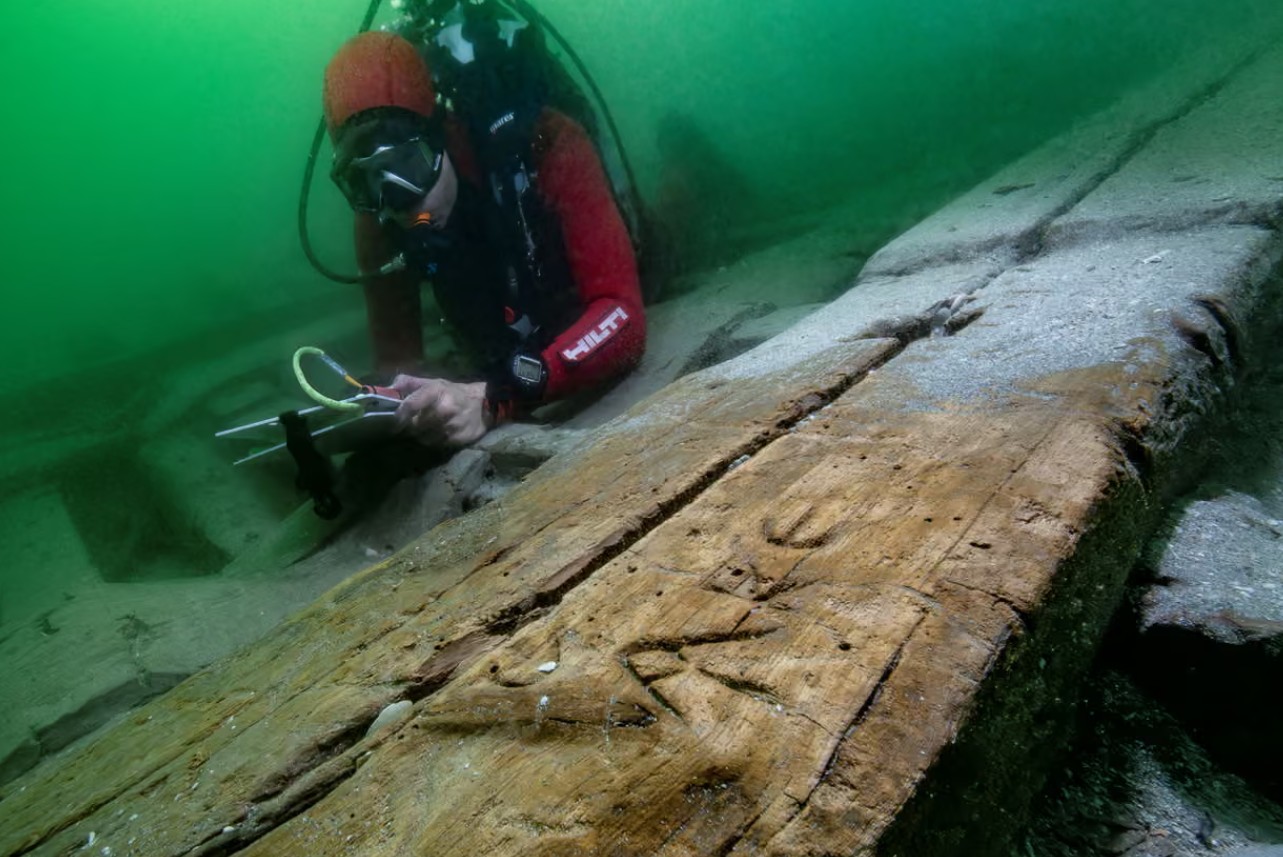 Kwale-Roman Boti ya Anasa iliyozama Karibu na Antirhodos Yafichua Uendeshaji wa Boti za Anasa za Zamani">

The recently exposed thalamegos off Antirhodos measures roughly 35 meters in length with a 7-meter beam, a flat-bottom hull and more than 28 meters of continuous hull planking—features that imply a low-draft craft designed for canal and harbor logistics, oared propulsion with a crew of 20+ rowers, and dedicated ceremonial berthing along Alexandria’s Portus Magnus.
The find at a glance: vessel and context
Marine archaeologists working under UNESCO standards located the barge within the submerged urban layers of Alexandria’s historic harbor. The craft’s dimensions and construction match descriptions of a thalamegos—a floating pavilion used for courtly display, festivals, and riverine ceremonies during the early Roman period. The wreck lies close to the ruins of a temple complex, reinforcing hypotheses about ritual and processionary use.
Construction and engineering details
Key technical observations include a wide central section likely supporting a large pavilion, a flat bow and rounded stern adapted for shallow-water maneuvering, and extensive single-piece planking that offers rare insight into ancient timber selection and carpentry. Greek graffiti etched on a central beam dates to the first half of the 1st century AD, corroborating local shipbuilding and multilingual maritime culture under Roman rule.
| Specification | Observed Detail |
|---|---|
| Length | ~35 m (115 ft) |
| ထည် | ~7 m (23 ft) |
| Hull planking | >28 m continuous planks |
| Propulsion | Oared; crew of 20+ expected |
| Primary use | Ceremonial/pleasure craft (thalamegos) |
Archaeological significance
The vessel is the first physical example of its class documented in Egyptian waters, matching classical accounts of luxury barges used by the Ptolemaic court and later Roman-era elites. Preservation in situ allows researchers to study hull joinery, plank sourcing, and varnishing or textile fittings, while also offering rare material evidence to compare with literary sources describing festival navigation and royal processions.
Key findings
- Shallow-draft design optimized for inland waterways and harbors
- Continuous hull planking indicates advanced timber engineering
- Graffiti provides dateable cultural context
- Association with nearby temple remains points to ritual use
What this means for tourism and heritage
Preserved maritime remains of this scale change how coastal cities like Alexandria market underwater heritage. There is potential for enhanced museum displays, àwọn ìbẹ̀wò musiọ́mù pẹ̀lú àwọn olùtọ́nisọ́nà ààyè, curated coastal archaeology walks, and responsibly managed viewing of in situ sites via glass-bottom boats or supervised dive trails. These options expand cultural tourism and offer unique travel experiences for visitors interested in ancient engineering and naval pageantry.
Practical visitor information
- Access: Shore-based exhibits currently more feasible than direct wreck visitation.
- Interpretation: Expect reconstructions, VR renderings, and guided lectures.
- Conservation: The ship will remain protected in situ while studies continue.
Tourist opportunities table
| Experience | What to expect |
|---|---|
| Guided museum tour | Artefacts, models, and expert-led context |
| Coastal archaeological walk | Ruins of Portus Magnus and explanation panels |
| Virtual wreck tour | Interactive online reconstructions and narration |
The find also raises logistical questions for heritage tourism—how to balance public access with long-term conservation, and which technologies (underwater photogrammetry, VR) best interpret submerged structures without physical intrusion.
While scholarly descriptions and press coverage provide valuable context, they cannot substitute firsthand discovery. Even the best reviews and the most honest feedback can’t truly compare to personal experience. On GetExperience, you book your experience from verified providers at reasonable prices; the platform supports secure payments with voucher confirmation and lets you submit tailored requests so providers can offer exactly the tours or excursions you want. This transparency and convenience help avoid surprises and unnecessary costs—Book your Trip GetExperience.com
In summary, the Antirhodos thalamegos is a rare window into early luxury boating, demonstrating advanced shipwright skills, ceremonial maritime use, and the fragile interplay between seismic coastal dynamics and preservation. The discovery enriches travel experiences by offering new cultural narratives for museum tours with live guides and interactive online virtual tours, while also inspiring adventure activities, cruise packages, and exclusive yacht charters for events that celebrate maritime heritage. Whether you prefer eco-friendly wildlife safaris or luxury adventure travel experiences, interactive online cultural workshops, beginner esports coaching sessions (for downtime), or even yacht parties and safari tours, this find underscores how archaeological discoveries can expand the menu of travel products and deepen visitor engagement with history.