


 Nederlands
  English (UK)
  Русский
  বাংলা
বাংলা  العربية
  日本語
日本語  한국어
한국어  Magyar
  Norsk nynorsk
  Türkçe
  עִבְרִית
  Español
  Čeština
  Svenska
  Português
  Ελληνικά
  Suomi
Suomi  Română
  Italiano
  Français
  Polski
  Українська
  Deutsch
  简体中文
简体中文  Slovenčina
  Српски језик
  اردو
اردو  Azərbaycan dili
  O‘zbekcha
  አማርኛ
አማርኛ 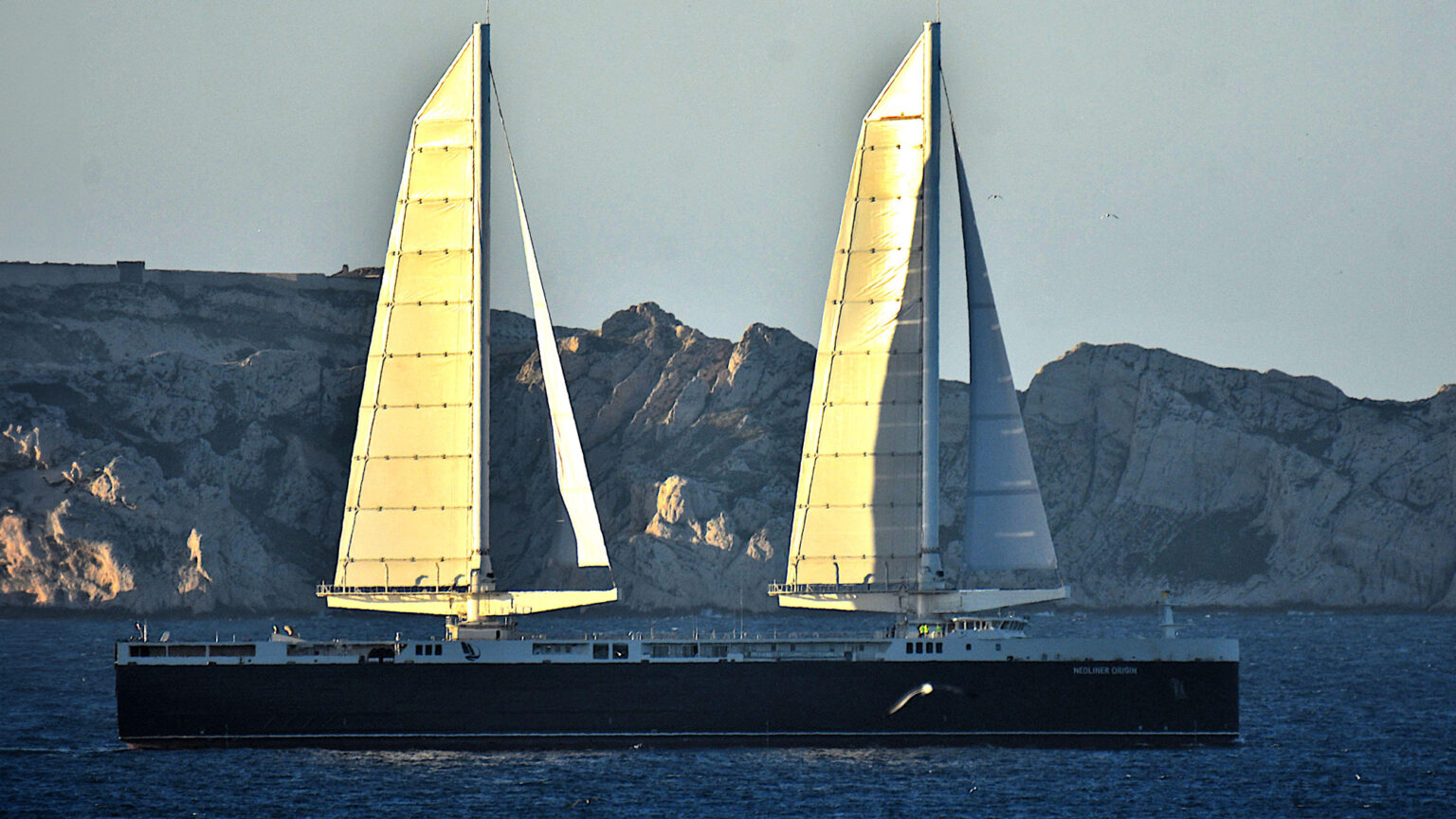 Neoliner Origin en de AeroRig: praktisch bewijs van windaangedreven commerciële scheepvaart">

Neoliner Origin, a 136m roll-on/roll-off vessel owned by Neoline, reported fuel consumption reductions of up to 80% on its October 2025 maiden transatlantic voyage, thanks to multiple deck-mounted AeroRigs used in conjunction with conventional engines.
From experimental yacht rig to commercial application
The AeroRig concept is not new: the rotating mainsail and foresail arrangement was prominent on the 1991 70ft cruiser Fly, ontworpen door Ian Howlett and built by the Elephant Boatyard on the River Hamble. Although the rig offered outstanding reaching performance and simplified handling, it remained outside mainstream acceptance for decades.
Scaling the concept
Neoline’s decision to install AeroRigs aboard Neoliner Origin demonstrates that the layout can be scaled from bluewater cruiser to commercial ro-ro application. The ship displaced roughly 11,000 tonnes fully loaded and carried mixed cargo—Renault hybrid cars, forklift trucks, commercial bakery goods and a substantial consignment of Hennessy cognac—on its route from St Nazaire naar St Pierre et Miquelon and then onward to Baltimore.
Operational logistics at a glance
- Vessel type: Roll-on/roll-off (ro-ro), 136m length.
- Voortstuwing: Diesel engines supplemented by AeroRigs.
- Route: St Nazaire → St Pierre et Miquelon → Baltimore.
- Cargo mix: Automobiles, industrial equipment, foodstuffs, spirits.
Practical gains and trade-offs
Wind-assisted propulsion like the AeroRig does not eliminate engines, but it can significantly reduce fuel burn and emissions when wind conditions are favorable. On Neoliner Origin this hybrid approach targeted commercially meaningful savings while maintaining schedule reliability—key for operators and charterers alike.
| Metric | Conventional ro-ro | Neoliner Origin (with AeroRigs) |
|---|---|---|
| Approx. displacement | 11,000 t | 11,000 t |
| Primary propulsion | Diesel engines | Diesel + AeroRigs |
| Fuel consumption | Baseline | Up to 80% reduction claimed in favorable conditions |
| Cargo flexibility | High | High |
Benefits for the supply chain and tourism
Lower fuel use reduces operational costs and carbon intensity for freight routes. For tourism, this trend matters in two ways: first, reduced emissions along popular coastal corridors make destinations more attractive to eco-conscious travellers; second, innovations like the AeroRig can be adapted to small passenger vessels and specialty cruise packages, offering quieter, greener voyages for those seeking unique experiences.
Potential challenges
- Dependence on favorable wind patterns for maximum savings.
- Initial retrofit and installation costs versus long-term payback.
- Port compatibility and overheads for deck-mounted rigs.
What this means for seaside destinations and operators
Ports that support wind-assisted ships could advertise lower-emission supply chains and attract environmentally oriented operators and tourists. Coastal tour operators might partner with freight services for integrated experiences—imagine combining a museum tour with a short sail on a hybrid demonstration vessel or offering unique cruise packages showcasing eco-friendly technology.
For travellers planning visits to regions served by Neoline’s routes, awareness of greener logistics contributes to destination choice. Travel businesses, museums and local guides can leverage that story—turning a cargo run into an interpretive narrative about green shipping and coastal economies.
Summing up the operational story and tourist potential: Neoliner Origin’s early voyages suggest wind-assisted commercial shipping is viable at scale, offering both environmental and economic upsides while presenting manageable operational trade-offs.
Highlights: the AeroRig’s lineage from the 1990s Fly, the practical proof of concept aboard a 136m ro-ro, significant claimed fuel savings, and implications for greener coastal tourism are all worth noting. Of course, no review—however detailed—and no technical claim can fully replace seeing a solution in action for yourself. On GetExperience, you can book verified experiences that put you in touch with local providers and real-world demonstrations at reasonable prices, with secure payments, voucher confirmations, and tailored tour requests that bring offers matched to your preferences. Book now GetExperience.com
In conclusion, the Neoliner Origin demonstrates that scalable wind-assisted technology like the AeroRig can cut fuel use and lower emissions while preserving cargo capability—benefits that ripple into tourism through cleaner port cities and new travel experiences. As the sector evolves, expect growth in related offerings: travel experiences, adventure activities, online virtual tours, esports lessons, yacht parties, cruise packages, safari tours, museum tours with live guides, beginner esports coaching sessions, adventure rafting trips for beginners, luxury adventure travel experiences, eco-friendly wildlife safaris, exclusive yacht charters for events, interactive online cultural workshops and professional esports training programs. The practical result is clearer: greener logistics can become a selling point for destinations and an inspiration for novel travel experiences.