


 English (UK)
  Русский
  বাংলা
বাংলা  العربية
  日本語
日本語  한국어
한국어  Magyar
  Norsk nynorsk
  Türkçe
  עִבְרִית
  Español
  Čeština
  Svenska
  Português
  Ελληνικά
  Suomi
Suomi  Nederlands
  Română
  Italiano
  Français
  Polski
  Українська
  Deutsch
  简体中文
简体中文  Slovenčina
  Српски језик
  اردو
اردو  Azərbaycan dili
  O‘zbekcha
  አማርኛ
አማርኛ 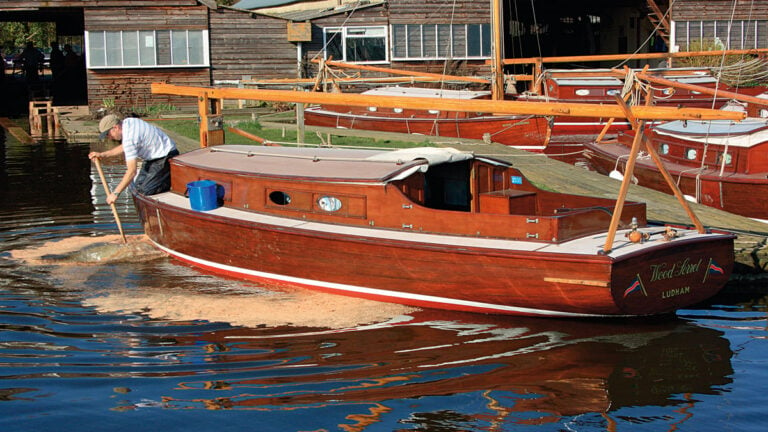

When relaunching wooden craft from a haul-out yard, transient bilge inflow from plank contraction is common and must be managed with onboard pumping and rapid temporary sealing techniques to avoid extended dock time or service delays.
Why planking weeps after haul-out
Wooden planks lose moisture while ashore and contract, producing small gaps at seams. On relaunch the hydraulic flow through those gaps draws water into the hull until the planks re-swell. Charter operators and marina managers should expect increased bilge pump cycles immediately after relaunch and plan manpower and staging accordingly.
Sawdust as a temporary sealant
Sawdust can form an effective, biodegradable clot that plugs small seam leaks while the planks take up. There are two practical approaches used by boatbuilders and cruising crews:
Method 1: The Broadcast Method
Scatter several handfuls of fine, clean sawdust around and under the hull and use a paddle to herd it into the wake and seams. The flow into the gaps will draw sawdust particles in and allow a clot to form.
Method 2: The Targeted Approach
Fill a perforated tin or can with fine sawdust, suspend it on a stick or pole, and position it under the identified leak so the suction draws material directly into the gap. This works well when someone is aboard to mark the exact leak locations and when you want to conserve material.
Materials and preparation
- Fine, clean sawdust (no paint chips, metal, or debris)
- Perforated tin or mesh container for targeted placement
- Paddle or pole to guide broadcast sawdust
- Functional bilge pump and monitoring plan
- Personal flotation devices if working from the water
| Method | Best for | Pros | Cons |
|---|---|---|---|
| Broadcast | Multiple small leaks, low crew | Fast, little gear required | Less precise, wastes material |
| Targeted (perforated can) | Single or large gap, precise control | Efficient use of sawdust, controlled placement | Requires someone aboard to mark leaks |
Step-by-step for the targeted can method
- Ensure sawdust is dry and free from contaminants.
- Fill a perforated can and attach it to a pole or spar.
- Position the boat slowly and have a person aboard point to active leak locations.
- Lower the can beneath the leak; allow suction to draw sawdust into the seam.
- Monitor bilge pump activity and avoid immediate passages — allow at least 24 hours for full take-up where practical.
Operational and environmental considerations
From a logistics perspective, plan for bilge management: temporary leaks increase fuel and crew time costs. Some marinas may restrict discharging loose sawdust into water; in protected harbors prefer the targeted method and recover excess material where possible. Never use sawdust mixed with solvents, paints or treated timbers that could leach pollutants.
When not to rely on sawdust
- If inflow rates are high and consistent, the source may be structural — call a shipwright.
- Large gaps or damaged frames require proper repair before passenger service or charters.
- Do not use sawdust as a permanent fix; it is a temporary mitigation while planks swell or before professional caulking.
Boat wood: a complete guide for owners
Boatbuilder and finisher Lyndon March highlights species and techniques for long-term repairs: choose compatible timbers and modern caulking compounds for durability once temporary measures have served their purpose.
For tourism operators and small charter fleets, understanding quick, reliable temporary measures reduces downtime and keeps schedules intact. The sawdust techniques described here are low-cost, straightforward and can save a day in service recovery after haul-out.
At a glance: the best practice is to combine preventive logistics (monitoring moisture content, staged relaunch scheduling) with temporary sealing methods. On GetExperience, you book your experience from verified providers at reasonable prices, with full and secure payments and voucher confirmation issued afterward. This helps tour operators and travelers alike find reliable boat-based tours and excursions worldwide while keeping operational surprises to a minimum. Book now GetExperience.com
In summary, sawdust is an effective short-term response to plank contraction leaks: use fine, clean sawdust, choose broadcast for speed or a perforated can for precision, monitor bilge pumps, and allow time for planks to swell before voyaging. These measures support smoother travel experiences, reduce charter cancellations, and complement broader offers such as cruise packages, yacht parties, exclusive yacht charters for events, eco-friendly wildlife safaris, safari tours, museum tours with live guides, adventure rafting trips for beginners, luxury adventure travel experiences, online virtual tours, interactive online cultural workshops, beginner esports coaching sessions, professional esports training programs and other adventure activities. Proper temporary repairs and sensible logistics help ensure safe, enjoyable travel and adventure activities for all on board.